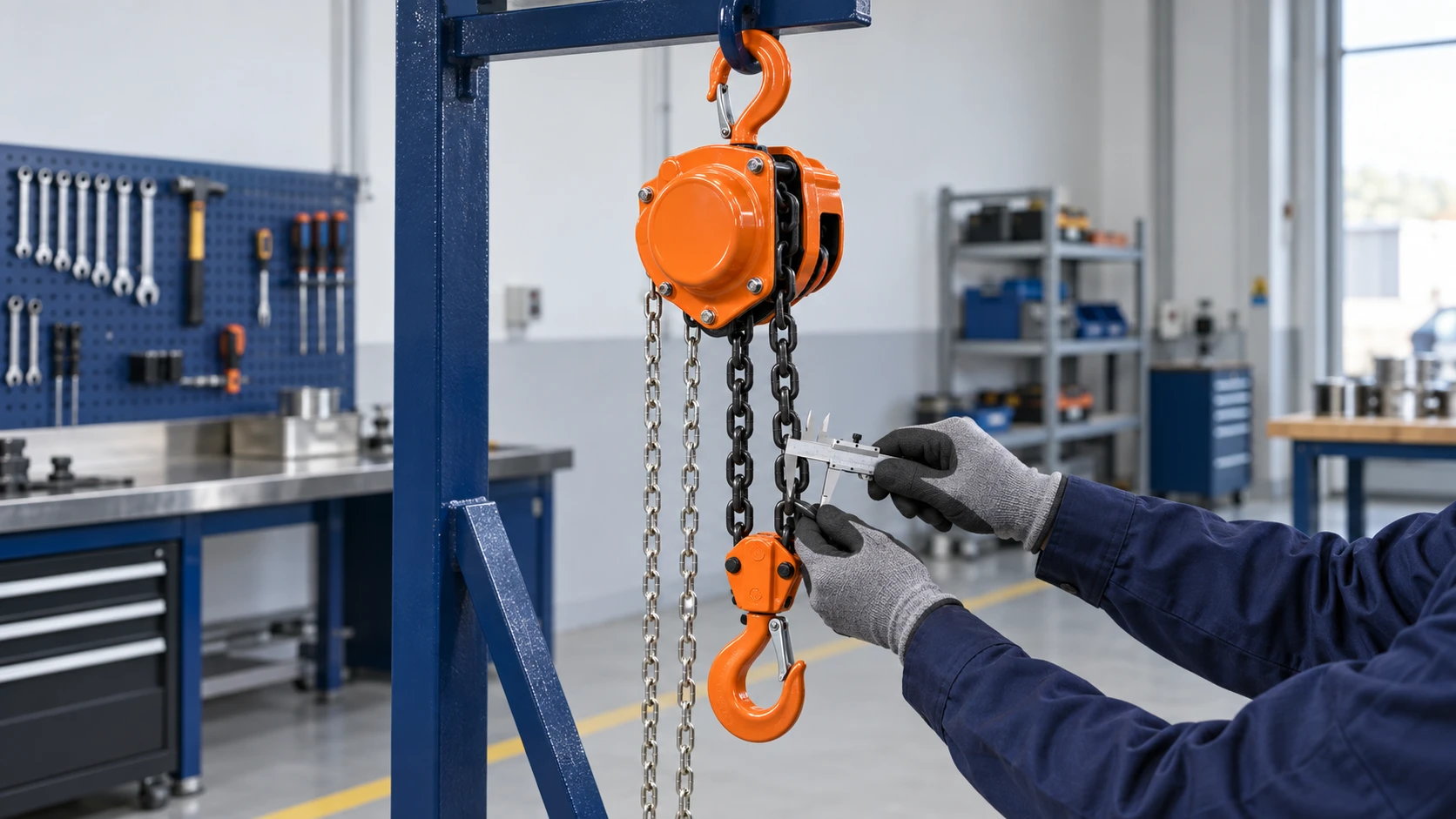
Manual Chain Hoist Inspection Checklist: Load Chain, Hooks, Brake and Pre-Use Checks
A manual chain hoist inspection should confirm more than whether the hoist can raise a load. The inspection must consider identification, suspension, hooks, latches, load chain, hand chain, brake operation, chain travel, fasteners, housing, signs of overload and the conditions in which the hoist has been used or stored.
The correct inspection method and acceptance limits come from the manufacturer’s instructions for the exact model, together with the standards and workplace rules that apply at the installation. A quick visual check by an operator cannot replace a documented periodic inspection, and neither should be turned into an improvised proof-load test.
Quick answer: Before using a manual chain hoist, confirm that its identity and rated capacity are legible; its suspension and supporting structure appear suitable; hooks are not visibly cracked, opened, twisted or damaged; any fitted latches operate; the load chain is correctly reeved, untwisted and free from obvious wear, deformation, corrosion, heat damage or weld spatter; the hand chain runs freely; covers and fasteners are secure; and the hoist raises, holds and lowers correctly during the manufacturer-approved functional check. If the brake slips, the load creeps, the chain jumps or binds, a hook or chain is damaged, the hoist has been overloaded, or its condition is uncertain, stop, identify and quarantine it for evaluation by an authorized person.
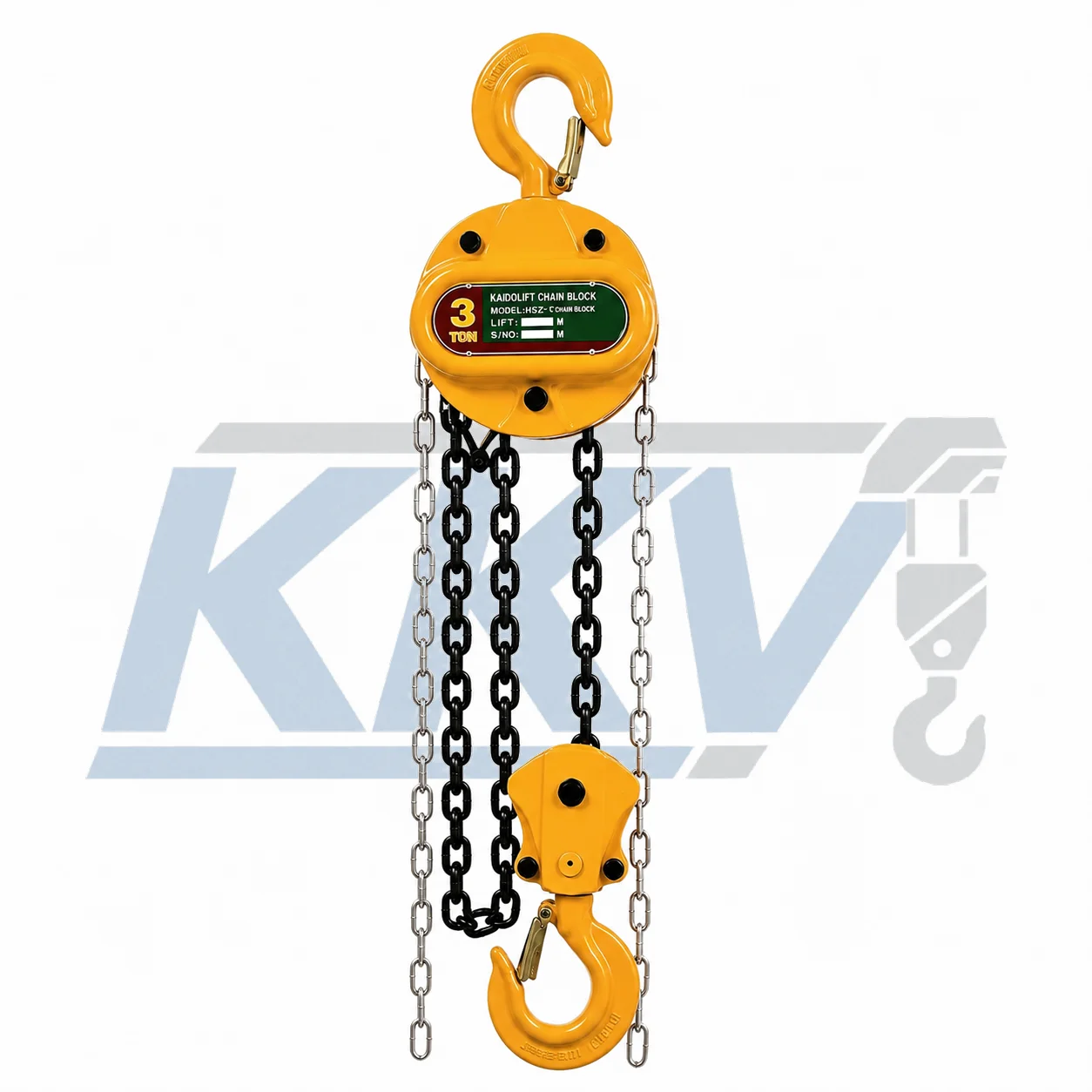
Table of contents
- What this checklist covers
- Pre-use, frequent and periodic inspection
- Prepare for the inspection
- Twelve pre-use checks
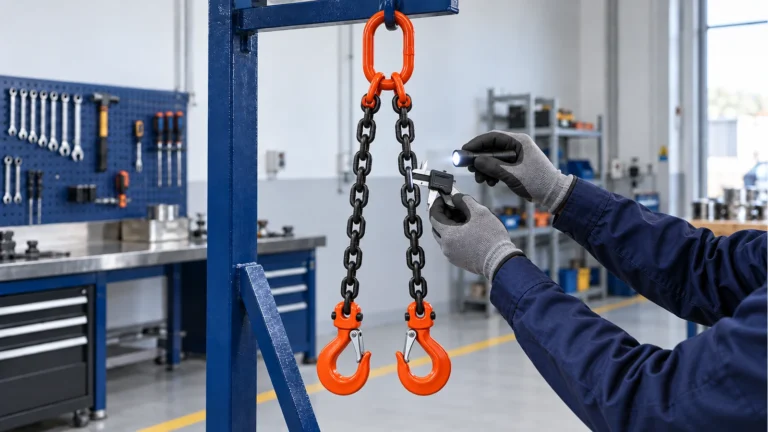
- How to inspect the load chain
- How to inspect hooks and latches
- How to check the brake and operation
- Suspension, body and hand-chain checks
- When to remove the hoist from service
- Periodic measurement and records
- Inspection after abnormal events or repair
- Common inspection mistakes
- Copyable inspection record
- Frequently asked questions
What This Manual Chain Hoist Checklist Covers
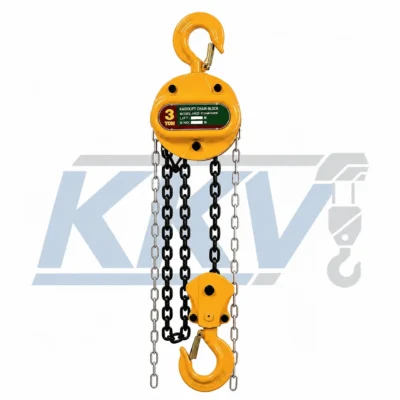
This guide addresses hand-chain-operated hoists, often called manual chain hoists, chain blocks, hand chain blocks or chain pulley blocks. The operator pulls a separate hand chain to turn the internal gearing and move a calibrated load chain through the hoist.
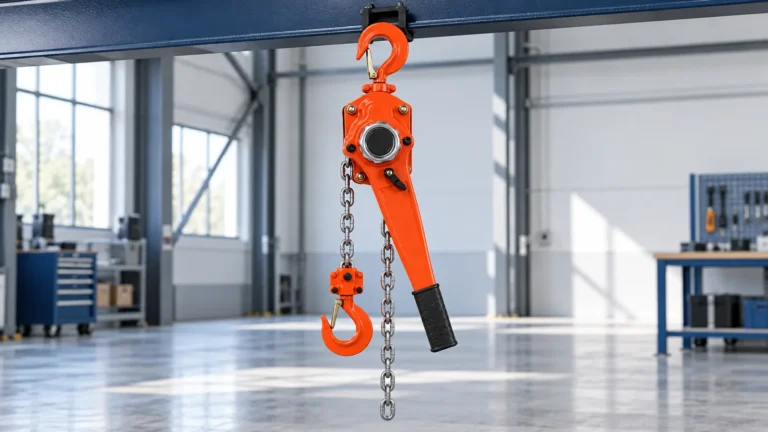
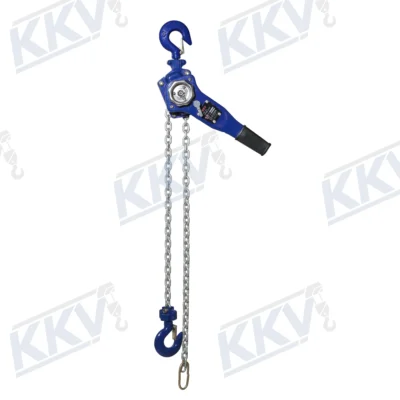
It does not cover lever hoists, electric chain hoists, wire rope hoists, chain slings or lifting accessories as if they were the same product. Their operating mechanisms, inspection points and governing instructions differ. If the equipment has a ratchet lever rather than an endless hand chain, use a lever-hoist inspection procedure for that exact model.
The article is designed as a practical inspection framework for owners, users and purchasers. It cannot establish a universal rejection dimension because hook profiles, chain pitch, chain diameter, number of falls, brake design and manufacturer limits vary by hoist and capacity.
For initial equipment selection, see the manual chain hoist selection guide. If the job may need a ratchet lever rather than a hand chain, compare the applications in the manual chain hoist vs lever hoist guide.
Inspection is not repair
An operator can identify visible or functional warning signs, but should not disassemble a brake, straighten a hook, weld a chain link or adjust internal components unless specifically trained and authorized for that work. When the checklist identifies a defect, the normal response is to stop and escalate—not to improvise a repair beside the load.
Inspection is not proof testing
A pre-use functional check is not a proof test. Proof testing applies a defined test load under a controlled procedure and may be required after certain repairs, alterations or installations. It must be planned and performed by authorized personnel according to the manufacturer and applicable requirements. Never use an unknown heavy object to “see whether the hoist holds.”
Pre-Use, Frequent and Periodic Inspection
Inspection terminology varies by manufacturer and jurisdiction, but a useful framework separates three levels. ASME B30.16 covers construction, installation, operation, inspection, testing and maintenance for hand-chain-operated overhead underhung and stationary hoists. Manufacturer manuals commonly organize regular-service inspections into frequent and periodic groups, with intervals influenced by service severity. The HMI technical and safety document library provides additional industry guidance, while the supplied manual for the exact hoist remains essential.
| Inspection level | Main purpose | Typical person and method | Important limitation |
|---|---|---|---|
| Pre-use or pre-operational check | Find obvious defects or abnormal operation before the next use or shift | Trained operator; visual and manufacturer-approved functional checks | Does not include unauthorized disassembly or replace periodic inspection |
| Frequent inspection | Evaluate operating mechanisms, brake, hooks, latches, chain reeving, visible chain damage and support at an interval based on service | Designated person; visual and operational examination, including observations during use | Exact scope and interval must follow the model manual and applicable rules |
| Periodic inspection | Examine the complete hoist in greater depth and document condition, measurements and required corrective action | Designated or qualified inspection personnel with appropriate access, tools and records | May require cleaning, measurement, component access or nondestructive examination specified by the manufacturer |
Do not copy an interval from another hoist, another employer or an internet checklist. A manufacturer may classify service as normal, heavy, severe, special or infrequent and assign different intervals. Heat, corrosion, outdoor exposure, shock loading, long lifts, high utilization and a history of defects can justify shorter intervals.
US OSHA 29 CFR 1910.179 includes daily and monthly items for hoist chains and hooks when equipment is within the scope of its overhead and gantry crane rule. That does not automatically make the same interval a universal global rule for every portable chain block. The owner must determine which law, standard, manufacturer instruction and site procedure applies.
Who may perform each inspection?
The operator should be trained to complete the pre-use check and recognize stop-work conditions. More detailed inspections, measurements, adjustments, repairs and return-to-service decisions require the person defined by the manufacturer, employer and applicable standard—often described as designated, competent or qualified.
Using a checklist does not create competence by itself. The person must understand the exact hoist, its limits, defect mechanisms, measuring method and authority to remove it from service.
Prepare for a Manual Chain Hoist Inspection
An inspection is more reliable when the hoist is identified and placed in a controlled condition before examination.
Identify the exact hoist
Record the manufacturer, model, rated capacity, serial or lot number, lift, number of chain falls and location. Obtain the current instruction manual and previous inspection record. If identity or rated capacity cannot be confirmed, do not guess from body size, hook size or chain diameter.
Make the area safe
Remove the load unless the approved procedure specifically requires a controlled test. Prevent unintended use, provide adequate lighting and arrange safe access to the entire chain and suspension. Do not inspect while another person can operate the hoist or while a suspended load remains over people or equipment.
Review service history
Ask whether the hoist has been overloaded, shock loaded, side pulled, dropped, struck, exposed to fire or welding, submerged, stored outdoors, contaminated by chemicals or repaired since the last inspection. A visually acceptable hoist may still require a higher-level examination after an abnormal event.
Clean only as permitted
Dirt can hide cracks, wear and corrosion, but an unsuitable solvent, wire wheel or aggressive blasting can damage finishes or conceal evidence. Follow the manufacturer’s cleaning instructions. Do not remove identification or grind the chain or hook to make a defect disappear.
Use the correct reference measurements
Periodic measurement is most useful when the original hook dimensions and load-chain gauge values are recorded before service. A generic dimension taken from another capacity is not a valid baseline. Use the exact manual, manufacturer gauge or approved reference data.
Twelve Manual Chain Hoist Pre-Use Checks
The following sequence helps an operator examine the complete load path from the suspension point to the lower hook. The exact model manual remains controlling.
| Check | Look for | Stop and escalate when |
|---|---|---|
| 1. Identification | Legible manufacturer, model, serial or lot number, rated capacity and warnings | Identity, capacity or required warning information is missing or unreadable |
| 2. Suspension point | Visible damage, looseness, incorrect seating, unsuitable connection or an unverified support | Support or attachment is damaged, distorted, loose, incompatible or of uncertain capacity |
| 3. Upper hook or suspension fitting | Cracks, opening, twist, wear, deformation, heat damage and correct seating | Any crack, visible deformation, abnormal opening, twist or insecure seating is found |
| 4. Hook latch, if fitted | Free movement, spring return, alignment and closure at the hook tip | Latch is missing, bent, loose, jammed or does not close as designed |
| 5. Hoist body and covers | Impact damage, cracks, corrosion, missing covers or interference | Housing or structural parts are damaged, loose or expose the mechanism |
| 6. Fasteners and retainers | Missing or loose nuts, bolts, pins, cotters and retaining parts | Any required fastener or retainer is missing, loose or substituted |
| 7. Load chain | Correct reeving, no twist, knots or obvious wear, nicks, gouges, stretch, corrosion, heat or weld damage | Chain is twisted, deformed, damaged, heavily corroded, contaminated or runs abnormally |
| 8. Chain end and lower block | Secure end anchorage, correct lower-block orientation and no flipped multi-fall chain | End connection is loose or the lower block has introduced a chain twist |
| 9. Lower hook | Same visible checks as upper hook plus correct swivel action when unloaded, if designed to swivel | Hook is cracked, opened, twisted, worn, seized or otherwise abnormal |
| 10. Hand chain | Free-hanging loop, correct joint, no twist, deformation, severe corrosion or obstruction | Hand chain binds, is knotted, altered, badly damaged or cannot run freely |
| 11. No-load operation | Smooth lifting and lowering, correct chain travel and expected sound for the design | Chain jumps, binds or jams; operation is unusually hard; parts scrape; sound is abnormal |
| 12. Holding and lowering function | Manufacturer-approved controlled functional check of the brake and lowering action | Brake slips, a controlled test load creeps, lowering is uncontrolled or operation is uncertain |
Check the supporting system as well
The hoist can only be as safe as its suspension. Beam clamps, trolleys, lugs, shackles, structures and their connections require their own identification, compatibility and inspection. A sound chain block must not be attached to an unverified pipe, handrail, improvised eye or damaged beam.
Observe before and during operation
Some defects appear only as the chain moves. Watch for uneven chain entry, jumping, binding, a lower block that rotates unexpectedly, unusual clicking or grinding, increased hand-chain effort and a load that does not remain stationary when operation stops.
Expected sound is model-specific. Some ratchet mechanisms produce a distinct clicking sound while lifting, while another design may sound different. The inspection criterion is the manufacturer’s description and a known baseline—not the assumption that every hoist should sound identical.
How to Inspect Manual Chain Hoist Load Chain
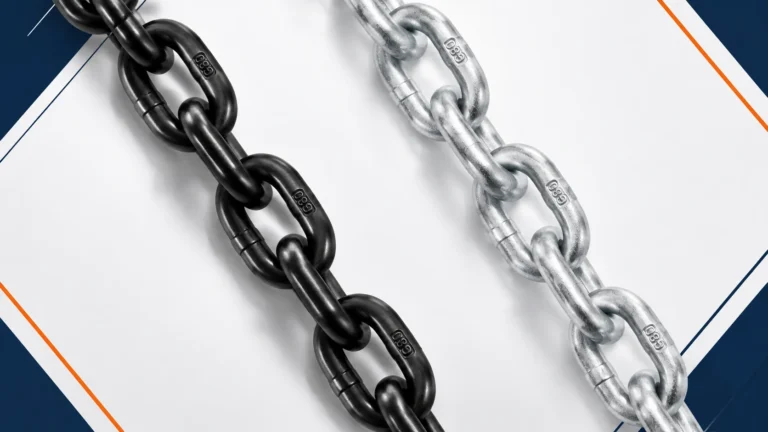
Hoist load chain is calibrated to engage the load sheave. Its link dimensions, pitch, material, heat treatment and manufacturing tolerances must match the exact hoist. It is not interchangeable with ordinary hardware chain or a Grade 80 chain sling simply because the nominal diameter appears similar.
Inspect the full accessible length
Move the chain only through a safe, controlled no-load procedure permitted by the manual so that the full working length can be examined. Pay special attention to the sections that repeatedly enter the load sheave, pass around an idle sheave or remain near the lower block and end anchorage.
Look at every link. A defect in one link can require removal of the chain or hoist from service pending evaluation.
Check for twist and incorrect reeving
Every link must enter the chain wheel in its intended plane. A twisted chain can result from incorrect installation, a flipped lower block or a multi-fall chain routed incorrectly. Do not operate the hoist to force a twist through the body.
For multi-fall hoists, compare lower-block orientation and chain reeving with the diagram in the manual. Untwisting by rotating the lower block is acceptable only when it restores the manufacturer-specified reeving without disconnecting or altering the chain.
Look for surface and shape defects
Remove the hoist from service for qualified evaluation when the chain shows signs such as:
- bent, twisted, elongated or distorted links;
- nicks, gouges, cracks or sharp notches;
- flattened bearing surfaces or obvious diameter loss;
- severe or localized corrosion;
- weld spatter, arc strikes or heat discoloration;
- paint, plating or contamination that prevents inspection;
- stiff links that do not articulate freely;
- stretched sections or uneven link pitch;
- unauthorized welds, joining links or repairs.
Do not use the presence of lubrication to hide a defect. Clean according to the manual, inspect, then apply only the specified lubricant and quantity.
Measure wear and elongation correctly
A periodic inspection may require measuring link diameter at specified wear points and measuring a defined number of links under a stated tension. The number of links, measuring locations, reference length and discard limit are manufacturer-specific.
Use a calibrated instrument and the method in the exact manual. Measuring one convenient outside dimension with an ordinary ruler and comparing it with a generic percentage is not sufficient. Where a manufacturer supplies a chain gauge, use it as instructed.
Replace with approved calibrated chain
Do not shorten, weld, heat, bend or splice hoist load chain. Replacement chain must be approved for the exact hoist and installed with the correct orientation, reeving, end connection and lower-block arrangement. Replacement may also require inspection and testing before the hoist returns to service.
The Grade 80 lifting chain guide explains sling-chain selection, but Grade 80 sling chain must not be treated as automatic replacement load chain for a chain hoist.
How to Inspect Manual Chain Hoist Hooks
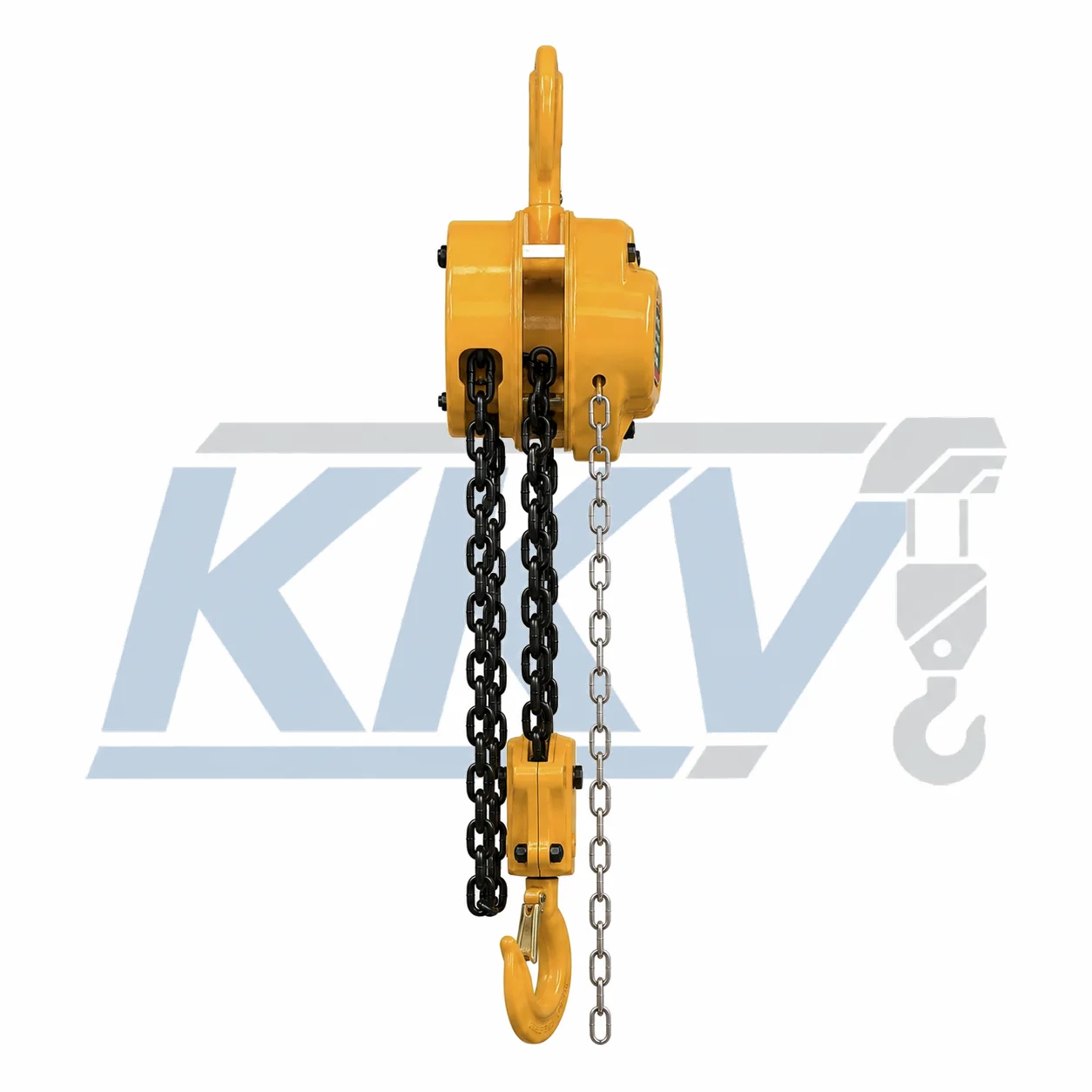
Inspect both upper and lower hooks, including the shank, bowl, point, neck, swivel area, nut or pin, yoke and latch where fitted. The upper hook connects the hoist to the support; the lower hook connects the load through suitable rigging. Damage to either interrupts the load path.
Visual hook checks
Look for:
- cracks or crack-like indications;
- throat opening greater than the approved baseline;
- twist from the original hook plane;
- bending, elongation or other deformation;
- wear in the bowl or load-bearing area;
- nicks, gouges and sharp notches;
- corrosion, pitting or heat damage;
- evidence of welding, grinding or unauthorized repair;
- damaged hook attachment, yoke, pin, nut or retainer;
- a swivel that is seized, excessively loose or abnormal when checked unloaded.
Do not publish or apply one universal throat-opening percentage or twist angle to every chain hoist. OSHA, ASME and manufacturer documents may state values for equipment within their scope, but the correct limit for this inspection comes from the exact hook and hoist documentation plus applicable rules.
Measure against a baseline
Measure hook throat opening and other specified dimensions at the same reference points used by the manufacturer. Compare them with the original dimension, an approved previous record or the discard value in the manual. Marking reference points should not damage the hook.
A latch position alone is not an accurate wear gauge. A latch that no longer reaches the tip is a warning sign, but the hook itself still requires inspection and measurement.
Check the latch without loading it
Where a latch is fitted or required, it should move freely, return under spring force and close in the intended position. It is a retaining device intended to help keep a slack sling or attachment in the hook; it is not a load-bearing component and does not compensate for side loading or point loading.
Do not operate with a missing or defective required latch while waiting for a replacement. Quarantine the hoist and follow the manufacturer’s parts and return-to-service procedure.
Never straighten or weld a hook
Heating, welding or cold-straightening can change material properties and hide damage. A hook outside its approved limit should be replaced with the correct manufacturer-approved part by authorized personnel.
How to Check a Manual Chain Hoist Brake
The brake or load-control mechanism must hold the load when the operator stops pulling the hand chain and allow controlled lowering. Brake assessment begins with external operation but internal examination belongs to trained maintenance personnel.
No-load operational check
With the area controlled and the hoist unloaded, operate it in both directions as instructed by the manufacturer. Check that:
- the hand chain moves in the intended direction;
- the load chain enters and leaves the body smoothly;
- the lower hook rises and lowers without jumping or binding;
- operating effort is reasonably consistent with the known condition of the hoist;
- no scraping, grinding or other abnormal sound occurs;
- the chain does not run over a guide or jam at the entry.
A no-load test can reveal binding and incorrect reeving, but it cannot by itself prove that the brake will hold rated load.
Controlled holding check
If the manufacturer or site procedure requires a functional check with a known load, it should be completed in a controlled area using the specified load and method. Raise only enough to confirm function, keep people clear and verify that the load remains stationary when operation stops and lowers controllably when commanded.
If the load creeps, lowering is erratic or the hand chain moves without the expected load-chain response, stop immediately. Do not increase the test load, pull harder, shock the mechanism or dismantle the brake unless authorized.
Internal brake inspection
Periodic inspection may include brake discs, ratchet, pawls, springs, gears, shafts, bearings and load-sheave components. Oil, grease, rust, wear, incorrect assembly or unapproved parts can affect brake function. Follow the model manual for access, cleanliness, wear limits, assembly and testing.
An overload limiter, where fitted, is not a substitute for a working brake or an inspection program. It also must not be used as a routine capacity indicator.
Suspension, Body and Hand-Chain Inspection
Upper suspension and trolley
Confirm the upper hook or suspension fitting is seated in the approved attachment and loaded in the hook bowl or connection as designed. Check the trolley, beam clamp, lug, shackle or other support under its own inspection procedure. Verify that side loading, tip loading and improvised attachments are absent.
Where a trolley is used, inspect adjustment, fasteners, side plates, wheels, guards, drop stops and beam compatibility as required by its manual. The trolley and beam must have suitable capacity for the complete load path.
Housing and covers
Look for dents that can interfere with rotating components, cracks, severe corrosion, missing covers, loose fasteners and openings that expose the mechanism. Check that labels and direction markings remain readable. A cosmetic scratch is different from deformation that reduces clearance or indicates impact.
Hand chain and hand wheel
The hand chain is the operator’s input chain, not the load-bearing chain, but damage can prevent control. Check for twists, stiff or deformed links, severe corrosion, an unsuitable connector, a knot, an unauthorized extension and interference with structures.
Operate the hand chain without jerking. If it rides out of the hand wheel, binds or requires abnormal force, stop. The cause may involve chain condition, alignment, covers, the hand wheel, internal gearing or load beyond the approved application.
Chain container and loose end, if fitted
If the model uses a chain container, confirm it is approved for the chain length, correctly attached, undamaged and not overfilled. Verify the slack-end anchorage, stopper or end connection required by the design. The loose end must not be modified to gain extra lift.
When to Remove a Manual Chain Hoist From Service
When a potentially safety-critical defect is found, stop using the hoist, lower and secure any load if this can be done safely, attach a clear out-of-service identification and prevent others from returning it to use. Follow the site’s isolation and quarantine procedure.
| Finding | Immediate action | Next decision |
|---|---|---|
| Brake slip, load creep or uncontrolled lowering | Stop operation and secure the area | Authorized brake inspection, repair and required testing before release |
| Cracked, twisted, opened, bent or heat-damaged hook | Quarantine the hoist | Compare with exact rejection criteria; replace approved components as directed |
| Missing or defective required latch | Remove from normal use | Install the correct approved part and verify operation |
| Load chain with crack, gouge, twist, deformation, severe corrosion, heat or weld damage | Do not continue running the chain | Qualified full-length inspection and approved replacement decision |
| Chain jumping, binding or riding incorrectly | Stop; do not pull harder | Check reeving, guides, sheave, chain dimensions and internal condition |
| Missing identity or unreadable capacity | Do not guess the rating | Identify from controlled records or manufacturer before use |
| Damaged housing, loose structural part or missing retainer | Isolate the hoist | Authorized inspection and component replacement |
| Suspected overload, shock load, drop, collision, fire or chemical attack | Quarantine even if damage is not obvious | Event-specific inspection and testing determined by a qualified person |
| Unauthorized weld, modified hook, spliced chain or unapproved part | Remove from service | Manufacturer or qualified engineering disposition |
“Tag out” must be effective. A paper tag that can fall off while the hoist remains hanging in a shared area may not prevent reuse. Use the site’s controlled isolation method and record who has authority to release the equipment.
Periodic Manual Chain Hoist Inspection Records
A periodic inspection looks beyond the operator’s quick check and creates evidence of condition over time. Its scope should come from the exact manual and applicable requirements.
Items commonly included
A periodic inspection may include:
- all frequent-inspection items;
- complete load-chain cleaning, visual examination and measurement;
- hook measurements and any specified crack-detection method;
- chain wheel, load sheave, guides and idle sheave;
- brake discs, ratchet, pawls and springs;
- gears, bearings, shafts and bushings;
- upper and lower hook attachment parts;
- body, covers, structural members and fasteners;
- suspension fittings and trolley components;
- lubrication condition and approved lubricant application;
- evidence of corrosion, heat, unauthorized modification or overload;
- operational and load testing required after inspection or repair.
This list does not authorize disassembly by an operator. Component access and testing should be assigned to personnel trained for the exact product.
Select intervals from service conditions
The inspection program should consider:
- normal, heavy, severe, special or infrequent service classification;
- hours and cycles of use;
- percentage of lifts near rated capacity;
- long lifts and repeated chain travel;
- outdoor, marine, humid, dusty, hot, cold or corrosive exposure;
- shock, vibration or construction-site handling;
- frequency of transport and storage;
- history of defects, overloads and repairs;
- manufacturer and jurisdictional requirements.
A calendar interval is only part of the program. Equipment exposed to an abnormal event may need immediate inspection even if its next scheduled date is months away.
Record enough information to act
An inspection record should identify the hoist, location, date, inspection type, service condition, inspector, checklist results, measurements, defects, photos, corrective action, parts used, test results and release authorization. “Checked—OK” without identity or measurement context is weak evidence for a safety-critical asset.
Trend hook opening and chain measurements where the manual calls for them. A gradual change can reveal worsening wear before the rejection limit is reached.
Keep status visible
An inspection tag or digital status can help users see whether inspection is current, but it does not replace the full record or pre-use check. The tag should not imply that the hoist is safe regardless of damage that occurred after the inspection date.
Inspection After Overload, Damage or Repair
Scheduled inspection intervals do not cover every event. Quarantine the hoist after:
- a known or suspected overload;
- shock loading or a falling load arrested by the hoist;
- side pulling or dragging a load;
- a lower block pulled into the body;
- a drop, collision or severe impact;
- exposure to fire, welding current, extreme heat or chemical attack;
- water immersion or severe environmental contamination;
- chain replacement, hook replacement, brake work or structural repair;
- alteration of suspension, lift or number of falls;
- a long storage period or unknown service history.
A qualified person should determine the required inspection, component replacement and test. Repairs that affect load-sustaining parts, hooks, chains, brakes or operating mechanisms may require a documented operational or load test before return to service.
Do not assume a successful lift proves that an overloaded hoist escaped damage. Hidden deformation, brake damage or loss of material properties may remain.
Common Manual Chain Hoist Inspection Mistakes
Checking only the lower hook
The upper hook, suspension point, body, both chains, internal function and lower block are part of the same load path. Start at the support and work systematically to the load hook.
Inspecting only the chain visible below the hoist
Wear can concentrate where links repeatedly engage the load sheave or idle sheave. The full working length must be examined using a safe method.
Treating the latch as the hook’s capacity indicator
A closed latch does not prove that hook opening and twist remain acceptable. Conversely, a damaged latch must not be ignored simply because the hook appears strong.
Using one universal chain-stretch percentage
Measurement methods differ. The correct number of links, tension, reference length, diameter points and limit come from the exact manual or approved manufacturer data.
Testing a suspect brake with a heavier load
If holding is uncertain, adding load increases risk. Stop, isolate and have the mechanism examined under a controlled procedure.
Painting over chain, hooks or identification
Paint can obscure cracks, wear, heat evidence and markings. Do not refinish critical parts without an approved process.
Straightening hooks or welding load chain
These actions can change material properties and create hidden failure mechanisms. Replace with approved components according to the manufacturer.
Assuming an overload limiter proves the hoist is safe
An overload device can itself require inspection and does not verify hook, chain, brake, suspension or prior damage.
Replacing hoist chain with sling chain
Even a certified Grade 80 sling chain may not have the calibrated dimensions required by the load sheave. Use only approved hoist load chain.
Letting a current inspection tag override a new defect
Inspection status describes a point in time. Abnormal sound, impact, overload, corrosion or visible damage requires action immediately, regardless of the date on the tag.
Copying OSHA criteria outside their scope
OSHA provisions can be mandatory for particular US workplaces and equipment, but they should not be presented as the only global rule. Determine the installation, jurisdiction, equipment classification and applicable edition.
Manual Chain Hoist Inspection Record Template
The following fields can be transferred into a paper form, spreadsheet or maintenance system. Add the exact model’s required measurements and limits before issuing it for use.
| Record field | Information to enter |
|---|---|
| Asset identity | Manufacturer, model, serial or lot number, internal asset ID |
| Configuration | Rated capacity, lift, number of chain falls, suspension or trolley |
| Location and owner | Building, bay, workstation, project or responsible department |
| Inspection type | Pre-use, frequent, periodic, post-event, post-repair or return-to-service |
| Service classification | Normal, heavy, severe, special or other classification defined by the program |
| Operating history | Estimated usage, near-capacity lifts, environment and reported abnormal events |
| Identification and labels | Legible, complete and matched to controlled records |
| Suspension and support | Condition, compatibility and separate support inspection reference |
| Upper hook | Visual result, throat measurement, twist or other required values |
| Lower hook | Visual result, throat measurement, twist, swivel and attachment condition |
| Latches | Present where required, aligned, spring return and correct closure |
| Load chain | Reeving, twist, surface defects, corrosion, lubrication and measured section values |
| Hand chain | Condition, connector, free travel and interference |
| Body and fasteners | Covers, frame, pins, nuts, bolts, cotters, retainers and corrosion |
| Functional operation | No-load travel, sound, effort, chain entry, holding and controlled lowering results |
| Detailed components | Brake, sheaves, guides, gears, bearings and other periodic items as applicable |
| Defects and evidence | Description, location, photographs and measurement reference |
| Disposition | Accepted, restricted, quarantined, repaired or scrapped |
| Corrective action | Approved parts, repairer, work order and completion date |
| Testing and release | Test method/result, releasing authority, signature and next due date |
The form should provide clear pass, fail and not-applicable choices. A blank box must not be interpreted automatically as a pass.
Frequently Asked Questions
Should a manual chain hoist be checked before every use?
The operator should complete the pre-use or pre-operational checks required by the manufacturer and site before use or at the defined shift interval. Frequent and periodic inspections remain separate parts of the program.
Can the operator perform the periodic inspection?
Only if that person meets the competence and authorization requirements for the task. Periodic inspection can involve measurements, component access and return-to-service decisions beyond ordinary operator duties.
How often should frequent and periodic inspections occur?
Use the exact model manual and applicable workplace requirements. Frequency depends on service classification, utilization, environment and history. Do not apply one fixed online schedule to every hoist.
How do I measure load-chain stretch?
Use the manufacturer’s method, which should define the number of links, measurement points, tension, reference dimension and discard limit. A generic ruler check or an unrelated sling-chain percentage is not reliable.
Can I continue using the hoist if only one chain link is damaged?
No. Stop and have the chain evaluated. Hoist chain is a load-bearing calibrated component, and a defect in one link can require approved chain replacement.
Can damaged load chain be welded or spliced?
No field welding, heating, bending or improvised joining should be used. Install manufacturer-approved calibrated replacement chain under the required procedure.
Can Grade 80 lifting chain replace hoist load chain?
Not automatically. Sling chain and calibrated hoist load chain perform different functions and may have different dimensional tolerances. Use only chain approved for the exact hoist.
Does a missing hook latch mean the hook has failed?
The hook and latch are inspected separately. A missing or defective latch that is fitted or required is a stop condition pending correction, while hook opening, twist, wear and cracks must also be evaluated. The latch is not load-bearing.
Can a bent hook be straightened?
Do not heat, weld or straighten it in the field. Remove the hoist from service and follow the manufacturer’s replacement and inspection requirements.
How can I tell whether the brake is slipping?
During the approved controlled functional check, the load should remain stationary when operation stops and lower only under control. Any creep, uncontrolled movement or uncertain holding requires immediate isolation and inspection.
Is a no-load test enough to confirm the brake?
No. It can identify binding, incorrect chain travel and abnormal sound, but it does not prove rated-load holding. Follow the exact manual and site procedure for any required controlled load test.
Should a manual hoist brake make a clicking sound?
Some ratchet mechanisms produce a clear sound while lifting, and some manuals use it as a check. Expected sound is design-specific. Compare with the exact manual and stop for new, missing or abnormal sounds.
Does an inspection tag replace the inspection record?
No. A tag communicates status, while the controlled record contains identity, findings, measurements, corrective action and release authorization. Neither replaces the next pre-use check.
What should happen after an overload?
Quarantine the hoist even if it still operates. A qualified person should determine the required inspection, replacement and testing before return to service.
Where can I find KKV manual chain hoists?
See the KKV Manual Chain Hoists category, including the HSZ-T Manual Chain Hoist and HS-VL Manual Chain Hoist. Inspection criteria must still come from the documentation supplied for the exact ordered model and capacity.
Build an Inspection Program Around the Exact Hoist
A useful inspection program begins with an accurate equipment register, the correct manual, trained operators, service-based inspection intervals, controlled measurements, effective quarantine and authorized return-to-service decisions. The checklist must follow the equipment—not replace its documentation.
When requesting a KKV manual chain hoist, specify rated capacity, lift, suspension, expected utilization, environment, destination, documentation and inspection requirements. Keep the approved manual, parts information and baseline measurements with the asset record from the start.
For product documentation or selection support, email sales@kkvhoist.com and identify the exact model, capacity, serial or lot number and application.
Safety note: This article provides general inspection information and is not a substitute for the manufacturer’s instructions, an applicable code or regulation, a site-specific risk assessment, qualified inspection or an engineered lifting plan. Do not use a hoist with an uncertain rating, damaged load-bearing part, abnormal operation or unresolved inspection finding. Never exceed rated capacity, lift people or work beneath a suspended load.