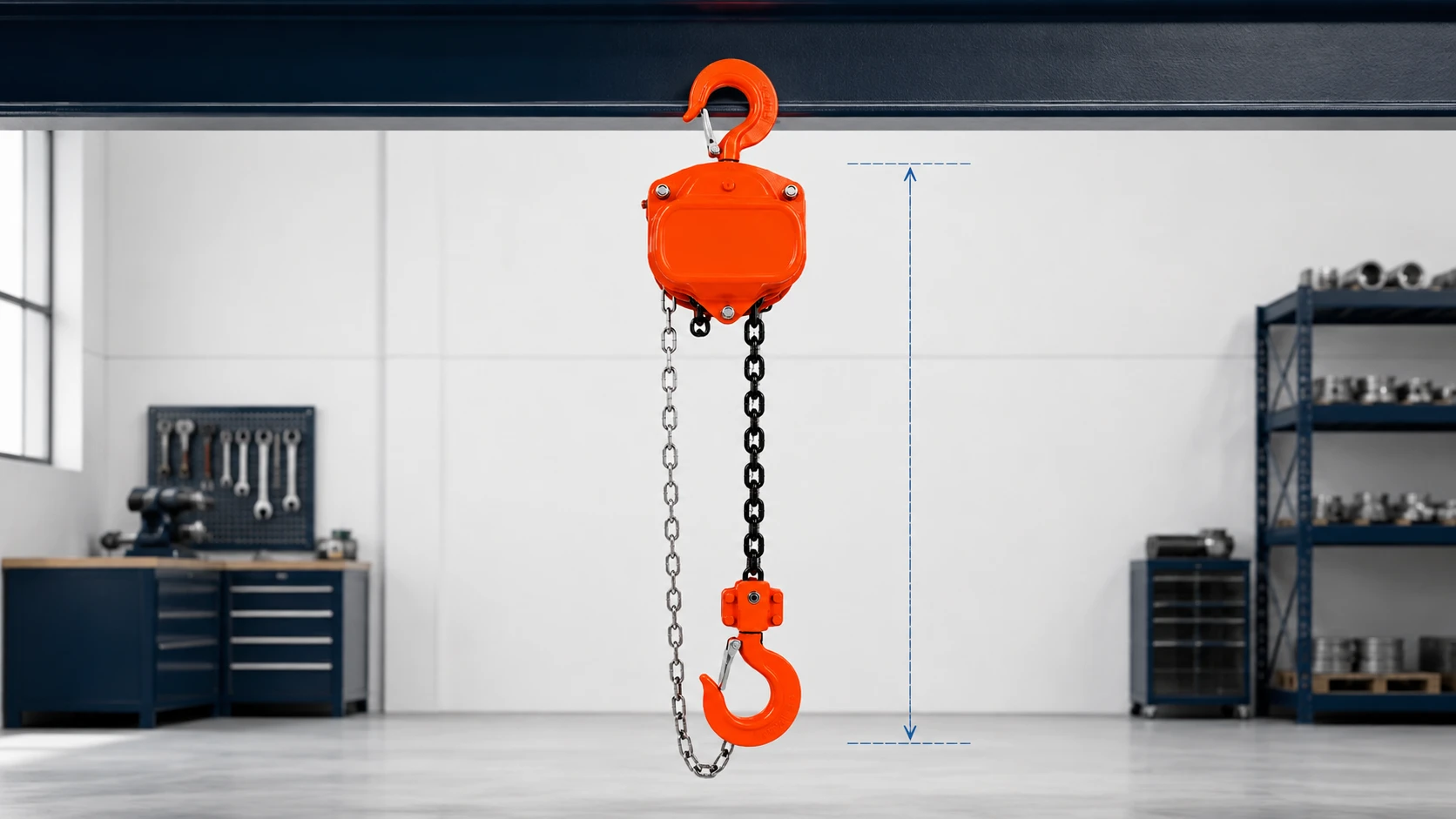
How to Choose a Manual Chain Hoist: Capacity, Lift, Headroom and Safety
Choosing a manual chain hoist involves more than matching a load weight to the tonnage shown on a nameplate. The hoist must support the complete load on the hook, provide enough vertical travel, fit within the available headroom and operate with a practical hand-chain pull for the expected frequency of use.
The suspension point, trolley, beam, rigging and below-the-hook attachments are part of the same lifting system. A chain block with sufficient rated capacity can still be unsuitable if the hook cannot rise high enough, the load is not directly below the hoist, the hand chain is difficult to reach or the supporting structure has not been verified. This guide explains how to choose a manual chain hoist and how to prepare the information a supplier needs for an accurate quotation.
Quick answer: Select a manual chain hoist whose rated capacity is at least equal to the maximum total load applied to the lower hook, including below-the-hook attachments and rigging. Then verify the required lift, available headroom, suspension or trolley arrangement, full-load hand-chain pull, operating frequency, environment, documentation and the capacity of the complete supporting system. Never treat proof-test force or an overload device as additional working capacity.
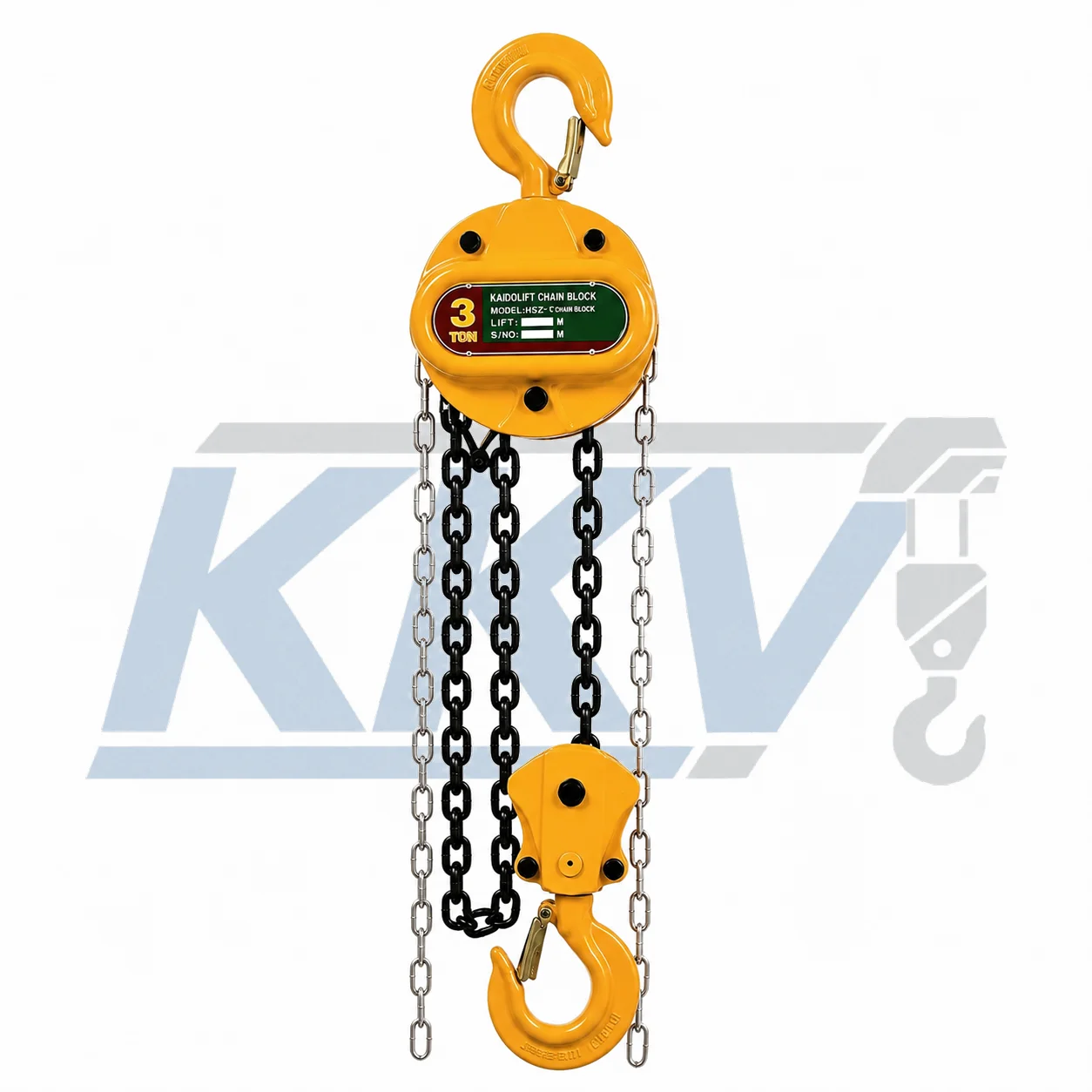
Table of contents
- What is a manual chain hoist?
- When should you choose one?
- Choose the correct hoist type before sizing
- Nine manual chain hoist selection factors
- Capacity, lift and headroom example
- Comparing KKV manual chain hoist series
- A seven-step selection process
- Manual chain hoist specification checklist
- Common selection mistakes
- Safety and pre-use inspection
- Frequently asked questions
What Is a Manual Chain Hoist?
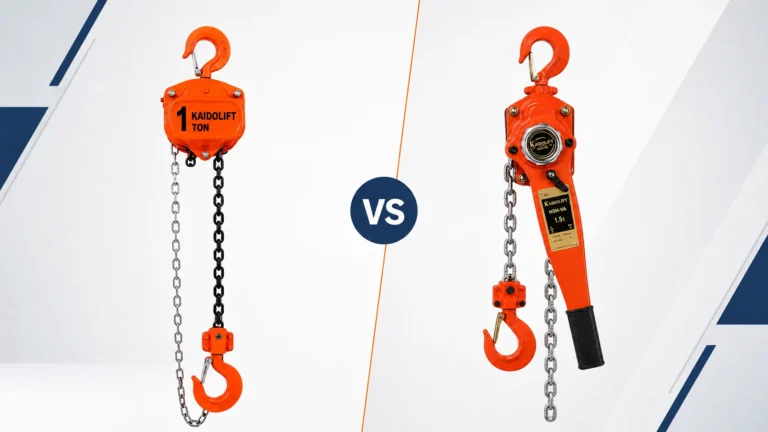
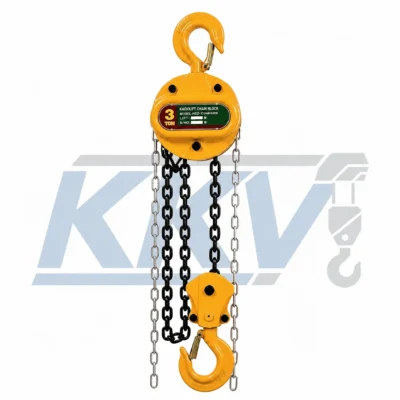
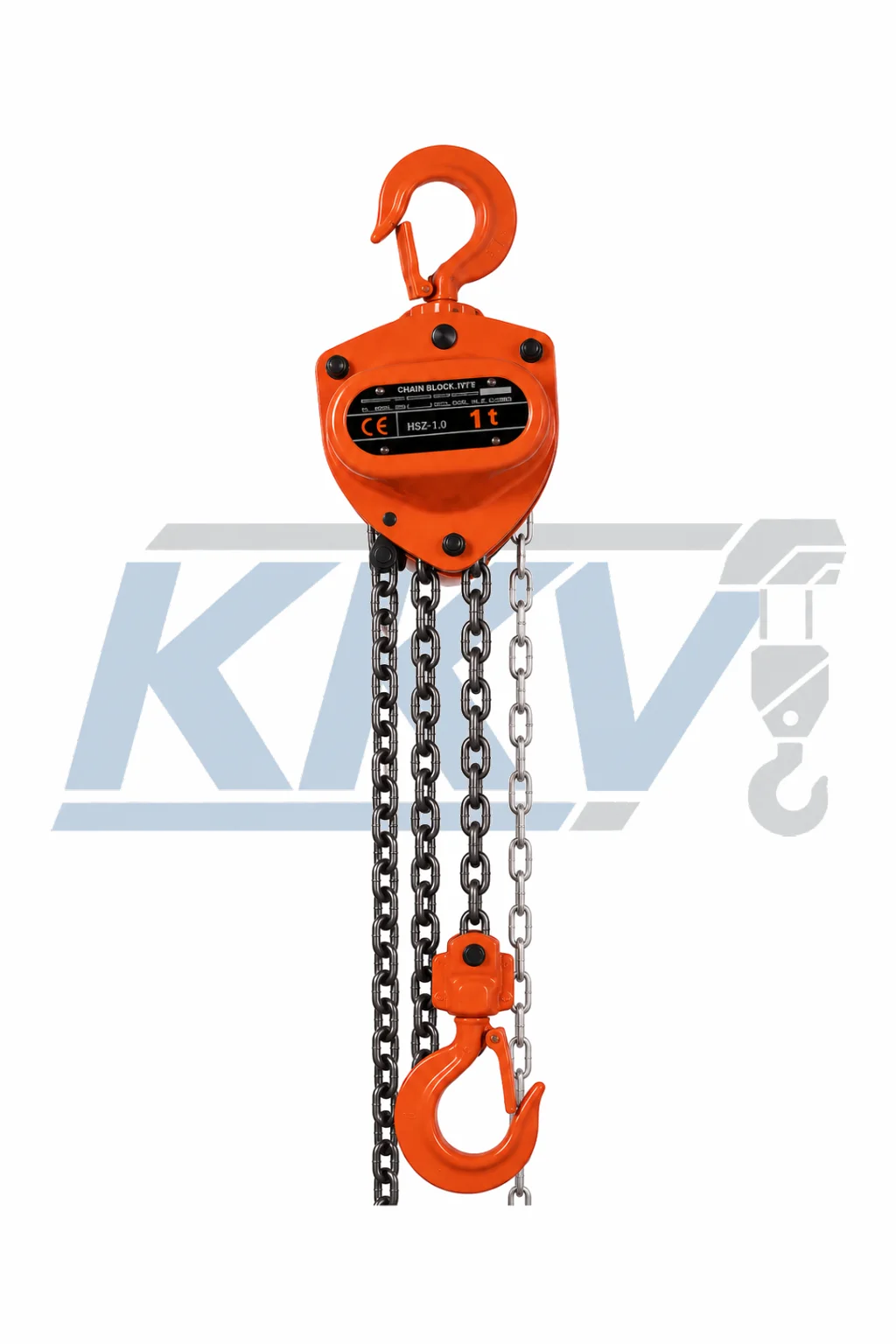
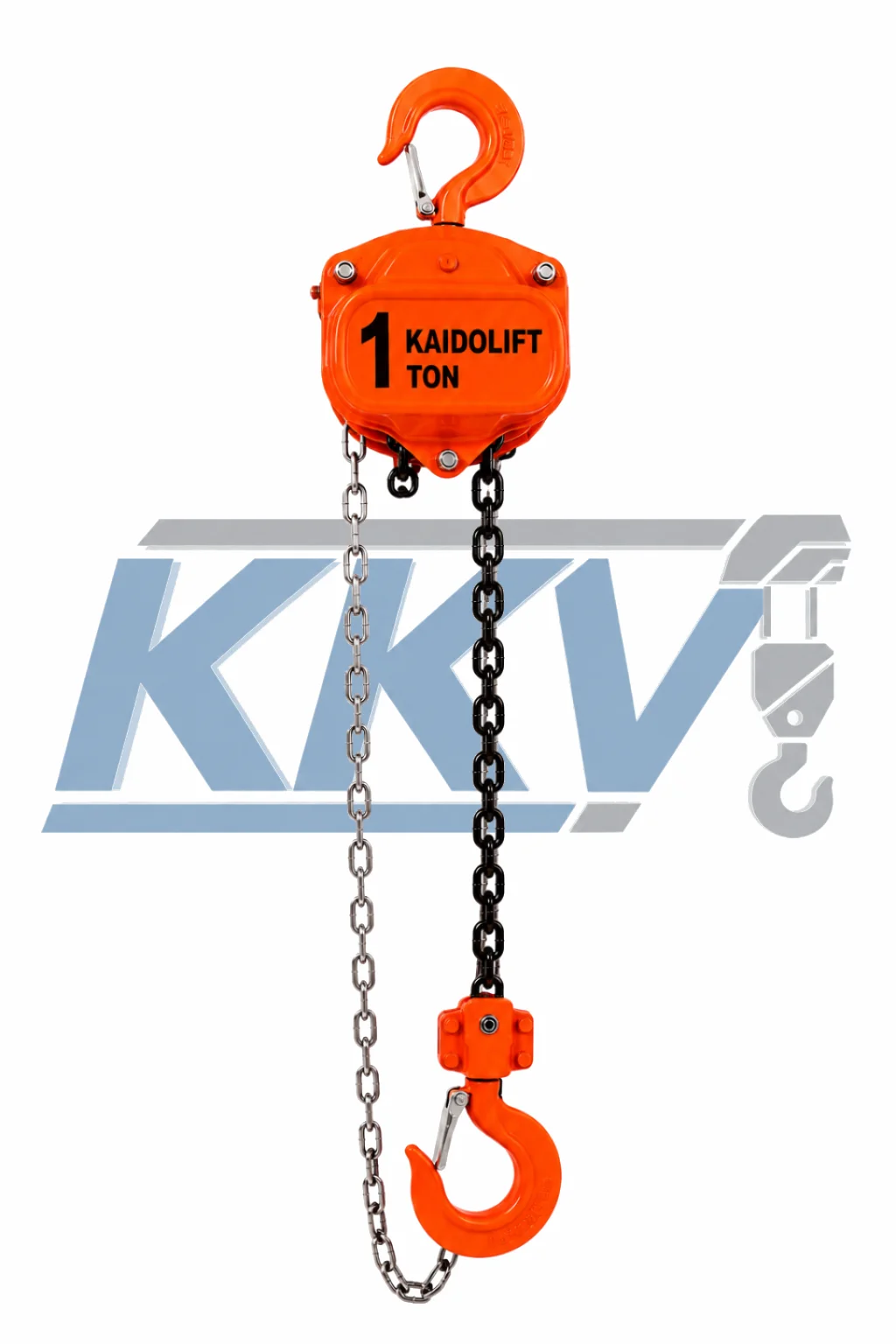
A manual chain hoist is a hand-operated device used to raise, lower and hold a freely suspended load. It is also commonly called a chain block, hand chain hoist or manual chain block.
The operator pulls an endless hand chain. This turns the hand wheel and internal gearing, which moves the calibrated load chain over the load sheave. A braking mechanism controls lowering and holds the load when the operator stops pulling, subject to the design, condition and operating limits of the exact hoist.
Because it requires no electrical or pneumatic power, a manual chain hoist can be useful at fixed workstations, construction and maintenance locations, temporary lifting points and remote sites. It is primarily selected for controlled vertical lifting with the load chain aligned beneath the hoist.
The load chain and hand chain perform different functions. The load chain carries the suspended load and must match the sheave, pitch, diameter, material and manufacturer specification. The hand chain is the operator’s input. Neither should be substituted, lengthened or repaired using unapproved material.
When Should You Choose a Manual Chain Hoist?
A manual chain hoist is often a practical starting point when:
- electricity or compressed air is unavailable;
- lifting is temporary, intermittent or relatively infrequent;
- slow, controlled positioning is more important than high lifting speed;
- the hoist must be portable between approved suspension points;
- the required lift and operating force remain practical for manual work;
- simple installation and maintenance are important;
- the initial equipment cost must remain lower than a powered system.
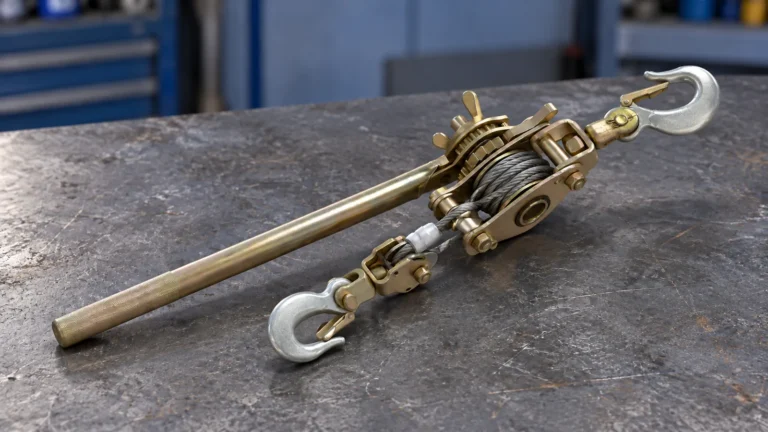
A powered hoist may be more suitable for high cycle counts, long vertical travel, repetitive production work, faster throughput or applications where manual operating effort would be excessive. A lever hoist may be more suitable for short-travel lifting, pulling or tensioning when the manufacturer permits that operating direction.
Manual does not automatically mean suitable for every location. Corrosion, temperature, dust, clean-room rules and hazardous-area classification still need to be evaluated. A product without an electric motor is not automatically spark-proof or approved for a flammable atmosphere.
Choose the Correct Hoist Type Before Sizing
The correct equipment depends on what the load must do, where the operator can stand and how frequently the movement will be repeated. Capacity alone cannot decide between these three products.
| Hoist type | Use it as the starting point when | Continue with |
|---|---|---|
| Manual chain hoist | The task is primarily intermittent vertical lifting from an approved overhead point, and the hand chain can be operated from a safe position | The nine selection factors below |
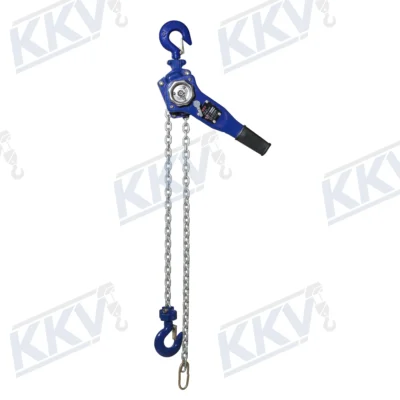
| Lever hoist | The task needs short-travel lifting, pulling or tensioning in an orientation permitted by the exact model | The dedicated manual chain hoist versus lever hoist comparison |
| Electric hoist | The task involves frequent cycles, long travel, faster production or impractical manual effort | Duty, speed, power supply, controls and environment selection |
For a deeper comparison of the two manual designs, see Manual Chain Hoist vs Lever Hoist: Key Differences and How to Choose. For repetitive powered lifting, use the electric hoist selection guide to evaluate duty cycle, starts per hour, speed and electrical supply.
How to Choose a Manual Chain Hoist: Nine Selection Factors
1. Rated Capacity and Maximum Total Load
Start with the maximum total load that will actually be applied to the lower hook. Include the payload and every below-the-hook item carried by the hoist, such as a lifting beam, magnet, grab, clamp, scale, sling, shackle or fixture.
The exact product may identify this limit as rated load, rated capacity, working load limit (WLL) or, in some documents, safe working load (SWL). Use the value and units stated on the exact hoist nameplate and manual. A metric tonne is 1,000 kg and is not the same as a US short ton, so never convert a capacity from the word “ton” alone.
The hoist’s rated capacity must not be lower than the maximum total hook load. Every separately rated trolley, clamp, pad eye, hook, sling and attachment must also meet its applicable load requirement. A qualified person must verify the beam, connections and supporting structure for the payload, rigging, hoist and trolley self-weight, together with the relevant vertical, dynamic and horizontal forces for the complete arrangement.
Do not use motor power, proof-test force, minimum breaking force or a load-limiter setting as working capacity. If a load is unknown, restrained, frozen, buried, snagged or affected by process forces, stop and obtain an engineered assessment instead of estimating the weight from appearance.
2. Required Lift and Load-Chain Length
Lift is the usable vertical travel of the lower hook between its lowest and highest working positions. It is not the building height, total chain length or distance from the floor to the beam.
Measure the actual operation:
- Identify the lowest hook-saddle position required to connect the rigging.
- Identify the highest hook position required to clear or place the load.
- Include the height of the load, slings, lifting beam and other attachments.
- Include pickup, obstacle and landing clearances.
- Confirm whether the standard lift or a manufacturer-approved custom lift is required.
Extra chain is not automatically an advantage. It adds suspended and stored weight, requires a suitable chain container where one is used and can create housekeeping problems. Specify the required load-chain lift rather than ordering an arbitrary additional length.
3. Available Headroom
Headroom is the vertical space occupied between the upper suspension and the lower-hook saddle when the hook is at its highest permitted position. Read it from the exact capacity’s dimensional drawing. For a top-hook chain block, the minimum hook distance is commonly measured between the bearing points of the upper and lower hooks. A lug-suspended or trolley-integrated model may use a different reference, such as the beam running surface.
Headroom determines how high the load can ultimately rise. A hoist can provide enough lift but still fail the application because its body, upper hook, lower block or multiple chain falls consume too much space.
Record the suspension elevation and highest required hook position. Check the exact dimension for the selected capacity because body size, hook block and number of chain falls can change within one series. If ordinary hook suspension does not fit, use only a low-headroom trolley or integrated arrangement whose compatibility is confirmed by the manufacturer; do not create an improvised hoist-and-trolley combination.
4. Suspension and Horizontal Travel
Decide whether the load only moves vertically at one fixed point or must also travel horizontally along a beam.
- Top-hook suspension: useful at an approved fixed point and for portable applications between compatible supports.
- Lug or integrated suspension: may reduce overall dimensions in a matched trolley arrangement.
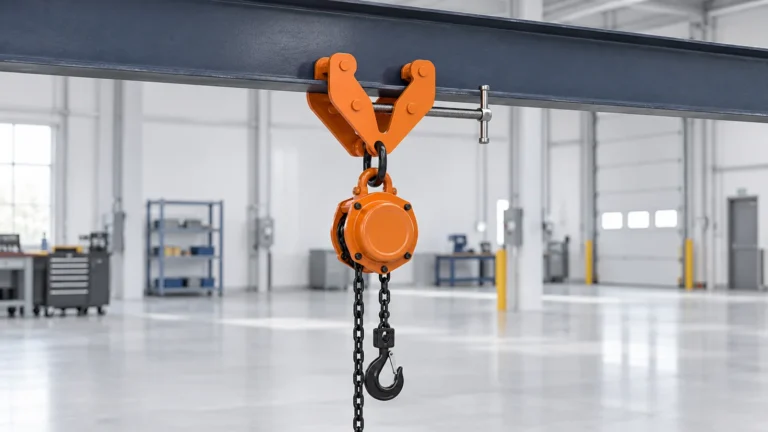
- Plain trolley: travels by an approved pushing method specified for the trolley and application.
- Geared trolley: travels by a separate hand-chain-driven wheel mechanism.
For a trolley-mounted hoist, provide the beam profile, flange width, flange thickness, tread shape, runway length, minimum curve radius, end approach and available side clearance. A trolley that fits the nominal flange width is not automatically suitable for the beam geometry, curve or load.
The hoist should be positioned so the load chain forms a vertical line before lifting. Do not side pull to drag a load into position. Move the trolley, suspension point or load so the lifting line is correct.
5. Hand-Chain Pull and Operator Position
Hand-chain pull is the manual force required to operate the hoist under a stated load condition. Compare the full-load chain-pull value for the exact model and capacity. Two hoists with the same rated capacity can require different operating effort.
Higher-capacity models may use multiple load-chain falls. The falls change load sharing and the amount of chain movement, but required hand-chain pull also depends on gearing, mechanical efficiency and the exact design. Do not infer operating effort from capacity or number of falls alone. Compare the published full-load hand-chain pull for the exact model and capacity. The lower block must not be twisted between the falls.
Specify the operator’s floor or platform level and the desired hand-chain drop separately from load-chain lift. The hand-chain loop must be reachable without placing the operator beneath the load or forcing an unstable working posture.
6. Operating Frequency and Manual Effort
Describe how often the hoist will operate during the busiest realistic period. Provide lifts per hour, operating hours per day, typical load, maximum load and average vertical travel. Also consider the time needed to move the hand chain and position the trolley.
Repeated long lifts near rated capacity can be slow and physically demanding even when the hoist is mechanically capable of the load. If the task involves frequent cycles, long travel or sustained production, compare an electric hoist before ordering. Equipment price should be evaluated together with labor, cycle time and operator fatigue.
7. Load Chain, Hooks and Protective Options
Compare only features supported by the exact product documentation. Items to confirm can include:
- load-chain diameter, pitch, material and number of falls;
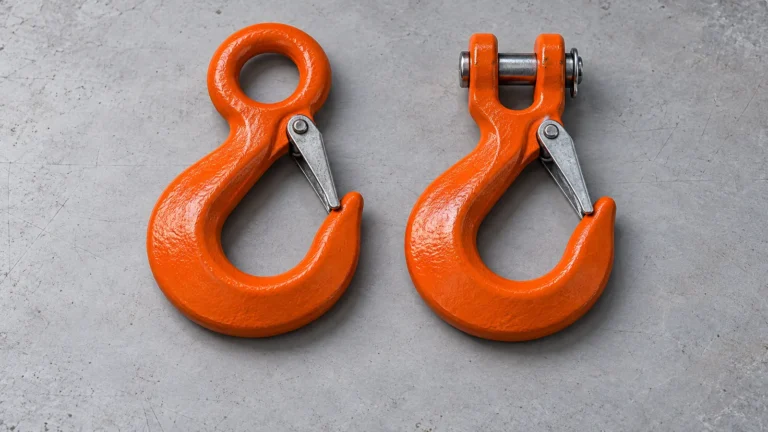
- upper and lower hook construction, rotation and latches;
- brake and pawl arrangement;
- bearing or bushing design;
- hand-chain material and finish;
- overload or load-limiting option;
- chain-container availability for longer lifts;
- replacement parts and maintenance instructions.
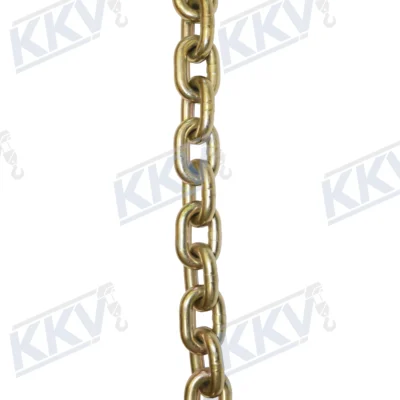
Some hoists use heat-treated alloy load chain that may be described by a strength grade, but hoist load chain is calibrated to match the load sheave’s pitch and pocket geometry. General lifting-sling chain is not an interchangeable replacement, even when its diameter appears identical. The Grade 80 lifting chain guide explains sling-chain WLL and inspection considerations. To change a hoist’s lift, use a complete manufacturer-approved load chain installed and tested under authorized instructions; do not splice chain or add links.
A load limiter can add overload-control functionality, but it does not increase rated capacity, determine an unknown load weight or replace correct selection and inspection. It is not a scale, and deliberately making it slip is not an acceptable way to estimate a load.
8. Operating Environment
Tell the supplier if the hoist will be exposed to:
- rain, condensation, humidity or washdown;
- marine or salt-laden atmosphere;
- corrosive chemicals or fumes;
- very high or low temperature;
- heavy dust or abrasive particles;
- food, pharmaceutical or clean-room requirements;
- flammable gas, vapor or combustible dust;
- outdoor storage between uses.
These conditions may require special materials, finish, lubrication, inspection intervals, storage procedures or an application-specific product. Do not assume a standard indoor chain block is acceptable merely because it can be operated manually.
9. Documentation, Compliance and Service Support
Document requirements depend on the destination country, workplace and project specification. Ask what is available for the exact model and configuration rather than relying on a general statement covering a product family.
The RFQ may require:
- model, serial identification and rated-capacity nameplate;
- operation, inspection and maintenance manual;
- test certificate or inspection record;
- declaration or certificate applicable to the supplied configuration;
- dimensional drawing and technical data;
- spare-parts list and recommended service items;
- packing dimensions, net weight and shipping information;
- load-chain or critical-component traceability where required.
If a tender names CE marking, EN 13157 or another standard or regulation, state the exact requirement in the RFQ and confirm the document supplied for that specific model, capacity and configuration.
Capacity, Lift and Headroom Example
Consider a machine weighing 1,750 kg. The lifting fixture, slings and shackles carried by the lower hook weigh another 120 kg:
Maximum known load on the hook = 1,750 kg + 120 kg = 1,870 kg
A 1,500 kg model is unsuitable. A 2,000 kg (2 metric-tonne) model may be a candidate because its rated capacity is not below the known total, but the selection is not complete.
Assume the lower hook must connect at 0.5 m above the floor and reach 4.2 m above the floor. The minimum required hook travel is 3.7 m before pickup and landing clearances are considered. If the standard model provides only 3 m of lift, it will not complete the task.
Now assume the suspension point is 5.0 m above the floor and the highest required hook saddle is 4.2 m. Only 0.8 m of vertical space is available for the upper hook, hoist body, chain falls and lower block. The selected model’s minimum hook distance must fit within that space.
Finally, verify the hand-chain operating height. A 3 m hand-chain drop may be impractical if the operator stands on a platform or if the suspension point is much higher. Capacity, lift, headroom and hand-chain drop solve four different questions and must be specified separately.
Comparing KKV Manual Chain Hoist Series
The KKV manual chain hoist category contains several product series. Use the table only as a navigation and quotation starting point. It intentionally does not assign universal capacity ranges or performance claims: final values must come from the current product data and approved documents for the exact capacity, lift and configuration.
| Series | Exact values to compare | Application information to provide |
|---|---|---|
| HSZ-T | Rated capacity, standard or custom lift, minimum hook distance, full-load hand-chain pull, number of falls and net weight | Total hook load, lift, headroom, suspension and operating frequency |
| HSZ-A | Rated capacity, dimensions, hand-chain pull, chain specification, options and available documents | Load details, operator level, environment and destination requirements |
| HSZ-C | Rated capacity, lift, dimensions, number of falls, operating force and configuration | Pickup and landing positions, headroom and support arrangement |
| HSZ | Model code, capacity, lift, hook distance, hand-chain drop and net weight | Required travel, operating frequency and suspension point |
| HSZ-CB | Rated capacity, dimensional drawing, chain data, operating force, options and documents | Complete hook load, work environment and required records |
| HSZ-KII / model designation to confirm | Confirm the exact series name first, then compare capacity, dimensions, chain pull and documents | Quotation description, application data and destination |
| HS-VL | Rated capacity, lift, headroom, chain falls, operating force and available options | Load, required lift, operator position and environmental conditions |
Terms such as “heavy duty” are not complete selection criteria. They do not replace an exact rated capacity, operating-force value, dimensional drawing or documented service conditions. Published information can also change, so resolve any difference between a website summary, quotation and approved drawing before ordering.
A Seven-Step Selection Process
Step 1: Describe the Lifting Task
Record what will be lifted, its maximum weight, dimensions and center of gravity. Identify the pickup and landing positions and whether horizontal beam travel is required. Note whether the hoist will be permanently installed or moved between approved points.
Step 2: Calculate the Maximum Total Load
Add the maximum payload to every accessory carried by the lower hook. Verify that the load is known, stable, free to lift and not affected by an external process force. Select only from rated capacities that cover the resulting total.
Step 3: Measure Lift and Headroom Separately
Measure the required hook travel and the available suspension-to-hook distance at the highest position. Include load height, rigging height and clearances. Do not combine these into one vague “lifting height.”
Step 4: Define Suspension and Horizontal Travel
Choose top hook, lug, plain trolley or geared trolley. For beam travel, provide the profile, flange dimensions, tread, curve information, runway length, end approach and support assessment.
Step 5: Check Operating Effort and Frequency
Compare full-load hand-chain pull, hand-chain drop and number of chain falls. State lifts per hour, travel per lift, operating hours and typical load. Consider powered lifting if the manual cycle is impractical.
Step 6: Define Environment and Documentation
Describe moisture, corrosion, dust, temperature, cleanliness and any hazardous-area classification. List the standards, certificates, manuals, drawings and records required at the destination.
Step 7: Review the Final Configuration
Before issuing the purchase order, compare the quotation with the application data. Confirm model code, rated capacity, lift, hand-chain drop, minimum hook distance, full-load chain pull, net weight, chain falls, optional limiter, trolley interface, environment and documents.
Manual Chain Hoist Specification Checklist
| RFQ field | Example format |
|---|---|
| Maximum payload | 1,750 kg |
| Below-the-hook weight | 120 kg for fixture, slings and shackles |
| Maximum total hook load | 1,870 kg; supplier to confirm standard capacity |
| Required lift | 4 m usable vertical hook travel |
| Available headroom | Suspension point to highest hook saddle: ___ mm |
| Suspension | Top hook, plain trolley or geared trolley |
| Beam information | Profile, flange width/thickness, tread and curve radius |
| Hand-chain operating height | Operator level to hand-chain loop: ___ m |
| Operating frequency | ___ lifts/hour; ___ hours/day; typical load ___ kg |
| Environment | Indoor dry, outdoor, marine, corrosive or other |
| Required documents | Manual, drawing, test record, declaration or certificate |
| Destination | Country, port, delivery terms and required language |
Replace the examples with measured project information. If a value is unknown, describe the application and ask the supplier to review it rather than entering a guessed specification.
Common Selection Mistakes
Choosing Capacity from Payload Alone
Rigging and below-the-hook equipment also load the lower hook. Excluding them can leave insufficient rated capacity.
Treating Test Load as Working Capacity
A test-load figure describes a controlled test. It is not permission to lift above rated capacity during normal service.
Confusing Lift with Headroom
Lift describes lower-hook travel. Headroom describes the space consumed above the highest hook position. Both require separate measurements.
Ignoring the Supporting Structure
A correctly rated hoist is not a correctly rated lifting system. The pad eye, clamp, trolley, beam, connections and building structure must be verified for the complete loading condition.
Side Pulling with a Chain Block
A typical hand chain hoist is intended to lift with the load chain vertically aligned. Side pulling can damage components and cause uncontrolled movement. Reposition the hoist, trolley or load.
Twisting a Multi-Fall Lower Block
On multi-fall models, a twisted lower block can cause crossed or incorrectly routed chain. Check that every chain fall is straight before applying load.
Replacing or Repairing Load Chain Without Authorization
Do not weld, splice, heat-treat or install unapproved chain. Replacement chain must match the hoist and be installed, inspected and tested according to authorized instructions.
Assuming a Load Limiter Makes Overloading Acceptable
A limiter is a protective function, not extra capacity or a weighing device. Determine the load and select the correct hoist before lifting.
Buying on Price Without Comparing Operating Effort
Two hoists with the same rated capacity may differ in headroom, chain pull, net weight, number of falls, documentation and service support. Compare the complete application and lifecycle needs.
Manual Chain Hoist Safety and Pre-Use Inspection
Selection is only the first step. Installation, inspection, operation and maintenance must follow the manufacturer’s manual and the requirements applicable at the worksite. A pre-use observation does not replace the scheduled detailed inspections required for the equipment and service conditions.
Typical pre-use observations include:
- model, rated-capacity marking and identification are legible;
- upper support, suspension, trolley and fasteners appear secure and suitable;
- load chain is seated correctly and free from twists, kinks, visible deformation, excessive wear or corrosion;
- multi-fall chain and lower block are not twisted;
- hand chain is correctly routed and moves without binding;
- upper and lower hooks show no obvious cracking, abnormal opening, twist or damage;
- hook latches, where fitted, are present and operate correctly; the latch is not load-bearing, and the rigging must bear in the hook bowl rather than on the tip or latch;
- the hoist raises, lowers and holds during the checks specified by its manual;
- the load is directly below the hoist and the intended path is clear;
- personnel are clear of the suspended load and load path;
- required inspection and maintenance records are current.
Stop using the hoist if operation feels abnormal, the brake slips, the chain jumps or binds, a hook is damaged, identification is missing or any load-bearing condition is uncertain. Isolate it and have it examined by an authorized or qualified person. Chain wear and elongation, hook opening and hook twist must be measured against the exact manufacturer’s removal limits; appearance alone is not enough.
Do not exceed rated capacity, shock load, side pull, use the load chain as a sling, lift people, carry a load over people or leave a suspended load unattended. Do not pull a trolley with the hoist’s hand chain or load chain, and do not use the hoist as permanent support. Inspection intervals and removal criteria must come from the manufacturer, service conditions and applicable workplace requirements; do not invent a universal annual interval or chain-discard dimension.
Frequently Asked Questions
What capacity chain hoist do I need for a 2,000 kg load?
A 2,000 kg (2 metric-tonne) hoist can only be considered if the maximum total load applied to the lower hook, including fixtures and rigging, does not exceed 2,000 kg. The support, trolley, attachments and slings must also be suitable. If the total is uncertain or exceeds 2,000 kg, do not use that hoist.
How much lift do I need?
Measure the usable travel between the lowest pickup hook position and highest required hook position. Include the load, rigging and required clearances. Confirm hand-chain drop separately.
Why is headroom important?
Headroom determines how high the lower hook can rise beneath the support. If the minimum hook distance is too large, the load may not reach its required height even when there is enough load chain.
How do I choose the hand-chain length?
State the suspension elevation and the floor or platform level from which the operator will work. The loop must be reachable from a safe position without excessive loose chain. Confirm the supplier’s method for specifying hand-chain drop.
Can I install a manual chain hoist on a trolley?
Yes, when the hoist, trolley, beam and attachment method are mutually compatible and suitably rated. Confirm flange dimensions, wheel profile, capacity, curve radius, end approach and suspension interface for the exact combination.
Is an optional load limiter worth specifying?
It may be useful when a project specification requests additional overload-control functionality. It does not increase working capacity or replace load calculation, training and inspection.
Can I use a standard chain block outdoors?
Only when the manufacturer confirms suitability for the expected rain, humidity, salt, temperature, corrosion and storage conditions. The required finish, lubrication and inspection may differ from indoor service.
Can ordinary Grade 80 chain replace the hoist load chain?
No. Hoist load chain is calibrated to the load sheave and specified for the exact mechanism. Use only manufacturer-approved replacement chain installed and tested according to authorized instructions.
Can I leave a load suspended on the brake?
Do not leave a suspended load unattended. Complete the movement, place the load in a stable supported condition and follow the manufacturer’s operating instructions and site lifting procedure.
How often should a manual chain hoist be inspected?
Perform pre-use observations and scheduled inspections at the intervals required by the manufacturer, service conditions and applicable regulations. Severe or unusual service may require shorter intervals. Keep the required inspection and maintenance records.
Choose the Hoist from the Application, Not Just the Tonnage
The correct manual chain hoist fits the complete lifting task: maximum total hook load, lift, headroom, suspension, operating force, frequency, environment and required documentation. Providing this information before ordering reduces specification errors and makes supplier comparison more meaningful.
KKV can compare suitable models from its manual chain hoist range after reviewing the payload, rigging weight, required lift, available headroom, suspension method, beam information, operating frequency, environment, destination and document requirements.
Need help selecting a manual chain hoist? Email sales@kkvhoist.com with the completed RFQ information above and the required quantity.
Safety note: This article is a general product-selection guide, not a lifting plan or a substitute for the manufacturer’s instructions, site risk assessment, qualified engineering review, inspection or local requirements. Never exceed rated capacity, stand beneath a suspended load or use a material-handling hoist to lift people.