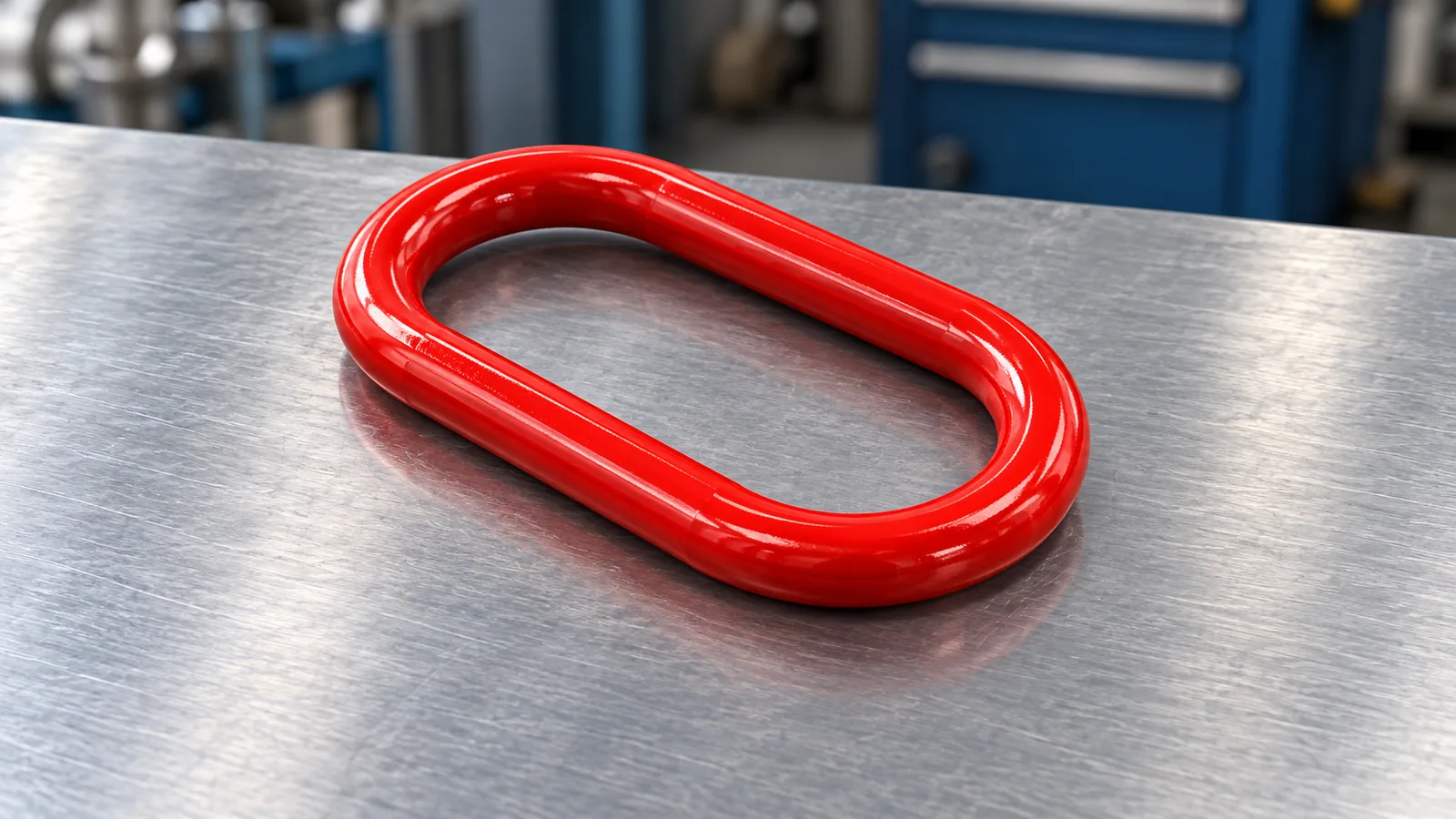
How to Choose a Master Link: WLL, Crane Hook Fit and Sling Assembly Compatibility
A master link can have sufficient marked capacity and still be the wrong upper connection for a chain sling. It may not seat properly in the crane hook, may leave insufficient room for the specified connectors, or may belong to a different component system from the chain legs being assembled.
Choosing the right master link therefore involves two linked decisions: whether the component is suitable for the rated sling configuration, and whether its geometry works with the actual lifting equipment. A larger opening does not automatically mean a higher Working Load Limit (WLL), and a higher component WLL does not upgrade the complete sling.
This guide focuses on the upper master link and its interfaces. It does not repeat the full chain-selection process or provide an alternative sling-angle calculator. The aim is to help a buyer obtain the right component drawing, compatibility confirmation and assembly documentation before ordering.
Quick answer: Select a master link as part of a defined sling assembly. Confirm its documented WLL and permitted application, the chain size and component system, the approved number of legs and connectors, and its fit in the actual crane hook. Check internal dimensions, bar diameter and bearing geometry together. For multi-leg slings, obtain the manufacturer’s configuration-specific rating; do not add leg capacities or assume every plain oval link accepts four legs.
Table of contents
- Identify the master link and its connection role
- Separate component WLL from complete sling WLL
- Check three stages of crane-hook fit
- Read the dimensions that control compatibility
- Choose the approved leg and connector arrangement
- Match the component system, not just the grade
- Understand what KKV currently publishes
- Work through a hook-fit purchasing example
- Prepare the enquiry and acceptance record
- Frequently asked questions
- Primary references and application limits
Identify the Master Link and Its Connection Role
The master link is the upper connection through which a sling assembly is suspended from a compatible crane hook or other approved attachment. Below it, the chain legs may connect through coupling links, intermediate links or an integrated connection system. The complete arrangement depends on the manufacturer’s design.
A master link assembly commonly adds intermediate or sub-links to an upper link. Those additional links can provide the specified connection arrangement for several sling legs. They are not independent extra lifting points that a user may rearrange without reviewing the assembly.
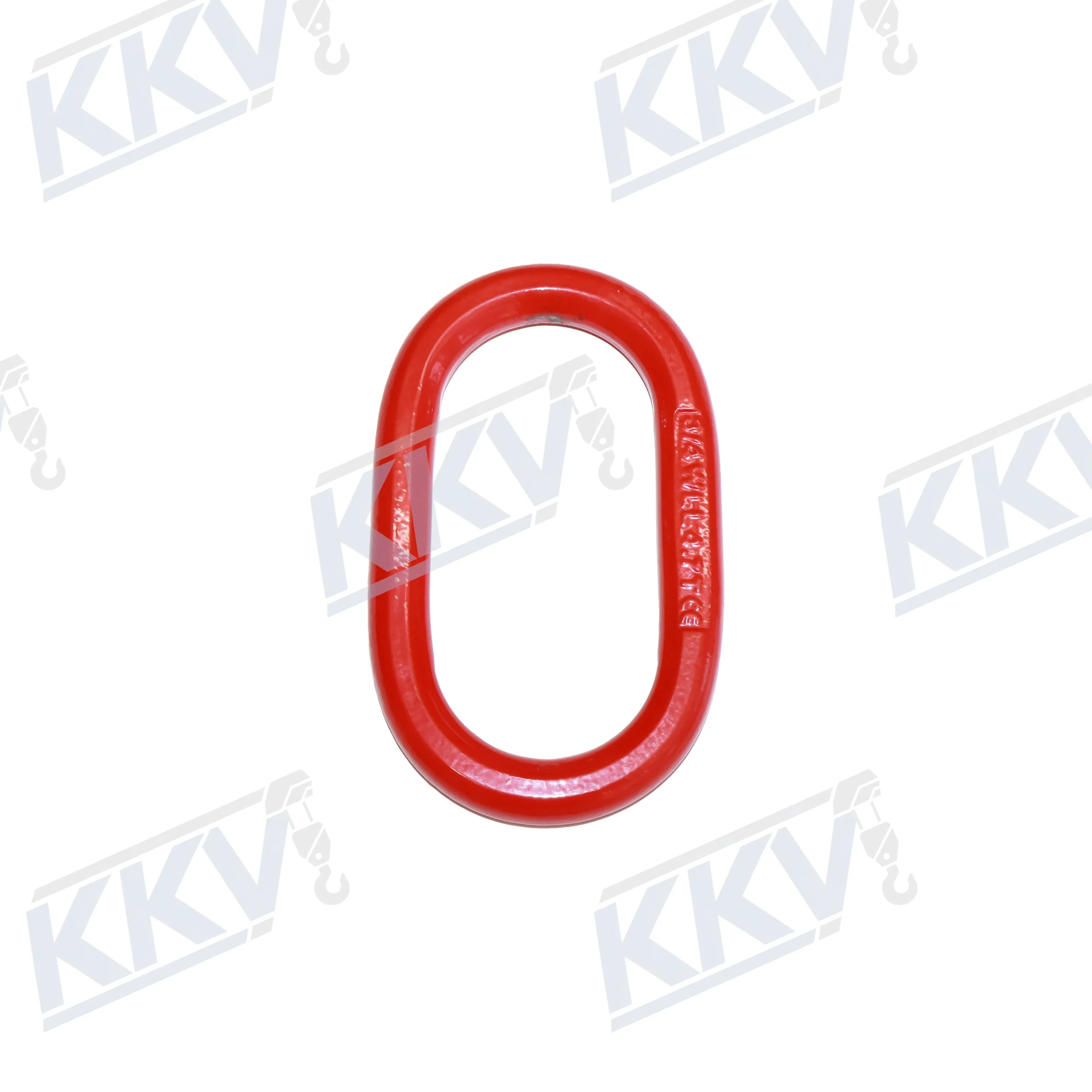
Distinguish this upper connection from a chain coupling link, an individual chain link and a shackle. Similar-looking pieces serve different functions. Ask for the manufacturer’s exact part number and drawing rather than ordering an unspecified red oval ring.
Separate Component WLL from Complete Sling WLL
The component rating answers a question about the identified master link under its stated loading conditions. The sling rating answers a different question: what the complete identified assembly may lift in its specified configuration and service conditions.
Neither value should be treated as an unrestricted tonnage. The rating must be read with the applicable drawing, instructions and configuration notes. A component table may also distinguish between sling systems or applications. For example, Crosby’s A-342 catalogue lists component WLL alongside chain-size compatibility and application notes. Its values are not a rating table for KKV products.
For a new sling, obtain the assembly’s WLL for the required number of legs, hitch and angle range. For a replacement master link, have the responsible assembler confirm compatibility and whether the replacement changes the identification, examination or documentation required for that sling.
A higher-rated upper link does not strengthen undersized chain legs or unsuitable end fittings. Equally, a suitable component cannot make an unassessed asymmetric lifting arrangement acceptable. Do not estimate the complete capacity by adding the ratings of the chain legs or the sub-links.
If your immediate question concerns leg force rather than connection fit, review the geometry separately with the responsible sling assembler. An angle calculation can help explain force, but it does not produce an approved component selection or a certified assembly rating.
Check Three Stages of Crane-Hook Fit
1. Can the link enter the hook correctly?
Check the hook opening, latch arrangement and proposed method of introducing the link. A link that cannot pass into the hook without forcing or modifying either component is not a usable match. Do not spread a link, grind its bar or defeat a latch to make the connection possible.
Entry clearance is only the first stage. A link can pass the hook tip yet become trapped before reaching its intended bearing position.
2. Can it seat at the intended bearing area?
Obtain the hook profile as well as the link drawing. Compare the internal opening with the hook’s width and bearing shape at the actual seating location. Check that the connection does not bridge an unsuitable surface, bear on the hook tip or load the latch.
RUD’s sling-chain instructions require its master links to remain freely movable in the bowl of the crane hook. That principle explains why a photograph of a link hanging from a hook is not sufficient evidence of fit. The actual drawing and loading arrangement still need review.
3. Can it align without binding?
Consider the positions needed for pickup, load alignment and landing. Check the permitted movement of the master link and its lower connections, not just a straight-on photograph of an unloaded assembly. Crowded connectors may stop the link aligning as intended.
Ask the link manufacturer to identify the permitted loading direction and any restrictions on the proposed arrangement. The pewag component instructions, for example, give longitudinal-loading and assembly rules for their specified link types. Those instructions do not authorize a side-load reduction factor or other numerical allowance for KKV products. An uncertain loading direction needs manufacturer review.
Read the Dimensions That Control Compatibility
A nominal size on a sales list is not a complete dimensional specification. Request a current drawing with units and identify what each letter refers to; different manufacturers may use different letters for the same feature.
| Dimension or feature | What to compare | Purchasing question |
|---|---|---|
| Internal width | Crane-hook width and required connection clearance at the bearing position | Can the link seat and move as specified, not merely enter the hook? |
| Internal length | Hook profile, lower connectors and available space within the link | Is there room for the complete approved arrangement? |
| Bar diameter or cross-section | Hook entry, bearing geometry and connector opening | Is the thickness compatible with both interfaces? |
| Curved-end geometry | Actual hook-bearing shape and lower connection location | Are contact and alignment suitable for the approved loading direction? |
| Overall dimensions | Headroom, adjacent equipment and handling space | Will the whole assembly fit the installation? |
| Sublink or connector dimensions | Number and size of the specified lower components | Can every approved connection articulate without crowding? |
| Effective assembly length | The defined bearing-point references used by the assembler | Does the proposed replacement alter sling reach or geometry? |
Do not substitute overall width for clear internal width. Similarly, the bar diameter is not necessarily the chain size for which the link is approved. Record those as separate fields.
For reference, RUD’s master-link selection page treats hook size, load and number of legs as separate selection criteria. Its clearance guidance belongs to its product system; this guide does not convert it into a universal KKV fit allowance. If a supplier quotes a clearance rule, ask which drawing, instruction and hook measurement it refers to.
Choose the Approved Leg and Connector Arrangement
Do not decide leg count solely from the shape of the upper link. Some systems use a master link with sub-links for three- or four-leg assemblies; others permit particular connectors to provide that arrangement from a different upper-link design.
The Crosby/Gunnebo master-link catalogue illustrates this distinction. Its MF/MFH arrangements permit different leg counts only with the specified connecting components, while MT assemblies use sub-links for their stated multi-leg applications. These are approved combinations within that system, not a universal rule for all oval links.
| Intended arrangement | What must be confirmed | What not to assume |
|---|---|---|
| Single-leg sling | Correct upper-link, connector and chain-size combination | Any link with an adequate marked tonnage is compatible |
| Two-leg sling | Approved two-leg arrangement, connector fit and applicable angle rating | Two single-leg ratings can simply be added |
| Three- or four-leg sling | Specified master-link assembly or approved connector topology, leg count and rating conditions | Four connectors that physically fit create an approved four-leg sling |
If two complete slings are proposed on one crane hook, treat that as an arrangement requiring review, not as an automatic substitute for a correctly specified multi-leg sling. Hook crowding, seating and load sharing need assessment together.
Do not add a shackle, extra ring or chain link simply to obtain more room. A revised connection changes the assembly that must be checked and documented.
Match the Component System, Not Just the Grade
Matching colour or a grade marking is insufficient. Confirm the chain’s nominal size and system, the master-link model, the connecting components and any specified pins or retaining parts. A connector that closes around the bar is not automatically compatible with the approved sling arrangement.
The pewag AW product page separately specifies its intended sling arrangements, chain-size relationships and hook compatibility. Its documented three- and four-leg arrangement requires the corresponding transition-link assembly. This shows why a component name alone cannot settle compatibility.
Do not assume that mixed manufacturers or mixed grades are approved. The RUD manual, for example, prohibits mixing manufacturers but expressly allows certain combinations within its own Grade 80/VIP system under stated conditions and with the appropriate lower rating. That exception is not general permission to combine arbitrary Grade 80 and Grade 100 parts.
For KKV enquiries, request written confirmation of the exact combination proposed. If replacing part of an existing third-party sling, identify its manufacturer and records before asking whether a KKV component can be used. Do not substitute a supposedly equivalent item based only on its outside dimensions.
Understand What KKV Currently Publishes
The current KKV Master Link product page identifies the product as an upper connection for chain sling assemblies and asks buyers to consider chain size, configuration, WLL, hook fit and sling angle.
It does not currently publish a numerical WLL-and-dimension table for identifiable master-link models. The specification button is not evidence that a complete data sheet is available. Obtain the current technical offer before selecting a component.
| Information | Public-page position at the time of checking | What to request |
|---|---|---|
| Connection role | Upper master link for a chain sling assembly | Exact supplied model and arrangement |
| Permitted leg configuration | General single- and multi-leg discussion, not a model-specific compatibility table | Approved leg count, chain size and connectors |
| Component WLL and rating conditions | No numerical model table published | Identified rating with its application notes |
| Link and interface dimensions | No dimensioned model table published | Drawing showing internal dimensions, bar section and connector details |
| Material, standard and traceability | No complete model-specific evidence published | Applicable declaration, test/traceability records and identification details |
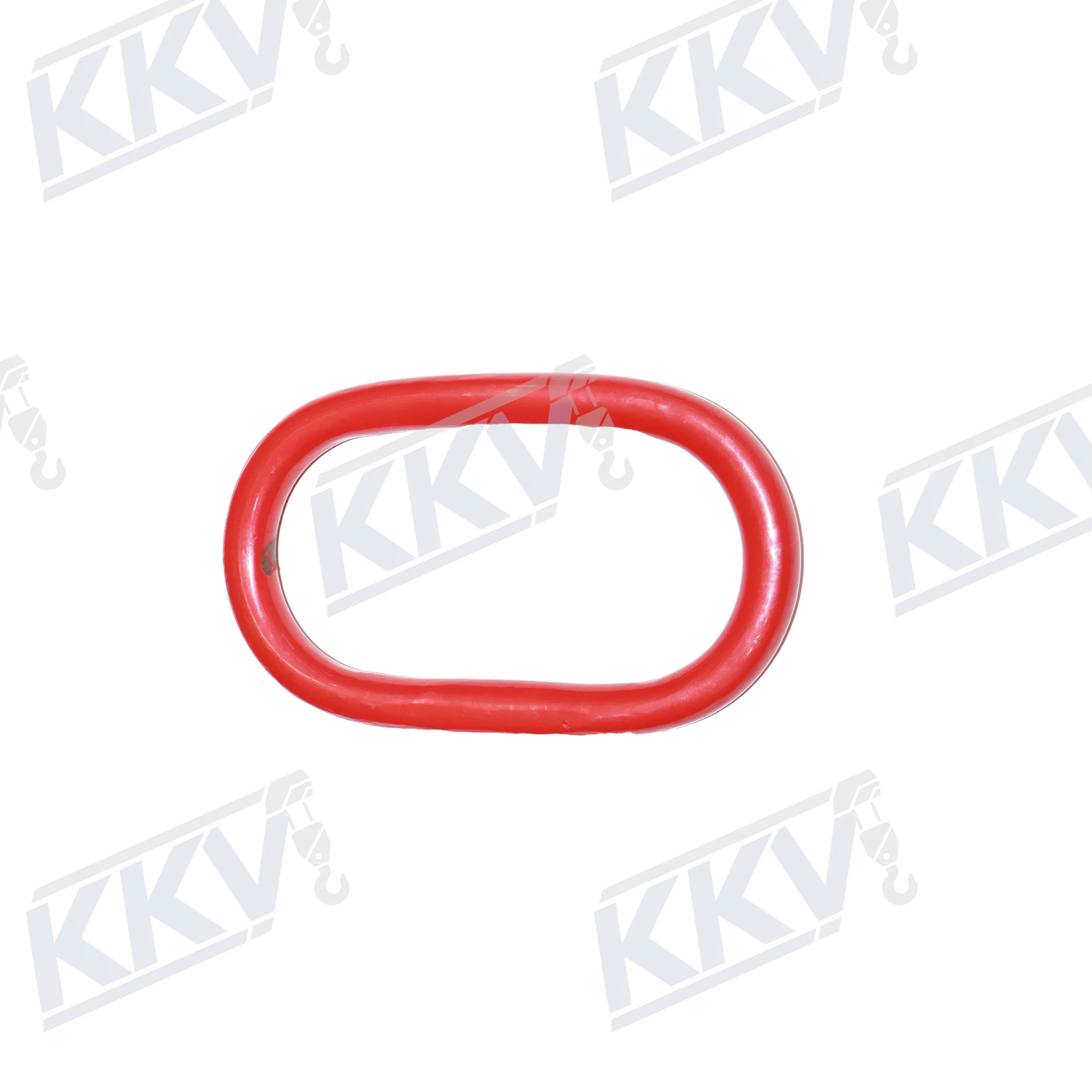
Do not infer a capacity range, grade, standard or certification from the red finish or from markings visible in a catalogue image. Ask the supplier to identify what the markings mean for the exact component supplied and how they relate to its documentation.
Work Through a Hook-Fit Purchasing Example
Suppose an existing chain sling has adequate documented capacity for a planned task, but a different crane has a wider hook. The purchasing problem is not necessarily a need for more sling capacity: it may be a need for a compatible upper connection.
Assume the hook drawing identifies a relevant bearing width of 72 mm, and one proposed link has a clear internal width of 65 mm. Those dimensions show an incompatibility at that location; an adequate WLL does not resolve it. The buyer should reject that fit proposal rather than force the link onto the hook.
A second candidate has a 95 mm internal width. That larger opening removes the obvious 65-versus-72 conflict, but it does not prove compatibility. The hook profile, entry path, bar diameter, seating, free movement, lower connectors and approved rating still need checking. The extra width is not a universal clearance allowance or acceptance criterion.
If the wider candidate belongs to a different component system, the assembler must resolve that issue too. Replacing the master link can also change effective reach and the relationship between the upper connection and the legs. The final answer should identify an approved replacement and any required updated records, not simply the largest ring available.
These dimensions are hypothetical, not KKV specifications or a design formula. For a real enquiry, provide both manufacturers’ drawings and the existing sling identification.
Prepare the Enquiry and Acceptance Record
A useful enquiry includes the sling and the crane hook, not only the desired master-link WLL. Send clear drawings and identification photographs with the following information.
| Enquiry field | Useful information |
|---|---|
| Purchase type | New complete sling, new loose component or replacement in an identified assembly |
| Sling identification | Manufacturer, tag/reference, current records and intended configuration |
| Capacity and geometry | Required assembly WLL, hitch, leg count, angle range and any unequal-loading issue |
| Chain and connectors | Nominal chain size, component system and exact connector models |
| Crane hook | Manufacturer/model and dimensioned opening, bearing profile and latch arrangement |
| Space and environment | Required effective reach, surrounding clearances, temperature and relevant exposure |
| Evidence required | Component drawing, approved combination, identification, instructions and project-required documents |
Before acceptance, compare the delivered component with the approved offer and drawing. Check identification and visible condition, including the bearing and connector-contact areas. Missing records, uncertain identity, cracks, distortion or significant wear require resolution before the component enters lifting service.
Do not carry out a loaded trial to prove an uncertain fit or rating. Do not heat, bend, weld, spread or grind a link to make it match. Refer replacement, repair and examination decisions to the responsible manufacturer or competent sling assembler under the applicable requirements.
For an existing assembly’s broader inspection framework, see the Grade 80 chain sling inspection checklist. This article does not establish universal wear percentages, test loads or examination intervals for master links.
Frequently Asked Questions
Is a master link the same as a master link assembly?
Not necessarily. A master link is the upper connection component. A master link assembly includes the manufacturer’s specified additional links or connection arrangement. Check the drawing and approved application rather than relying on the sales name alone.
Can a plain oval master link be used in a four-leg chain sling?
Only where the manufacturer approves the complete arrangement, including the connectors, chain size and rating conditions. Some systems require sub-links; others permit specified connector arrangements. Four parts physically fitting inside a ring does not establish approval.
Does the master-link WLL have to equal the sum of all leg ratings?
Do not use that arithmetic to select the assembly. The upper component and complete sling must be suitable for the actual approved configuration. Leg angles, load distribution and the manufacturer’s rating basis matter; adding nominal leg ratings does not produce a valid sling WLL.
What if the master link passes through the hook but does not sit freely?
Do not accept entry alone as adequate fit. The connection must reach the intended bearing position and align as specified without binding or unsuitable contact. Provide the hook and link drawings to the responsible supplier or assembler.
Can a larger master link solve a hook-fit problem?
It may be a candidate, but internal width is only one check. Bar section, internal length, hook profile, lower connectors and approved component compatibility must also be reviewed. A larger link does not automatically increase the sling’s rating.
Can I select the grade from the colour or stamped number in a photo?
No. Photographs do not identify the actual delivered component and its records. Obtain the exact model, marking explanation and supporting documentation. Do not treat an isolated number as a confirmed WLL or assume a red finish proves Grade 80 or Grade 100.
Can I replace a master link with one from another brand?
Do not assume interchangeability. Identify the existing sling system and obtain the required compatibility and replacement approval. Some manufacturer systems expressly prohibit mixing parts from different manufacturers, even if the nominal chain size appears similar.
What information should I send KKV for a quotation?
Send the required sling configuration and WLL, chain size and system, connector details, crane-hook drawing, available space and documentation requirements. State whether you need a loose link or a complete rated assembly, and identify any existing sling that will be modified.
Primary References and Application Limits
These manufacturer sources support the specific examples in this article. Their ratings and assembly rules are not KKV specifications.
- KKV Master Link: current product role, selection information and catalogue photographs.
- RUD sling-chain user manual: its component-system restrictions and crane-hook seating requirements.
- RUD master-link selection overview: hook geometry, load and leg-count considerations.
- Crosby A-342 catalogue: separate dimensional, component-rating and chain-compatibility information.
- Crosby/Gunnebo master links, catalogue page 141: model-specific master-link and connector arrangements.
- pewag AW Master Link: its permitted assembly arrangements and associated technical data.
- pewag winner G10 component instructions: loading and assembly rules for its identified link types.
Use the current instructions for the actual supplied component and sling. A catalogue example from another manufacturer does not certify a KKV link or authorize a mixed assembly.
Specify Both Sides of the Master Link
The right master link must work with the crane hook above it and the approved sling arrangement below it. Resolve geometry and component-system compatibility alongside WLL, then retain the records that identify the finished assembly.
For a master-link enquiry: send your required assembly WLL, chain size, leg count, connector details and crane-hook drawing to sales@kkvhoist.com, or contact KKV. State whether the request is for a loose component, a replacement or a complete chain sling so the appropriate configuration can be confirmed.
Safety note: This is a general purchasing guide, not an assembly procedure, lifting plan, certificate or approval to modify an existing sling. Follow the actual manufacturer’s instructions and applicable requirements. Do not lift with uncertain identification, capacity, fit or component compatibility, and keep people clear of suspended loads.