How to Choose a Wire Rope Grip: Cable Size, Jaw Fit and Pulling Capacity
A wire rope grip must match more than the diameter of a cable. Its jaw design must suit the actual material, construction and surface, while its rated capacity must cover the required pulling force in the approved arrangement. A grip with a higher catalogue rating can still be unsuitable if the cable is smaller than its minimum gripping range.
The names used in online catalogues can also be confusing. A temporary jaw-type pulling grip is not the same as a U-bolt wire rope clip, a permanent rope-end termination or a through-rope pulling hoist. Buying the wrong category can leave the project without the connection or load-control function it actually needs.
This guide covers temporary mechanical wire rope grips for compatible pulling and tensioning tasks, including the KKV JX range. It is a purchasing and compatibility guide, not a procedure for energized-line work, suspended lifting, releasing a tensioned cable or operating a complete pulling system.
Quick answer: Identify the cable material, construction, actual diameter and surface condition, then choose a manufacturer-approved jaw type and diameter range. Separately confirm the maximum required line pull and the grip’s permitted capacity in matching units. Check the pulling eye, connector, direction of pull, retention features and instructions for the complete arrangement. Do not choose only by tonnage, assume every cable within the jaw range is compatible, or use a temporary grip as a permanent anchor.
Table of contents
- Identify the type of wire rope grip you need
- Describe the cable before choosing the jaws
- Check actual diameter and jaw fit
- Specify pulling force, not just load weight
- Compare the published KKV JX models
- Check connections, retention and alignment
- Work through a preliminary selection example
- Plan inspection and compatibility confirmation
- Prepare a useful enquiry
- Frequently asked questions
- Primary sources and application boundaries
Identify the Type of Wire Rope Grip You Need
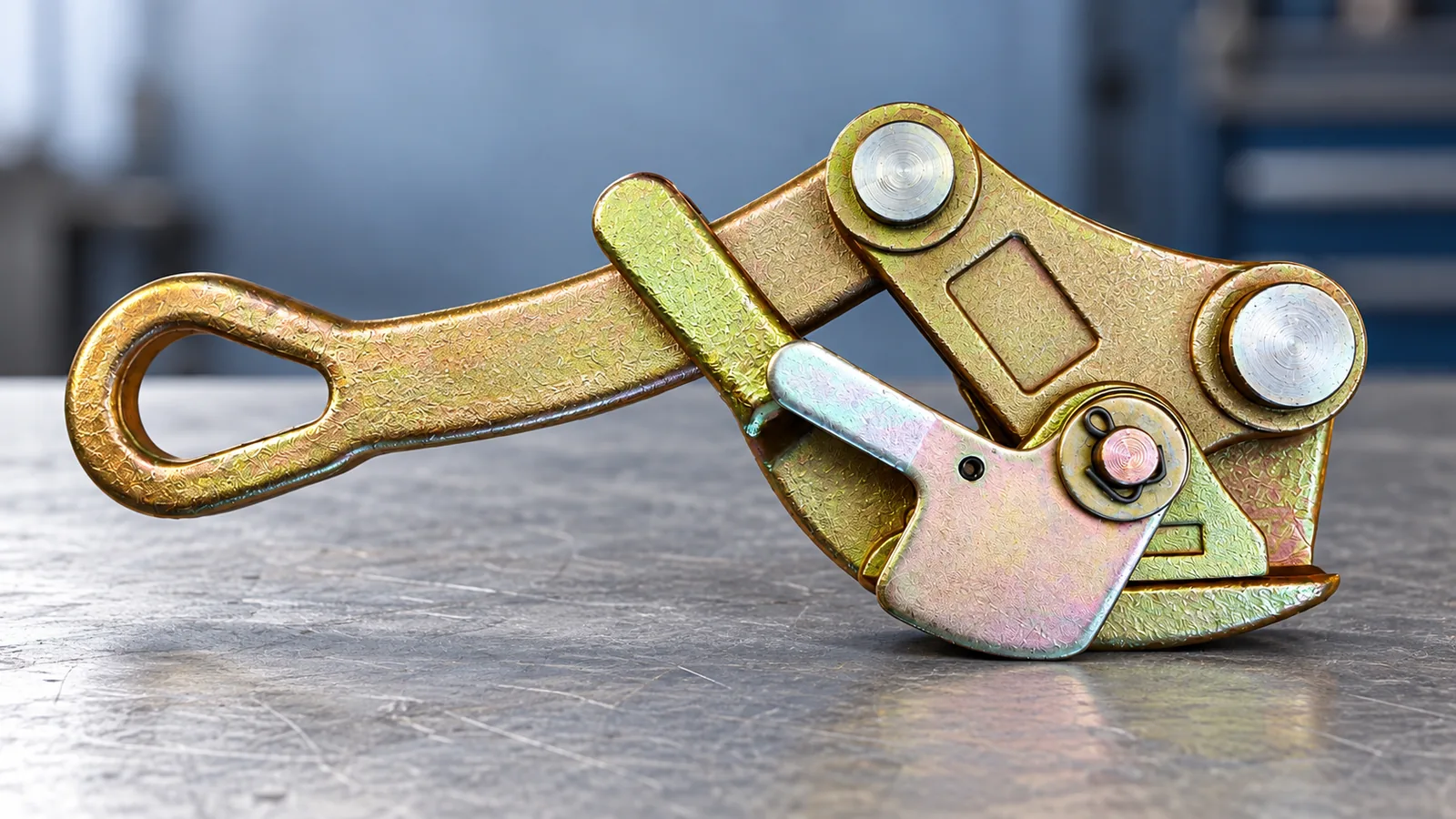
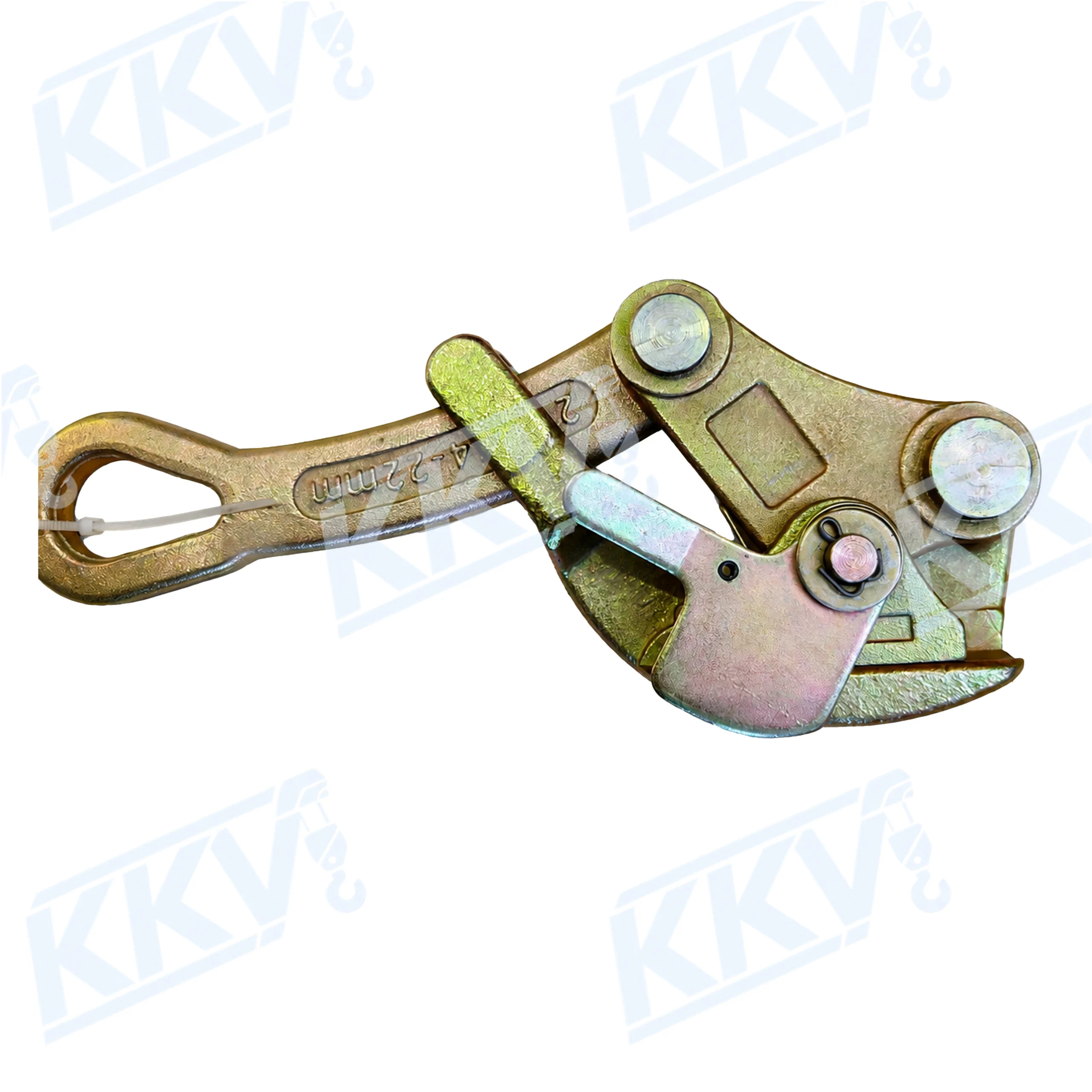
A mechanical pulling grip uses jaws and a linkage to create a temporary gripping point on a compatible cable. A pulling device connects to its eye, while the jaw mechanism transmits force to the cable. The grip does not itself provide the operating travel of a hoist or winch.
Distinguish the equipment by function before comparing prices:
- A jaw-type wire rope grip provides a temporary connection for an approved pulling or tensioning task.
- A wire rope clip or other termination fitting is selected for a specified rope-end connection and has its own installation and application requirements.
- A through-rope pulling hoist is an operating machine with its own matched rope and load-control mechanism; an external grip is not a replacement for that internal mechanism.
- A wire-mesh pulling grip is a different gripping design, with its own cable and application limits.
Do not assume products are interchangeable because a seller calls all of them cable clamps. State whether the request is for temporary gripping, a rope termination or a complete pulling machine.
Describe the Cable Before Choosing the Jaws
Two cables with the same outside diameter can behave differently under the same jaws. Give the supplier the cable manufacturer’s identification and specification rather than only a photograph or a nominal size.
| Cable detail | Information to provide | Why it affects selection |
|---|---|---|
| Material and product type | Exact steel rope, strand, conductor or other cable designation | A grip approved for one product type is not automatically suitable for another |
| Construction | Strand/wire arrangement, core and any special construction | Contact geometry and resistance to local gripping differ |
| Diameter | Nominal size plus the measured outside diameter and units | The actual contact size must fall within the approved range |
| Surface | Bare, galvanized, coated, lubricated or otherwise treated | The interface may affect gripping and cable damage |
| Cable condition | New or used, with relevant inspection findings | Wear or distortion cannot be corrected by choosing a stronger grip |
| Task requirements | Required line pull, intended movement and any surface-damage restriction | Compatibility must cover the application, not merely physical fit |
Klein Tools’ Grip Finder asks separately for cable type, cable diameter and maximum safe load. This is a useful example of the information needed for selection; it is not a compatibility approval for JX equipment.
Similarly, CMCO’s LMG product information distinguishes standard and grooved-jaw models and specifies cable-surface and material conditions. Those distinctions show why a diameter range alone is incomplete. Do not transfer its rope-strength limits or jaw claims to a KKV model.
If the cable is coated or has a surface that must remain undamaged, identify that requirement explicitly. Do not assume a jaw described as smooth, curved or half-moon will provide an unrestricted non-marring grip. Ask the supplier to confirm the actual cable and the acceptable contact effects.
Check Actual Diameter and Jaw Fit
Use the outside rope diameter
For stranded steel rope, a measurement taken between strand valleys can understate the diameter. verope’s diameter-measurement guidance explains measurement over the outside strand crowns using an appropriate measuring device; odd-strand constructions require suitable measuring-face coverage.
Have the measurement made safely under the applicable rope and site instructions. Record the measured value and units alongside the nominal cable specification. Do not reach into a moving or tensioned arrangement to obtain a purchasing measurement.
Check both ends of the range
A maximum opening is not the only limit. A grip designed for a larger cable can have too large a minimum gripping size for a smaller rope. Selecting the highest-capacity model in a catalogue therefore does not automatically provide the widest compatibility.
Pay attention when the measured cable is close to a stated boundary. Do not round the measurement into the range or assume a hidden tolerance. Ask how the manufacturer applies its range to the cable’s actual diameter, construction and condition.
Confirm jaw compatibility separately
A cable entering the jaws does not prove adequate contact or approved gripping. The Yale LMG manual expressly warns that not every cable within its diameter range can be guaranteed to grip without slipping. That statement belongs to the LMG instructions, but the purchasing lesson is relevant: obtain an explicit compatibility answer for the cable you intend to use.
Do not reshape jaws, add improvised packing, clamp several small cables together or modify a grip to make an unsuitable size work. Resolve a mismatch with the manufacturer.
Specify Pulling Force, Not Just Load Weight
The grip is selected for the force transmitted through its pulling connection, not simply for the mass of an object being moved. Starting resistance, the route, slopes, obstructions and the pulling arrangement may affect the required force. Obtain the maximum required line pull from the responsible application assessment.
An object described as weighing one tonne does not establish a one-tonne pulling requirement. Nor does a powerful hoist or winch make every connected grip suitable: the complete system must remain within the applicable limits of the grip, cable, connectors, pulling device and anchor arrangement.
Keep the units explicit
Manufacturers may express pulling ratings in kN, daN, lbf or catalogue tonnage units. Do not compare numbers without their units or confuse a force rating with net equipment weight. Where a catalogue uses t, ask for the confirmed pulling-force rating and its basis in the units used by the project.
The KKV table below preserves its published Rated Capacity (t) heading. It is not presented as permission to suspend that mass from the grip. No rope breaking-force value or assumed safety factor should be used to create an operating rating that the manufacturer has not supplied.
Confirm the intended use
Do not infer lifting approval from a pulling-capacity number. For example, the Yale LMG manual expressly excludes lifting loads even though it specifies a rated force at the pulling eye. KKV’s public JX description concerns temporary pulling and tensioning; it does not establish approval for suspended lifting or personnel support.
This article excludes energized-line work. The finish, retention device or resemblance to another grip does not establish electrical insulation or authorization for that application.
Compare the Published KKV JX Models
The current KKV JX Wire Rope Grip product page provides this model data in its full technical specification table.
| Model | Published rated capacity | Published jaw opening range | Net weight |
|---|---|---|---|
| JX-0.5 | 0.5 t | 1–10 mm | 0.4 kg |
| JX-1 | 1 t | 2.5–16 mm | 0.75 kg |
| JX-2 | 2 t | 4–22 mm | 1.4 kg |
| JX-3 | 3 t | 16–32 mm | 2.5 kg |
Use capacity and jaw range together for an initial shortlist. Then ask KKV to confirm the actual rope or cable, force requirement, connection and intended arrangement. A higher-capacity model can be excluded by its minimum jaw range.
The public page does not supply a complete approved-cable matrix, a rope-construction list, proof-load evidence, numerical service limits or a complete operating manual. Its PDF download is currently marked Coming Soon. Obtain the applicable instructions and technical confirmation before using the equipment.
The page also lists dimensions A, B, C and D. Request the associated drawing before treating any letter as an eye opening, jaw length or connection clearance. A dimension without its reference drawing is not enough to select a connector.
Check Connections, Retention and Alignment
The pulling eye must work with the specified connector without wedging, tip loading or forcing the grip into an unintended direction. Obtain an eye drawing and compare it with the actual hook or shackle dimensions, not just their advertised capacities.
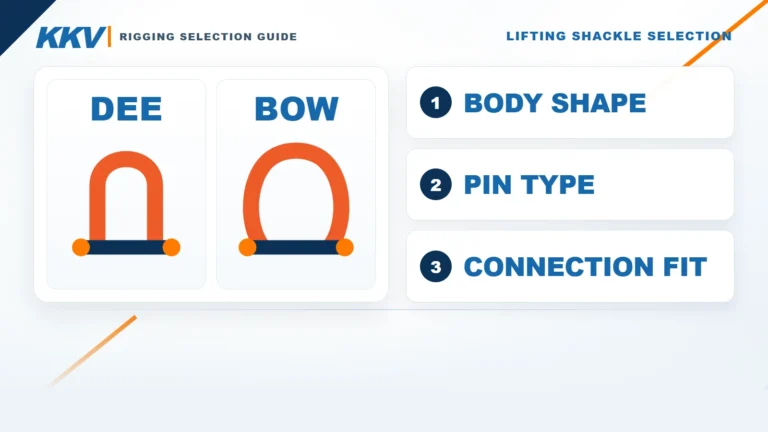
If a shackle is proposed, the lifting-shackle selection guide provides a broader compatibility checklist. It does not approve a particular shackle-to-JX connection; that arrangement still needs confirmation.
The grip’s retention feature and the pulling device’s load control have different roles. A feature intended to keep a cable located in a grip does not establish a fail-safe brake, a permanent anchor or permission to leave the system unattended. Ask what the specific device does and what the instructions require throughout the task.
Request the permitted direction of pull and a drawing of the intended cable path. Do not assume an eye may be side-loaded or that the cable can leave the jaw at any angle. The Yale LMG instructions, for example, require the applied pull to run parallel to the gripped material. That is not a published JX angle limit, so seek the corresponding JX instructions rather than copying an angle allowance from another brand.

Work Through a Preliminary Selection Example
Suppose an industrial installation requires temporary pulling of a cable with a confirmed outside diameter of 12 mm. The responsible project assessment specifies a maximum required line pull of 6 kN. The cable construction, surface and approved gripping conditions must still be confirmed.
Start by screening only the published diameter ranges:
| JX model | Does 12 mm fall within the published range? | Preliminary conclusion |
|---|---|---|
| JX-0.5 | No; its published upper limit is 10 mm | Exclude on diameter |
| JX-1 | Yes; 2.5–16 mm | Diameter candidate only |
| JX-2 | Yes; 4–22 mm | Diameter candidate only |
| JX-3 | No; its published lower limit is 16 mm | Exclude on diameter despite its higher nominal capacity |
Next, send KKV the 6 kN requirement, cable data and intended arrangement. Ask for the confirmed rated pulling force in compatible units and written acceptance of the cable/jaw combination. Check the connection, pulling device and anchor assessment as well.
This process does not approve either remaining model. It demonstrates why two independent questions must be answered: does the jaw suit the cable, and does the permitted pulling force suit the task? A matching diameter cannot compensate for inadequate capacity, and a higher capacity cannot compensate for incompatible jaws.
The 12 mm cable and 6 kN requirement are hypothetical enquiry inputs, not a tested JX application. The 6 kN figure must not be used as a recommendation for another project.
Plan Inspection and Compatibility Confirmation
Obtain the supplied model’s pre-use checks, maintenance instructions and rejection criteria. KKV’s public page identifies the jaws, linkage, pins, retention part, body, eye and markings as inspection areas. It does not give quantitative wear limits that a buyer can apply without further documentation.
Keep the following questions separate:
- Is the grip identifiable and in serviceable condition?
- Is this cable approved for it, and is the cable itself serviceable?
- Does the complete arrangement meet the pulling requirement?
An undamaged tool can still be the wrong tool. Conversely, an otherwise compatible model must not remain in service with damage, missing parts or uncertain identification.
Klein’s 1692-5 guidance requires cleaning and inspection before use and explains that galvanized material can leave deposits on its grip jaws. Treat this as evidence that contact condition matters, not as a KKV cleaning procedure. Obtain the cleaning method approved for the actual grip and rope; do not improvise solvents, remove a coating or strip required rope lubrication to force an unconfirmed combination to grip.
If slippage, unusual movement or cable damage occurs, stop work under the applicable site procedure and have the cause assessed. Do not respond by adding impact, exceeding the rating or changing the jaws without authorization.
The job plan must address stored energy, controlled unloading and safe removal. Do not attempt to open a loaded grip to release tension. This guide deliberately does not prescribe a release sequence: it must come from the actual equipment instructions and the assessed system.
Prepare a Useful Enquiry
Send a cable specification and a description or drawing of the pulling arrangement. This gives the supplier a defined compatibility question instead of an unspecified request for a three-ton clamp.
| Enquiry field | Information to provide or obtain |
|---|---|
| Cable identity | Manufacturer, designation, material, construction and nominal diameter |
| Contact condition | Measured diameter, coating, lubrication, surface condition and damage restrictions |
| Force requirement | Maximum required line pull with units and the basis of the application assessment |
| Intended arrangement | Cable path, direction of pull, pulling device, connector and anchor details |
| Working conditions | Access, visibility, relevant temperature/corrosion exposure and frequency of use |
| Proposed product | Exact JX model, supplied jaw configuration and dimensioned connection drawing |
| Required evidence | Cable-compatibility confirmation, rated-force basis, instructions, identification and project-required records |
On receipt, check that the supplied model and documents match the reviewed offer. Do not accept a different jaw style or substitute component simply because the catalogue capacity is similar. Resolve missing instructions or uncertainty about the cable before commissioning the arrangement.
For recurring work on several cable types, maintain a compatibility record by cable designation and grip model. Do not turn one successful job into an unrestricted approval for every cable with the same nominal diameter.
Frequently Asked Questions
Is a wire rope grip the same as a wire rope clip?
Not in this guide. A jaw-type grip makes a temporary pulling connection. A wire rope clip is a termination fitting with a different function and installation requirements. Describe the required function to avoid buying the wrong type of cable clamp.
Is cable diameter enough to choose a grip?
No. Diameter must be considered with material, construction, surface condition, approved jaw type and required pulling force. A cable fitting between the jaws is not evidence of an approved or slip-free combination.
Is the largest JX model suitable for every smaller cable?
No. The published JX-3 range starts at 16 mm. A 12 mm cable falls outside it even though other JX models have lower nominal capacity numbers. Check the minimum as carefully as the maximum.
Can a pulling-capacity rating be used as a lifting capacity?
Do not infer that approval. The actual instructions must permit the intended application. The public JX page does not establish suspended-lifting approval, and some other manufacturers’ pulling-grip instructions explicitly prohibit lifting loads.
Can the same jaws grip galvanized, coated and lubricated cable?
Not automatically. Give the supplier the precise cable and surface specification. Obtain confirmation of compatibility and any approved preparation or maintenance requirements rather than assuming all surfaces behave alike.
Does the retention device hold the working load independently?
Do not assume so. A cable-location or retention feature is not proof of an independent brake or fail-safe anchorage. Confirm its stated role and the complete system’s load-control requirements from the supplied instructions.
Can I leave a wire rope grip installed as a permanent anchor?
The JX description is for temporary gripping. Do not substitute it for a designed permanent termination or anchor. Klein also explicitly limits its referenced grip to temporary installation; that is not an approval of any permanent JX use.
What should I do if the cable slips in the grip?
Stop and follow the assessed site’s safe response. Have cable compatibility, jaw condition, setup and force checked before reuse. Do not increase the load, apply shock or modify the jaws to overcome slippage.
Primary Sources and Application Boundaries
The following manufacturer sources support the specifically attributed examples and purchasing distinctions in this guide. Their ratings and procedures are not interchangeable.
- KKV JX Wire Rope Grip: current model table and temporary-gripping product description.
- Klein Tools Grip Finder: cable type, diameter and load as separate selection inputs.
- Klein Tools 1692-5 grip: its contact-condition guidance and temporary-installation limitation.
- CMCO LMG cable grips: model-specific cable, jaw and surface distinctions.
- Yale LMG operating instructions: its cable-compatibility, pulling-direction and no-lifting restrictions.
- verope diameter-measurement guidance: measuring the outer rope envelope rather than strand valleys.
Obtain the current instructions for the actual JX configuration supplied. This article does not assign another brand’s rope-strength limits, operating angles, electrical permissions, test factors or inspection intervals to KKV equipment.
Match the Grip to the Cable and the Pulling Task
The correct purchase combines an approved cable/jaw interface with adequate permitted pulling force and compatible connections. Use the JX table as a shortlist, then resolve the missing application details before the equipment enters service.
For a JX wire rope grip enquiry: send your cable designation, construction, measured diameter, surface details, required line pull with units and arrangement drawing to sales@kkvhoist.com, or contact KKV. Include the proposed model and quantity so the appropriate configuration and documentation can be confirmed.
Safety note: This is a general purchasing guide, not an operating, tension-release or electrical-work procedure. Follow the actual equipment instructions and applicable site requirements. Do not exceed permitted force, use an unconfirmed cable/grip combination, release a loaded grip or use the product for personnel support. Keep people clear of tensioned cables and the assessed danger area.