How to Choose Grade 80 Lifting Chain: WLL, Size, Sling Angles and Inspection
Choosing Grade 80 lifting chain involves much more than matching a chain diameter to the weight of a load. The chain must be intended for lifting, and the complete sling must have a Working Load Limit that covers the total load in the actual hitch, leg arrangement and sling angle. Master links, coupling links, shortening devices and hooks must also be compatible with the chain and rated for the complete assembly.
Grade 80 is a strength class, not a capacity. It does not mean that a chain can lift 80 tonnes, and it does not make every chain marked “G80” suitable for every lifting application. Selection must also account for the load’s centre of gravity, edge protection, temperature, corrosion, inspection requirements, identification and the standard specified for the project.
This guide explains how to select Grade 80 chain for lifting and chain-sling applications, how sling angles affect capacity, which documents to request and why sling chain must never be substituted for a chain hoist’s calibrated load chain.
Quick answer: First confirm that you need Grade 80 chain for a lifting sling or lifting assembly—not hoist load chain or transport lashing chain. Determine the maximum total load and centre of gravity, then select the complete sling from the manufacturer’s WLL table for the intended number of legs, hitch and angle. Verify chain size, compatible Grade 80 components, effective length, environment, identification and certification. Never select by minimum breaking force, chain diameter or number of legs alone.
Table of contents
- What is Grade 80 lifting chain?
- WLL, proof force, breaking force and design factor
- Nine factors to check before ordering
- How sling configuration changes capacity
- Why sling angle matters
- A seven-step selection process
- Blackened vs galvanized G80 chain
- Information to include in your RFQ
- Pre-use inspection and removal from service
- Common selection and operating mistakes
- G80 sling chain vs hoist load chain
- Frequently asked questions
What Is Grade 80 Lifting Chain?
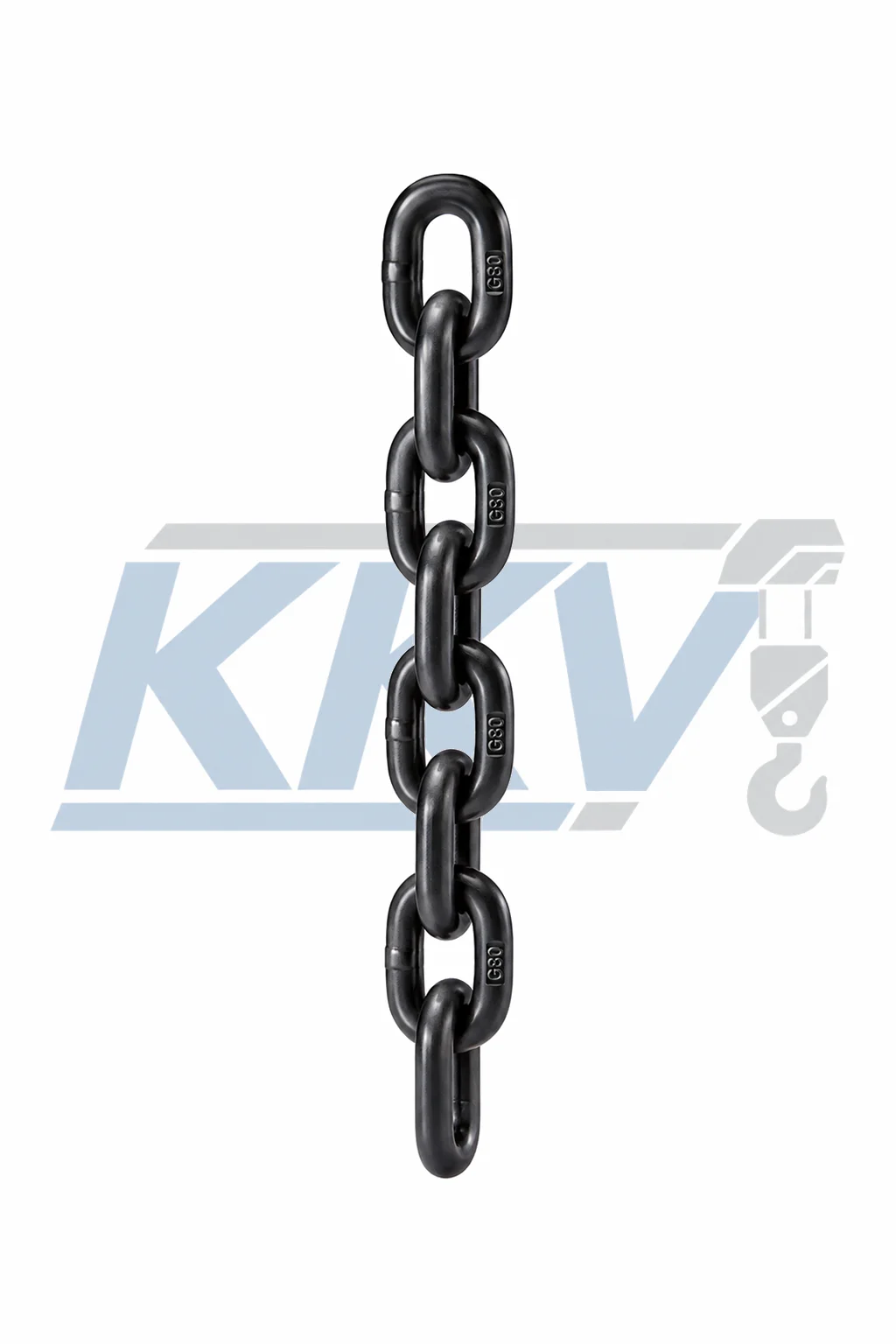
Grade 80 lifting chain is a heat-treated alloy-steel chain strength class used in rated lifting assemblies and chain slings. European and international documents often use the term Grade 8, while many product catalogues use Grade 80 or G80. These names refer to the same general strength-class convention, but the exact product standard, dimensions, test requirements and permitted application still need to be identified.
ISO 3076 covers short-link, medium-tolerance Grade 8 chain for chain slings and general lifting purposes. In North America, ASTM A391/A391M covers Grade 80 heat-treated alloy-steel chain for applications such as slings and load binding, while specifically excluding pocket-wheel applications.
The word lifting is important. General-purpose chain, decorative chain, transport chain and an unidentified length of alloy chain must not be assumed to have a lifting WLL. A lifting assembly should have traceable identification and a rated capacity for its actual configuration.
Grade Does Not State the WLL
“80” identifies a material strength grade. It does not identify chain diameter, finished sling capacity or permitted sling angle. Two Grade 80 products can have different dimensions, tolerances, markings, component systems and WLL tables.
To select a chain, you still need to know:
- the nominal chain diameter and link dimensions;
- the chain and component standard;
- the complete sling configuration;
- the permitted WLL for the hitch and angle;
- the effective working length;
- the manufacturer’s environmental limits; and
- the required identification and documentation.
Chain Is Only One Part of the Sling
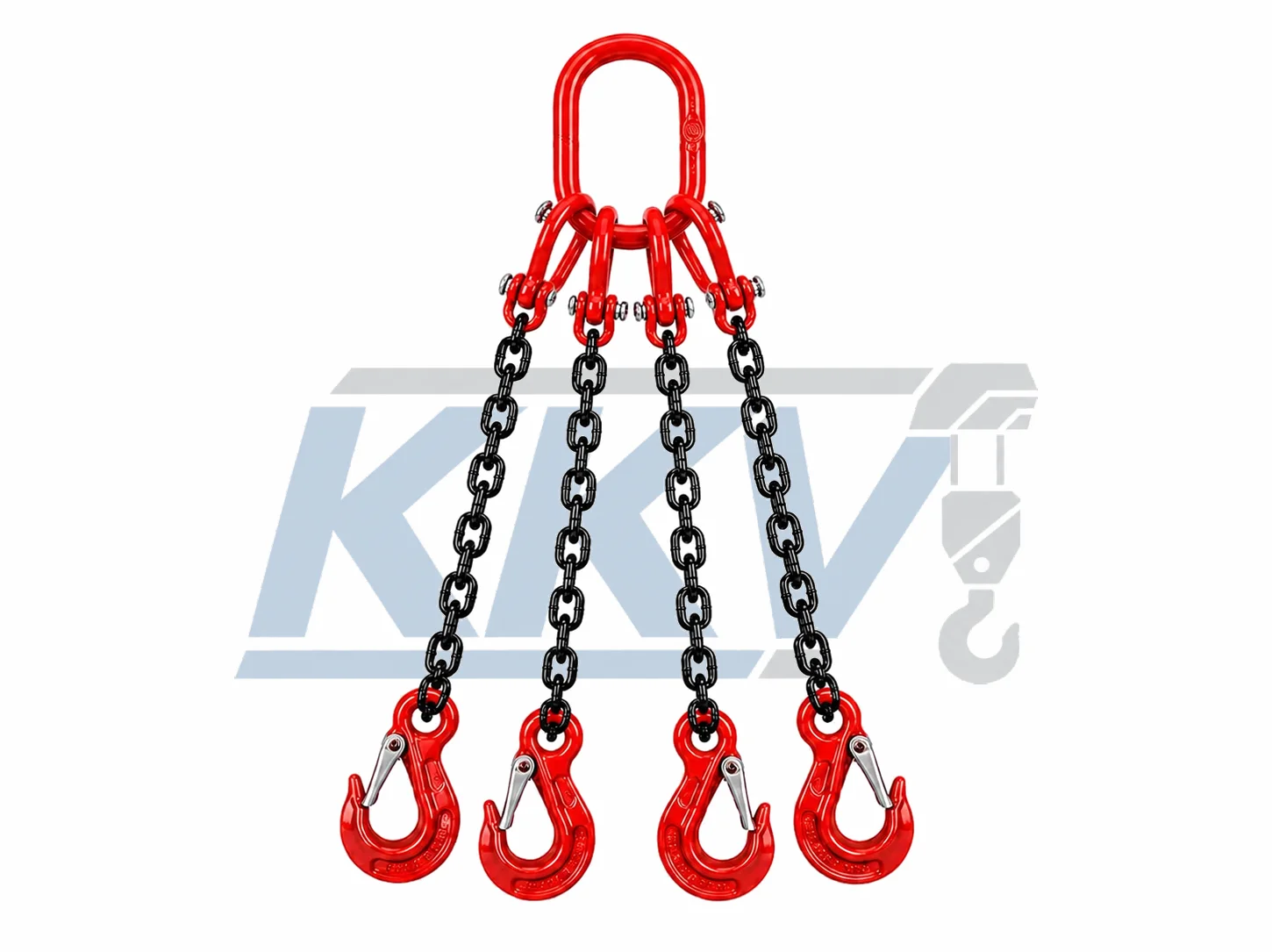
A chain sling normally includes a master link, one or more chain legs, coupling links, hooks or other end fittings and sometimes shortening devices. The complete assembly is limited by its weakest component and by the configuration shown on its identification tag.
A high-strength chain does not upgrade an undersized hook or master link. Likewise, adding more chain legs does not automatically multiply capacity because the load may not divide equally between the legs.
WLL, Proof Force, Breaking Force and Design Factor
Several load values can appear on a chain certificate or specification table. They describe different things and must not be used interchangeably.
| Term | What it means | How it should be used |
|---|---|---|
| Working Load Limit (WLL) | The maximum load permitted under the stated configuration and operating conditions | Use the WLL for selection and operation |
| Manufacturing proof force or test load | A controlled test force applied during manufacturing or certification | Evidence of testing; not an operating capacity |
| Minimum Breaking Force (MBF) | A destructive strength threshold established by the applicable specification | Quality or design reference; never a permitted working load |
| Design factor | A relationship between a defined failure value and rated capacity under the applicable design basis | A design principle; not spare capacity available to the user |
Many Grade 80 chain systems use a 4:1 design factor, including the current KKV G80 chain range. A 4:1 design factor does not authorize a user to exceed the stated WLL. It also does not allow a purchaser to calculate a safe WLL from an unverified breaking-load value.
The WLL normally assumes controlled loading in the approved configuration. Shock loading, twisting, knotting, side loading, sharp-edge damage, extreme temperature or chemical attack can invalidate the conditions behind the rating.
Nine Factors to Check Before Ordering
1. Confirm the Exact Application
Start by stating what the chain must do. “We need lifting chain” is not enough. Identify whether you are purchasing:
- bulk chain for manufacture of a certified chain sling;
- a finished single-leg or multi-leg chain sling;
- a replacement chain leg for an existing approved assembly;
- chain for a manual or electric hoist;
- chain for pulling or load binding; or
- chain for a special environment or engineered lifting system.
These uses are not interchangeable. A Grade 80 sling chain is not automatically a suitable hoist load chain, and a lifting sling is not automatically approved as transport restraint equipment.
2. Determine the Maximum Total Load
Use a known and reliable load weight. Include everything carried below the lifting point, such as lifting beams, spreaders, shackles, hooks, lifting clamps and other below-the-hook equipment. Do not select from an estimate when drawings, certified weights or weighing methods are available.
The weight is only the beginning. Record the centre of gravity and the intended lifting points. An off-centre load may place much more force on one leg than the others, even when the sling looks symmetrical.
3. Select by the Complete Sling WLL
Use the manufacturer’s WLL chart for the exact chain and component system. The required row or column must match:
- chain grade and diameter;
- number of legs;
- vertical, basket or choker hitch;
- angle convention used by the chart;
- symmetric or asymmetric loading assumptions; and
- any reduction required for temperature, edges or special conditions.
Do not use the WLL of a straight single chain leg as the capacity of a complete two-, three- or four-leg sling unless the sling manufacturer’s table expressly assigns that value.
4. Confirm Chain Diameter and Link Dimensions
Nominal diameter is a key identifier, but it is not enough on its own. Pitch, inside width, outside width and manufacturing tolerance affect compatibility with coupling links, shortening devices and other components.
Use dimensions from the exact supplier table. Do not assume that two chains with the same nominal diameter can be mixed simply because both are called G80. If a replacement chain leg or component must fit an existing assembly, identify the original system and have the compatibility confirmed by the manufacturer or a qualified sling assembler.
5. Choose the Sling Configuration and Hitch
The load shape and lifting points determine whether the sling should be single-leg, two-leg, three-leg, four-leg or another engineered configuration. They also determine whether the connection is vertical, basket, choker or made through suitable end fittings.
Each arrangement changes how force enters the chain and attachments. A choker hitch, for example, may require a capacity reduction. A basket hitch needs the load to remain balanced and the chain to contact the load in an approved way. Always use the configuration rating printed on the sling tag or supplied by the manufacturer.
6. Define the Sling Angle Clearly
Do not write only “45-degree sling.” Different charts measure angles differently:
- angle from the horizontal plane;
- angle of each leg from the vertical, often shown as beta; or
- included angle between two sling legs, sometimes shown as alpha.
Record both the value and its reference line. If the purchasing drawing and the capacity table use different conventions, convert or redraw the angle before selecting the sling.
7. Match Every Component
Master links, subassemblies, coupling links, hooks and shortening devices must be compatible with the chain size and grade. The rated capacity of the complete sling cannot exceed its lowest-rated component.
For U.S. workplaces, OSHA 1910.184 requires attachments used with alloy-steel chains to have a rated capacity at least equal to the chain, or the assembly must be rated to the capacity of the weakest attachment. Requirements differ by jurisdiction, so also follow local rules and the manufacturer’s instructions.
8. Check Temperature, Chemicals and Surface Conditions
Temperature limits and capacity reductions are manufacturer-specific. Do not copy a temperature table from another brand simply because both products are Grade 80. High heat can reduce capacity and may require permanent removal from service. Very low temperatures can also affect the permitted application.
Acids, alkalis, plating chemicals, salt water and other corrosive environments require specific evaluation. A galvanized appearance does not automatically make a chain suitable for marine, offshore, acidic or high-temperature service.
If galvanizing or another coating is required, it should be supplied or approved as part of the chain manufacturer’s controlled process. Do not send a finished heat-treated sling for uncontrolled plating, pickling or hot-dip galvanizing.
9. Specify Identification and Documentation
A finished chain sling should carry durable identification appropriate to the applicable standard and workplace rules. Typical purchasing information includes:
- manufacturer or supplier identification;
- chain grade and nominal size;
- number of legs and sling configuration;
- WLL and the angle range to which it applies;
- individual sling serial or traceability number;
- effective length;
- date of manufacture or test when required; and
- applicable standard and certificate reference.
Ask for documentation for the exact finished assembly—not a general certificate for a different size, batch or component.
How Sling Configuration Changes Capacity
A chain’s straight single-leg WLL is not a universal sling rating. Capacity changes with the hitch, number of effective load-bearing legs and how the load is distributed.
Single-Leg Sling
A single-leg sling provides one direct load path. Selection is straightforward only when the leg is correctly aligned, the attachment points are suitable and no side load or edge damage is introduced. The sling WLL still depends on the complete assembly, including both end fittings.
Two-Leg Sling
A two-leg sling can stabilize a load with two suitable lifting points, but each leg carries both vertical and horizontal force components when it is inclined. The legs do not automatically share exactly half of the load. Centre-of-gravity offset, unequal leg lengths and lifting-point geometry can make one leg carry more.
Three- and Four-Leg Slings
Additional legs can improve stability, but capacity must come from the manufacturer’s rated table. A rigid load or uneven lifting points can prevent all legs from sharing load equally. Four legs must never be treated as four perfectly equal quarters without an engineered basis.
Basket and Choker Hitches
A basket arrangement can support a load at two points along the chain, provided the load is stable and bending or edge conditions are acceptable. A choker arrangement tightens around the load and often requires a capacity reduction. Use only approved fittings and follow the supplier’s hitch-specific WLL.
Why Sling Angle Matters
As the legs of a multi-leg sling become flatter, tension in each leg increases. This means a low-angle sling can overload the chain or fittings even when the total load has not changed.
Consider a two-leg sling viewed from the side:
- with the legs closer to vertical, more of each leg’s force supports the load vertically;
- as the legs move toward horizontal, each leg needs more total tension to produce the same vertical support; and
- at very low angles, small geometry changes can create a large increase in leg tension.
Many industry tables and manuals warn against using sling angles below 30 degrees from horizontal. That statement must not be applied blindly: verify how the exact chart defines the angle and observe any stricter manufacturer or site limit.
The safe purchasing approach is to provide a lifting sketch showing the lifting points, centre of gravity, effective sling lengths and angle convention. The supplier can then select from the correct rated table rather than guessing what “45 degrees” means.
Safety note: Never pull sling legs outward to make a short sling reach widely spaced lifting points. Use a properly sized sling, an engineered lifting beam or another approved arrangement. Do not use knots, bolts, makeshift links or unapproved shortening methods.
A Seven-Step Grade 80 Chain Selection Process
Step 1: Describe the Load and Movement
Record the load type, verified mass, dimensions, centre of gravity, lifting points, pickup position and landing position. Note whether the lift will be repeated and whether the load is rigid, flexible, fragile or likely to shift.
Step 2: Draw the Complete Load Path
Show the crane hook or lifting point, master link, chain legs, couplers, hooks, shackles, lifting lugs and the load. Include any lifting beam or spreader. This exposes missing components and makes it easier to identify the weakest part of the system.
Step 3: Define the Sling Geometry
State the number of legs, hitch type, effective length and the angle of each leg. Mark whether the angle is measured from horizontal or vertical. If the load is asymmetric, give the lifting-point loads or request an engineered assessment.
Step 4: Use the Correct WLL Table
Select from the table for the exact Grade 80 chain and component family. Match the size, number of legs, angle range and hitch. Apply every manufacturer-specified reduction for temperature, choker use, edges or other conditions.
Do not use proof-test force, minimum breaking force or a design-factor calculation as the operating limit.
Step 5: Verify Components and Effective Length
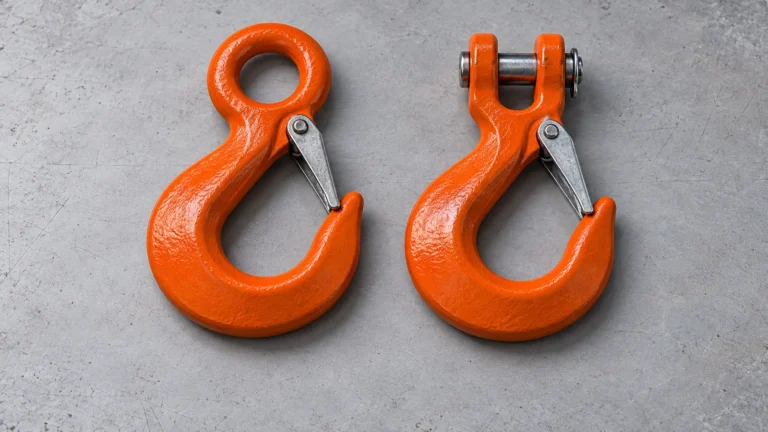
Confirm that master links fit the crane hook without crowding or point loading. Check that hooks match the lifting points and can seat correctly in their bowls. Confirm that coupling and shortening devices are approved for the chain size and that the sling’s effective length reaches the lifting points without forcing a shallow angle.
Step 6: Define the Environment and Finish
State indoor or outdoor service, temperature range, exposure to rain, salt, chemicals, abrasive material, sharp edges or welding operations. Request the surface finish and protection appropriate to that environment. Where conditions are unusual, obtain written confirmation rather than relying on colour or coating alone.
Step 7: Confirm Marking, Certificate and Inspection Plan
Before ordering, agree on identification, batch traceability, proof-test documentation, applicable standard, language and any third-party inspection requirement. Define who will inspect the sling on receipt and during service, where records will be kept and which manufacturer limits will be used for wear and damage.
Blackened vs Galvanized G80 Chain
Surface finish affects appearance and corrosion protection, but it does not change the need to verify grade, WLL, dimensions and compatibility.
| Selection point | Blackened G80 chain | Galvanized G80 chain |
|---|---|---|
| Appearance | Dark industrial finish | Zinc-coated silver finish |
| Common reason for selection | General industrial lifting where the specified blackened finish is acceptable | Applications requiring the specified galvanized surface option |
| Information still required | Size, WLL, standard, length, components, environment and certificate | Galvanizing method plus size, WLL, standard, length, components, environment and certificate |
| Important limitation | The dark finish does not identify capacity by itself | Galvanizing does not automatically approve marine, chemical or high-temperature use |
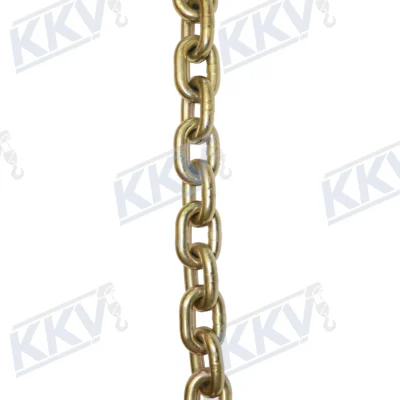
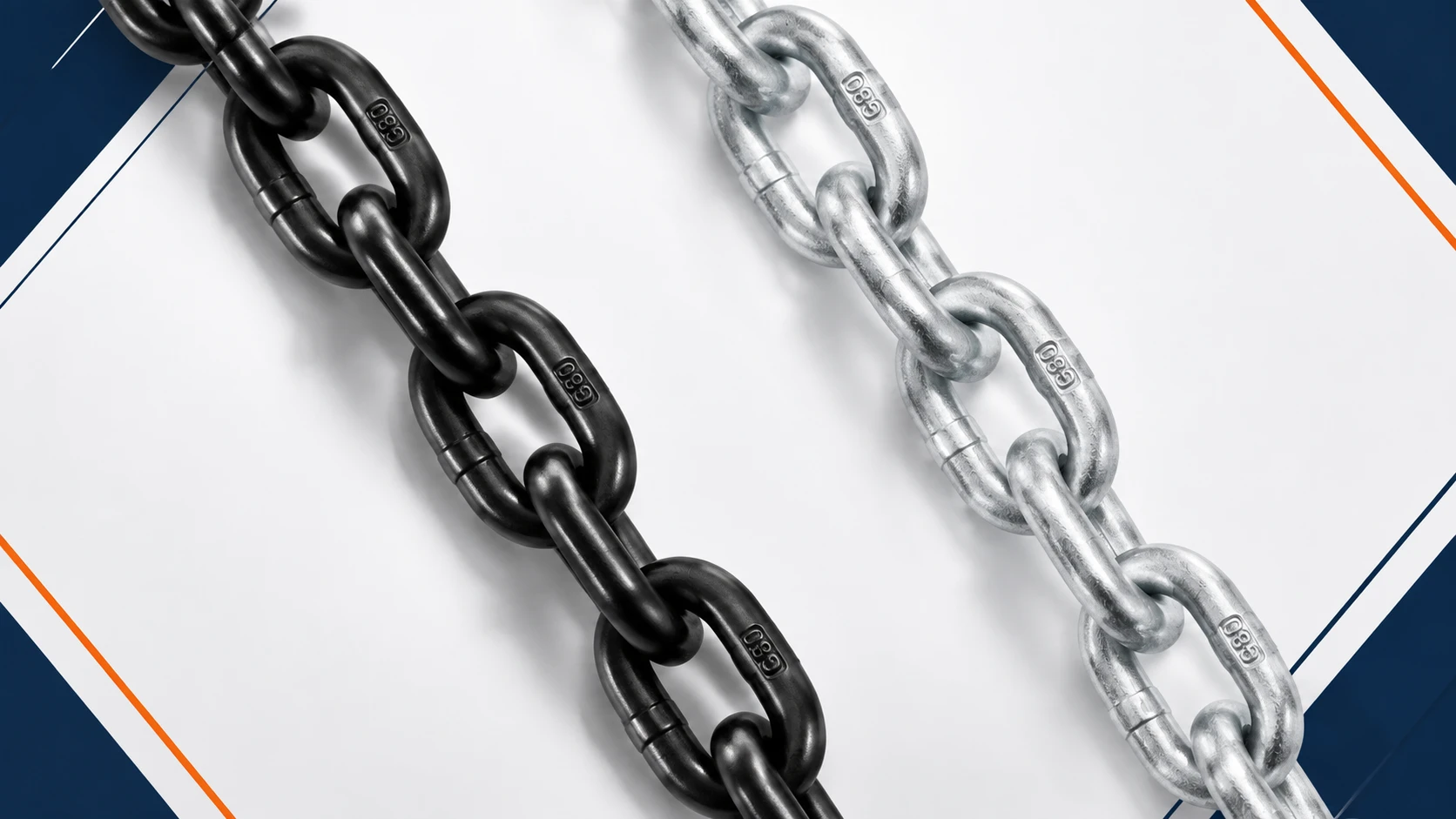
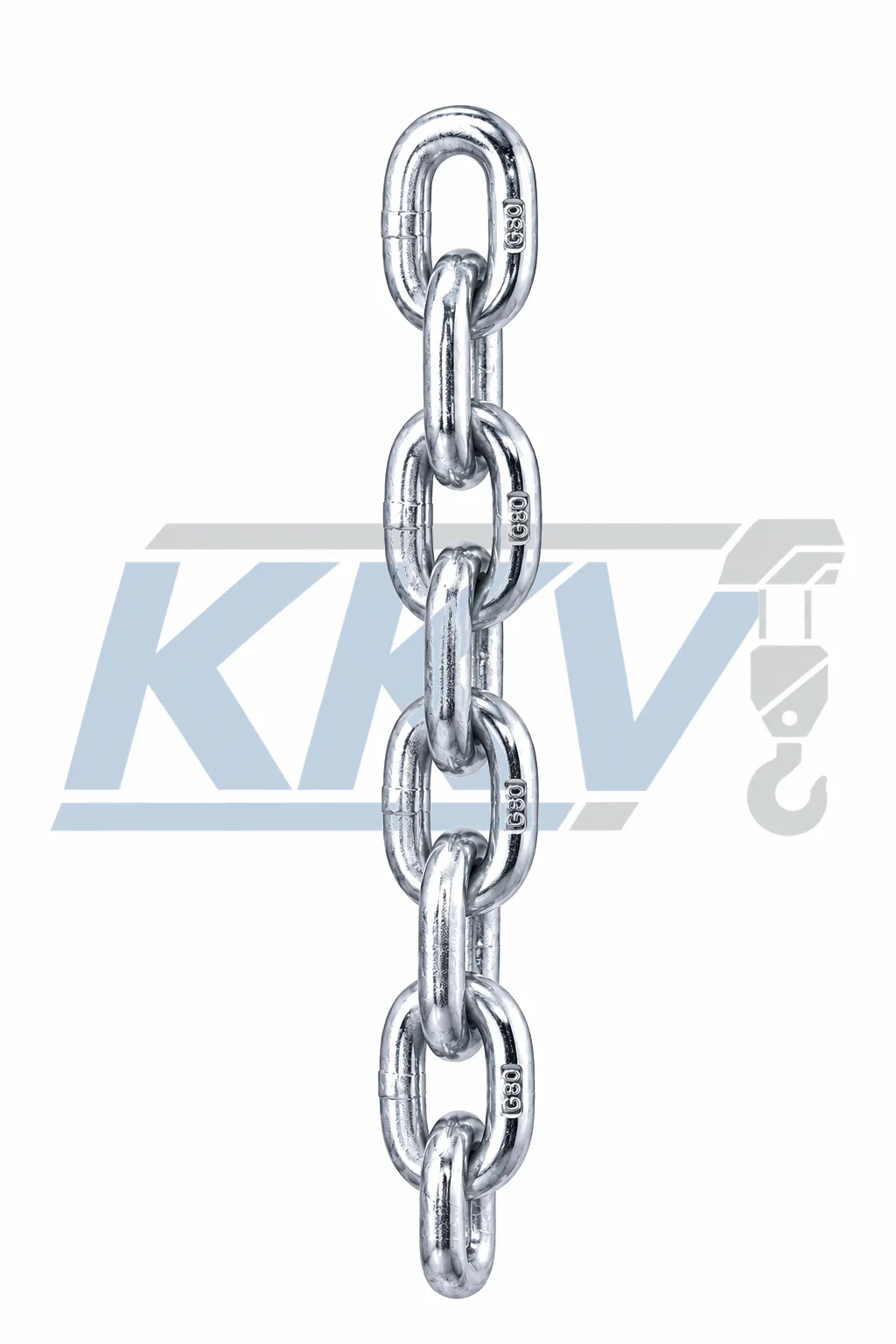
KKV currently offers G80 blackened lifting chain and G80 galvanized lifting chain in multiple chain sizes and WLL options. Use the product specification tab as a starting point, then confirm the exact standard, dimensions, finished sling configuration and documentation in the quotation.
Information to Include in Your RFQ
A complete RFQ reduces back-and-forth and helps prevent selection from an incomplete capacity description.
| RFQ field | Example format |
|---|---|
| Application | Lifting a machine from two designated lifting lugs |
| Maximum total load | Payload plus all below-the-hook equipment |
| Centre of gravity | Drawing or measured location |
| Sling configuration | Single-, two-, three- or four-leg; vertical, basket or choker |
| Sling angles | Value plus whether measured from horizontal or vertical |
| Chain requirement | Grade, nominal diameter and standard if already specified |
| Effective length | Bearing point to bearing point for each leg |
| End fittings | Master link, hook, shackle or other approved attachment |
| Shortening | Required or not required; approved device only |
| Surface finish | Blackened, electro-galvanized, hot-dip galvanized or supplier recommendation |
| Environment | Temperature, indoor/outdoor, moisture, salt, chemicals and abrasion |
| Required marking | WLL, grade, size, serial number and other project information |
| Documents | Certificate, proof-test record, declaration, inspection report or third-party documents |
| Destination | Country and applicable workplace or project requirements |
If the assembly will be used with a manual hoist, also provide the hoist capacity and application details. See How to Choose a Manual Chain Hoist and Manual Chain Hoist vs Lever Hoist for the hoist-side selection factors.
Pre-Use Inspection and Removal from Service
Inspection requirements depend on jurisdiction, service severity and the manufacturer’s instructions. For U.S. workplaces, OSHA requires alloy-steel chain slings to be inspected before use each day and as often as necessary during use, with a thorough periodic inspection at intervals no longer than 12 months. Other countries and projects may have different requirements. See the OSHA alloy-chain sling guidance for its specific scope.
Before use, check at least the following:
- the identification tag is present and legible;
- the sling grade, size, configuration and WLL match the lift plan;
- links are free from cracks, nicks, gouges, bending, twisting and stretch;
- welded areas do not show cracking, damage or unauthorized repair;
- there is no severe corrosion, pitting, heat discoloration or arc burn;
- the most heavily worn link area remains within the manufacturer’s limit;
- master links, coupling links, shortening devices and hooks are undamaged;
- hook openings, latches and bearing surfaces meet the applicable limits;
- chain legs are not knotted, twisted or crossed;
- the sling has not increased abnormally in reach or developed unequal leg lengths; and
- the planned load path is clear and personnel can remain away from the suspended load.
Do not assume that every chain has the same percentage-wear limit. Measure the area specified by the manufacturer and compare it with the discard table for the exact chain system.
Remove the sling from service if identification is missing, the inspection result is uncertain or any condition exceeds the applicable limit. Clearly quarantine it so it cannot return to use before evaluation by an authorized person.
Repair Restrictions
Do not weld, heat-treat, straighten or make an improvised repair to a Grade 80 chain sling. Never repair broken chain with bolts, rods, makeshift links or low-carbon repair links.
Repairs involving welding or heat treatment must be carried out by the sling manufacturer or an equivalent qualified entity and followed by the required testing and documentation. Approved mechanical coupling links may be part of a designed sling system, but they are not permission to improvise a field repair.
Common Grade 80 Chain Selection and Operating Mistakes
Choosing by Diameter Alone
The same nominal diameter does not guarantee the same standard, dimensions, WLL or component compatibility. Identify the exact chain and use its approved table.
Treating Breaking Load as Working Capacity
Minimum breaking force is not a working limit. Operate only within the stated WLL for the complete configuration.
Assuming More Legs Multiply Capacity
Two legs do not automatically provide twice a single-leg rating, and four legs do not guarantee equal quarter-load sharing. Use the manufacturer’s multi-leg rating and check load distribution.
Omitting the Angle Convention
“45 degrees” can mean angle from horizontal, angle from vertical or part of an included angle. Show the reference line on the RFQ and lifting drawing.
Mixing Chain and Components by Colour
Paint colour or finish is not a reliable compatibility system. Confirm grade, size, model and WLL markings for every component.
Loading a Hook or Master Link Incorrectly
Hooks should normally carry load in the bowl, and master links must sit correctly in the supporting hook. Avoid point loading, tip loading, side loading and crowding. Follow the instructions for the exact fitting.
Allowing Chain to Bear on an Unprotected Sharp Edge
An edge can bend, gouge or cut a loaded link. Use approved edge protection or redesign the lifting arrangement. Edge protection does not automatically restore full WLL; follow the supplier’s reduction or engineering instruction.
Shock Loading
Do not jerk the sling, snatch the load or allow sudden free movement. Lift smoothly and stop if the load shifts, a leg becomes slack or the sling does not seat as planned.
Unauthorized Shortening
Do not shorten a sling with knots, bolts, hooks not designed for shortening or by wrapping chain around another component. Use only the approved shortening device and apply any specified capacity rule.
Using an Unidentified Sling
A sling without legible identification should not be used based on appearance or a verbal claim. Quarantine it and follow the applicable procedure for identification, inspection and recertification.
G80 Sling Chain vs Hoist Load Chain
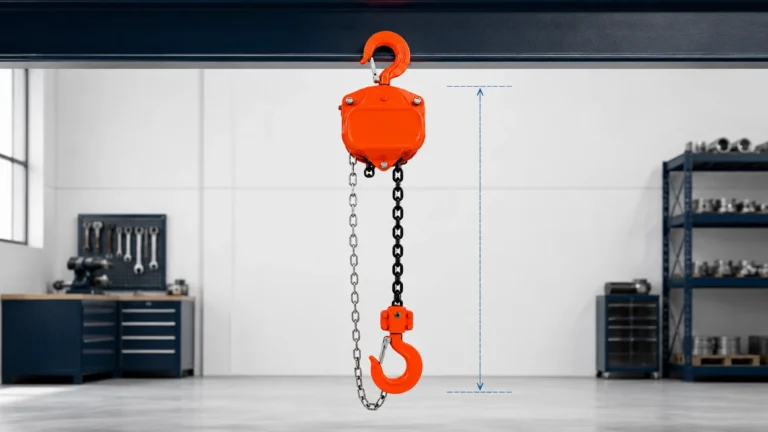
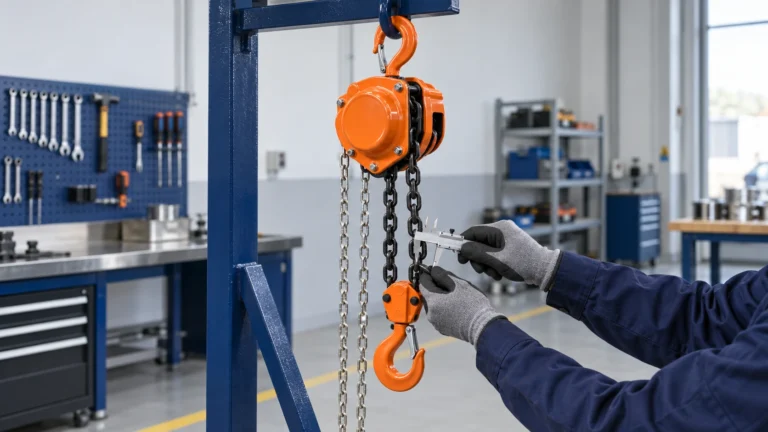
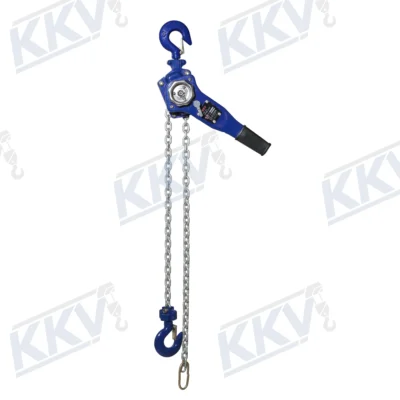
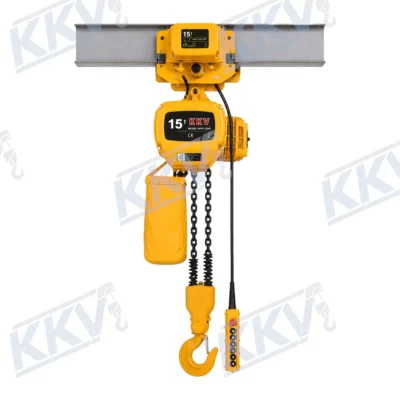
Grade 80 sling chain must not be substituted for a manual or electric chain hoist’s load chain.
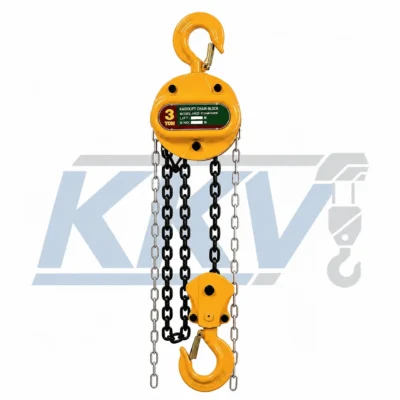
Sling chain and hoist load chain can both be alloy steel, but they serve different mechanical systems. Sling chain is commonly a medium-tolerance chain used in free chain-sling assemblies. Hoist load chain is fine-tolerance calibrated chain designed to engage a specific load sheave or pocket wheel.
ISO 3077 separately covers fine-tolerance chain for use with hoisting machines. Pitch, width, weld location, material condition and dimensional consistency must match the hoist manufacturer’s design.
Installing visually similar bulk chain can cause poor seating, jumping, jamming, accelerated wear or loss of load control. For replacement load chain:
- identify the exact hoist manufacturer, model, capacity and number of falls;
- use the chain part number and installation method specified by the manufacturer;
- confirm weld orientation and chain reeving;
- replace associated parts when the manufacturer requires it; and
- carry out the required inspection and functional test before returning the hoist to service.
Do not splice, weld or add links to extend a hoist load chain. If a longer lift is required, obtain the correct calibrated chain and configuration for the exact hoist.
Frequently Asked Questions
What does Grade 80 mean on a chain?
Grade 80 identifies a heat-treated alloy-steel strength class. It does not mean 80 tonnes and does not state the WLL of a specific chain or sling configuration.
Is G80 the same as Grade 8?
The terms commonly refer to the same general strength-class convention. However, purchase documents should still identify the exact standard, dimensions, marking, test requirements and manufacturer’s WLL table.
How do I determine the WLL of a Grade 80 chain sling?
Use the identification tag and the manufacturer’s table for the exact chain size, number of legs, hitch and angle range. The complete sling is limited by its weakest chain or component. Do not calculate WLL from minimum breaking force.
Does a two-leg chain sling lift twice as much as a single-leg sling?
Not automatically. Sling angle, centre of gravity, unequal leg loading and the manufacturer’s rating all affect capacity. Use the rated two-leg value for the actual angle and configuration.
Why does a lower sling angle reduce capacity?
As sling legs become flatter, each leg must carry more tension to create the vertical force needed to support the load. Low-angle arrangements can overload chain and fittings even when the load weight is unchanged.
Can I use a chain sling below 30 degrees from horizontal?
Many industry guides warn against angles below 30 degrees from horizontal, but the controlling limit is the exact product instruction, rating table, lift plan and local requirement. Confirm how the angle is measured before applying any limit.
Is galvanized Grade 80 chain suitable for marine use?
Not automatically. Galvanizing provides a zinc-coated finish, but marine or offshore suitability also depends on the manufacturing process, corrosion environment, components, inspection plan and project standard. Obtain written confirmation for the exact system.
Can I repair a damaged G80 chain by welding it?
No field welding or improvised repair should be performed. Repairs involving welding or heat treatment must be completed by the manufacturer or an equivalent qualified entity, followed by the required proof testing and documentation.
Can Grade 80 sling chain be used in a chain hoist?
No. A chain hoist requires calibrated fine-tolerance load chain matched to its load sheave, model, capacity and reeving. Use only the replacement chain specified by the hoist manufacturer.
What information should be on a chain sling tag?
Requirements vary, but commonly include manufacturer identification, chain grade and size, number of legs, WLL, applicable angle range, configuration and a traceability identifier. Follow the applicable standard and local rules.
How often should a Grade 80 chain sling be inspected?
Inspect before use and at the frequency required by the manufacturer, workplace conditions and applicable law. Severe service, heat, chemicals, impact, frequent use or suspected damage can require more frequent inspection. Keep periodic inspection records where required.
Specify the Complete Sling, Not Just the Chain Diameter
The correct Grade 80 chain starts with the complete lifting task: verified load, centre of gravity, lifting points, hitch, number of legs, angle, effective length, compatible components, environment and documentation. A diameter-only request leaves too many safety-critical decisions undefined.
Use the KKV G80 lifting chain category to compare available blackened and galvanized chain options. If you need a finished multi-leg assembly, review the KKV chain rigging range and send the application drawing, required load, sling geometry, destination and certificate requirements to sales@kkvhoist.com.
Safety note: This article provides general selection information. It does not replace the manufacturer’s instructions, a lift plan, inspection by a competent person, qualified rigging practice or applicable regulations. Never stand under a suspended load, and remove any unidentified or damaged sling from service.