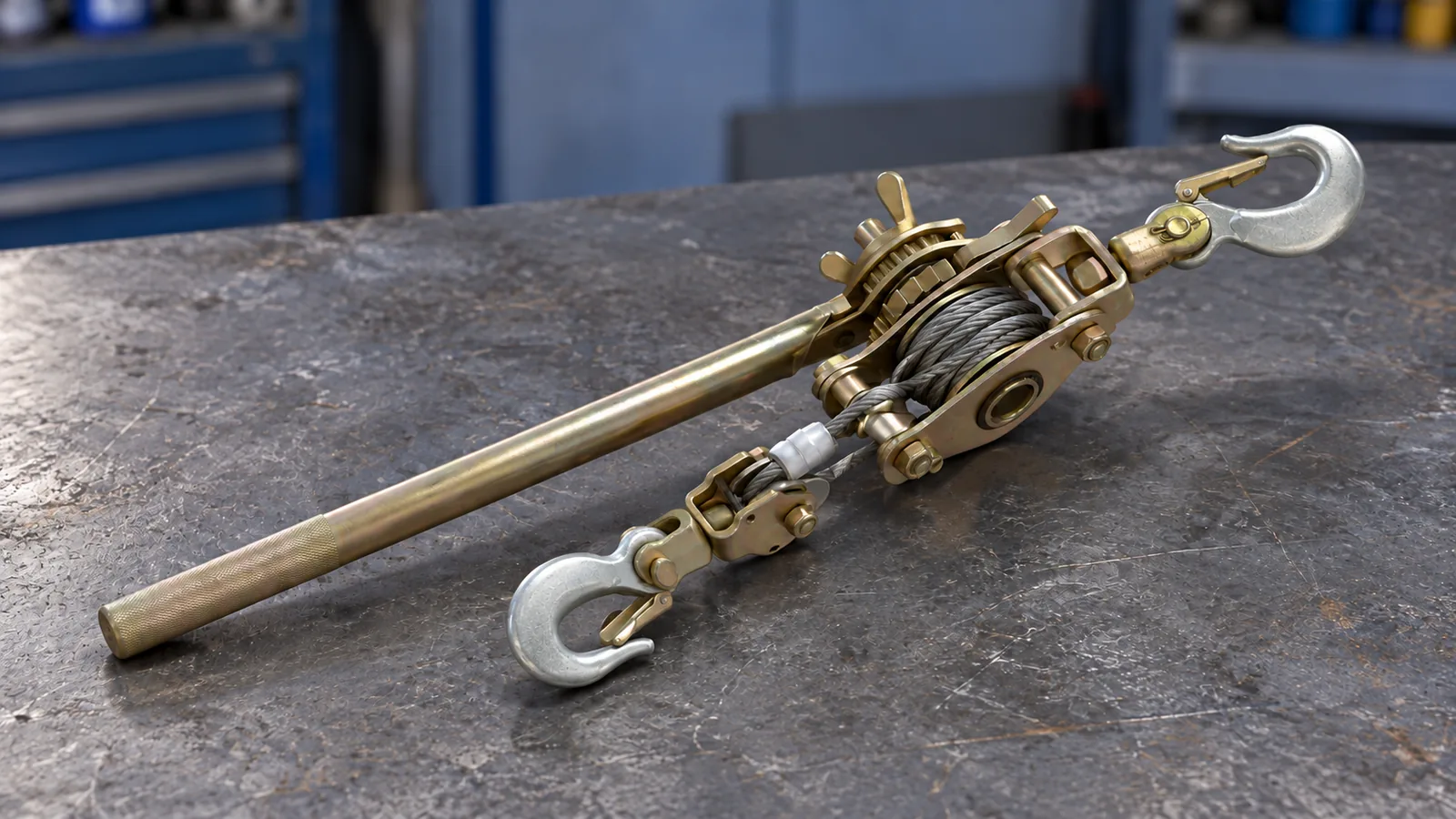
How to Choose a Ratchet Hand Puller: Pulling Capacity, Cable Travel and Connections
Choosing a ratchet hand puller means matching more than the largest tonnage printed in a catalogue. The selected unit must be permitted for the task, provide the required working capacity in its actual configuration, reach both attachment points and complete the required movement without running out of usable travel.
A compact tool can be inconvenient if its handle cannot move through the available space. A longer cable can still provide insufficient working movement. A hook that physically enters an attachment point does not establish that the connection can carry the intended force. These questions belong in the purchase enquiry, before equipment arrives on site.
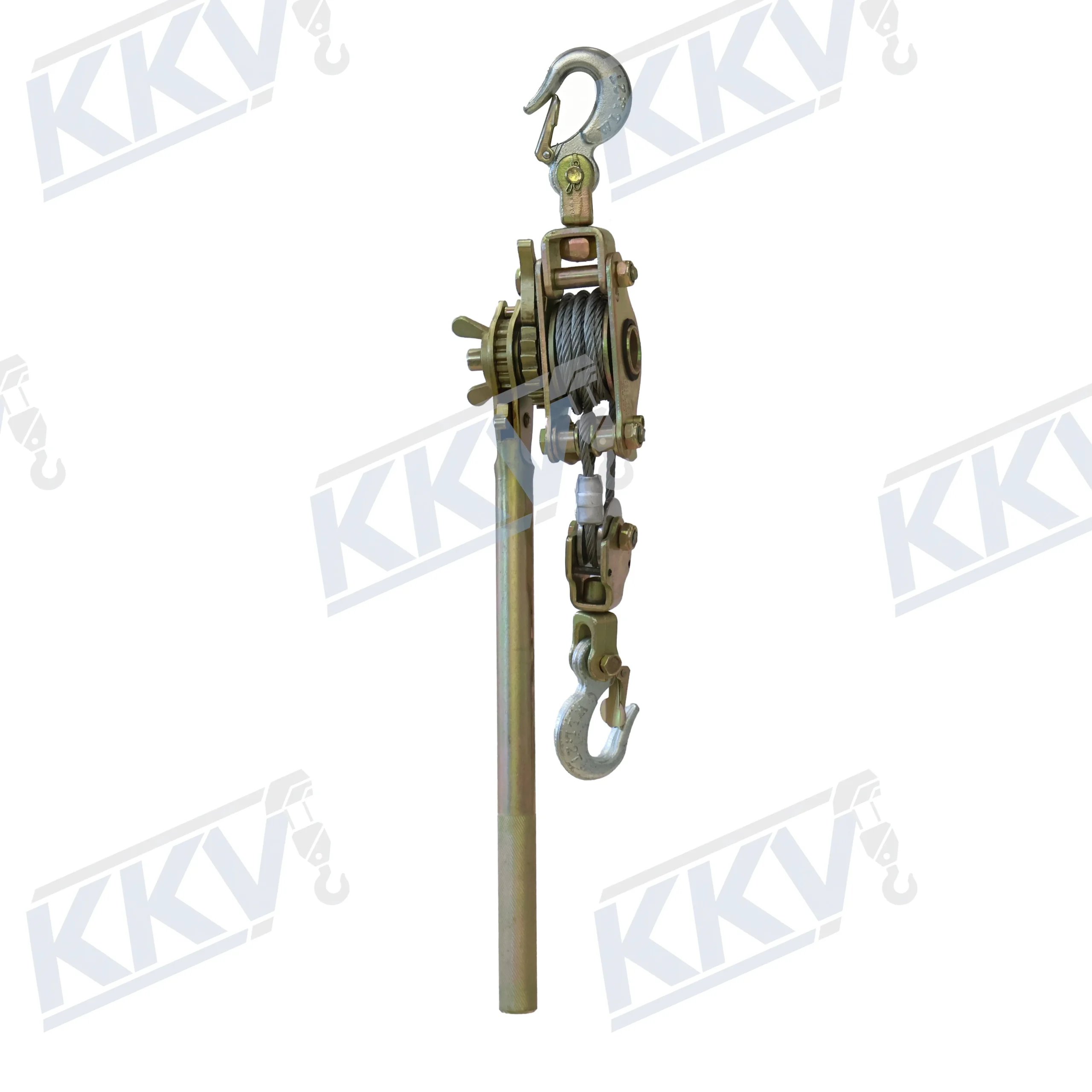
This guide focuses on spool-type, ratchet-operated wire-rope hand pullers, including the KKV JHW range. It covers selection and specification, not a universal rigging, cable-routing or tension-release procedure.
Quick answer: Select a ratchet hand puller by the exact permitted task, configuration-specific working rating, documented usable travel and compatible load and anchor connections. Confirm the meaning of every capacity figure, the required handle clearance, rope limits and controlled-release provisions. Do not treat test load, breaking strength, nominal rope length or a generic product name as operating approval.
Table of contents
- Identify the tool and permitted task
- Separate working capacity from other numbers
- Check cable length, reach and usable travel
- Compare the published KKV JHW models
- Specify load and anchor connections
- Check handle access and the working area
- Review rope condition, release and service support
- Work through a quotation-screening example
- Prepare a complete purchase enquiry
- Frequently asked questions
- Primary references and their limits
Identify the Tool and the Permitted Task
Start with a description of what must move, how it is supported and where the force will act. State whether the task is horizontal positioning, temporary tensioning or a proposed lifting operation. Include any need to maintain position after movement or to release tension while the load could still move.
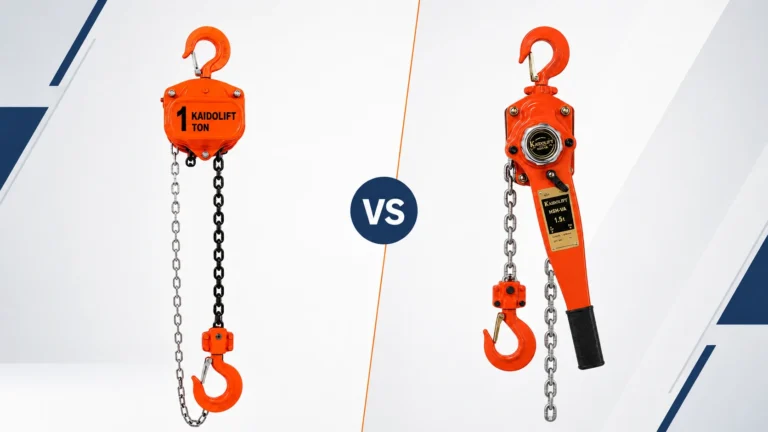
Avoid ordering by the informal word come-along alone. A spool-type cable puller, a lever chain hoist and a through-rope pulling machine can have different operating arrangements and permitted uses. Their names are not interchangeable technical specifications.
For context, TEKTON’s 5547 manual prohibits lifting with that tool, while Wyeth-Scott describes its own product as a puller/hoist with ratings based on vertical lifting. Neither statement establishes approval for a KKV model. This difference is precisely why the exact manufacturer’s instructions matter.
If lifting is proposed, obtain the selected model’s manual, applicable rating, permitted arrangement and relevant declaration before accepting it. A catalogue reference to a brake or a lifting application is not enough to define a complete operating method. Never use the equipment for personnel handling.
Separate Working Capacity from Other Numbers
The buying decision needs a working rating for the proposed task and configuration. Request that figure explicitly, with units and the document defining it. Do not select from a headline capacity without knowing what the label means.
For example, the TEKTON 5547 specification distinguishes its maximum-rated figure from a lower safe working load, and separately identifies single-line and double-line arrangements. The lesson is to preserve the manufacturer’s field names and configuration, not to import its ratings into another brand.
| Information in a quotation | What to ask before comparing offers |
|---|---|
| Rated load or safe working load | Which task, arrangement and conditions does it cover? |
| Test or proof load | What test does it describe, and where is the separate working limit? |
| Breaking strength | Is this a failure-related value rather than a permitted operating load? |
| Capacity in t, kg, lb or kN | Is the unit and intended meaning explicit and consistent across documents? |
| Load mass | Has the required pulling force been assessed for the actual movement? |
| Product net weight | Is this only the tool’s own mass, not its load-handling capacity? |
A machine’s mass is not, by itself, a complete pulling-force specification. For an enquiry, describe its support, route, inclination, starting condition and any restraint or obstruction. Ask a competent person to establish the force requirement where necessary; do not invent a friction coefficient from a floor photograph or use a generic weight-to-pull multiplier.
Avoid replacing that assessment with a larger tool and more effort. The HAUL-MASTER 30131 manual warns that sudden load movement can overload its puller and prohibits a lever extension. For a purchase specification, request operating-force information and an approved method rather than planning to add a pipe or apply a shock load.
Check Cable Length, Reach and Usable Travel Separately
Record three different requirements: the starting attachment-point separation, the movement the load must make and the space remaining at the final position. Ask the supplier to confirm the tool can cover the complete sequence in the approved arrangement.
Total rope length is a component dimension. Usable movement also depends on the device’s permitted configuration and end-of-travel restrictions. The Kerbl hand power puller manual, for example, specifies retained wraps and a rope-marker limit for its own units. Those requirements show why nominal length alone is insufficient; they are not KKV settings.
If a product offers different line arrangements, request its own capacity-and-travel table. Do not add a pulley and assume a new rating or an exact mathematical change in usable distance.
As a concrete manufacturer-specific example, TEKTON 5547 lists a safe working load of 2,000 lb and maximum pull length of 12 ft 7 in for its single-line arrangement, versus 4,000 lb and 7 ft 3 in for its double-line arrangement. This is a documented pairing, not a KKV conversion rule. Its stated pull length is not exactly halved.
For procurement, a dimensioned arrangement drawing is more useful than an unqualified promise of a long cable. Ask it to identify both connection positions, relevant minimum and maximum lengths, the required movement, handle clearance and any stopping limits. If the drawing is missing, keep the selection provisional.
Compare the Published KKV JHW Models
The following figures are from the current KKV Ratchet Hand Puller product page. The column labels are retained rather than reinterpreted as a configuration-specific line-pull chart.
| Model | Rated Load (t) | Wire Rope Diameter × Length (mm) | Overall Size (mm) | Net Weight (kg) |
|---|---|---|---|---|
| JHW-1000 | 1.0 | 5 × 2800 | 580 | 3.30 |
| JHW-1500 | 1.5 | 6 × 2800 | 680 | 4.35 |
| JHW-2000 | 2.0 | 6 × 2800 | 680 | 4.70 |
The additional-information section lists test load as 1.5 times rated capacity. That does not increase the working limit. The 2,800 mm entry is rope length, not verified usable travel; the reference points for Overall Size are not defined in the public table.
Use these data to identify candidate models, then request a configuration drawing, applicable working rating and operating manual. Do not fill gaps by estimating hook reach from a photograph. A procurement comparison should show which requirements are confirmed, unanswered or incompatible instead of treating every blank as a standard feature.
Specify Both the Load and Anchor Connections
Send the supplier photographs and dimensions of both connection locations, together with the intended force direction. Identify the attachment structure as well as the connector: an adequately rated shackle does not prove that the plate or support behind it is adequate.
Include the hook’s entry clearance, seating space, latch clearance and the possible change in alignment during movement. Ask whether the connection remains compatible at the starting and finishing positions, not only while the equipment is slack on the floor.
Do not use a photograph of a closed latch as evidence of connection capacity. Treat fit, rating and permitted force direction as separate acceptance items. A swivel or rotating feature also needs its own instructions; it is not general permission to load a hook sideways or pull around a corner.
The Kerbl manual expressly prohibits looping its operating cable around an object and hooking it back onto itself. If a separate load accessory is needed, specify it as part of the proposed system and obtain approval. Do not turn the puller’s rope into an improvised sling.
Check Handle Access and the Working Area
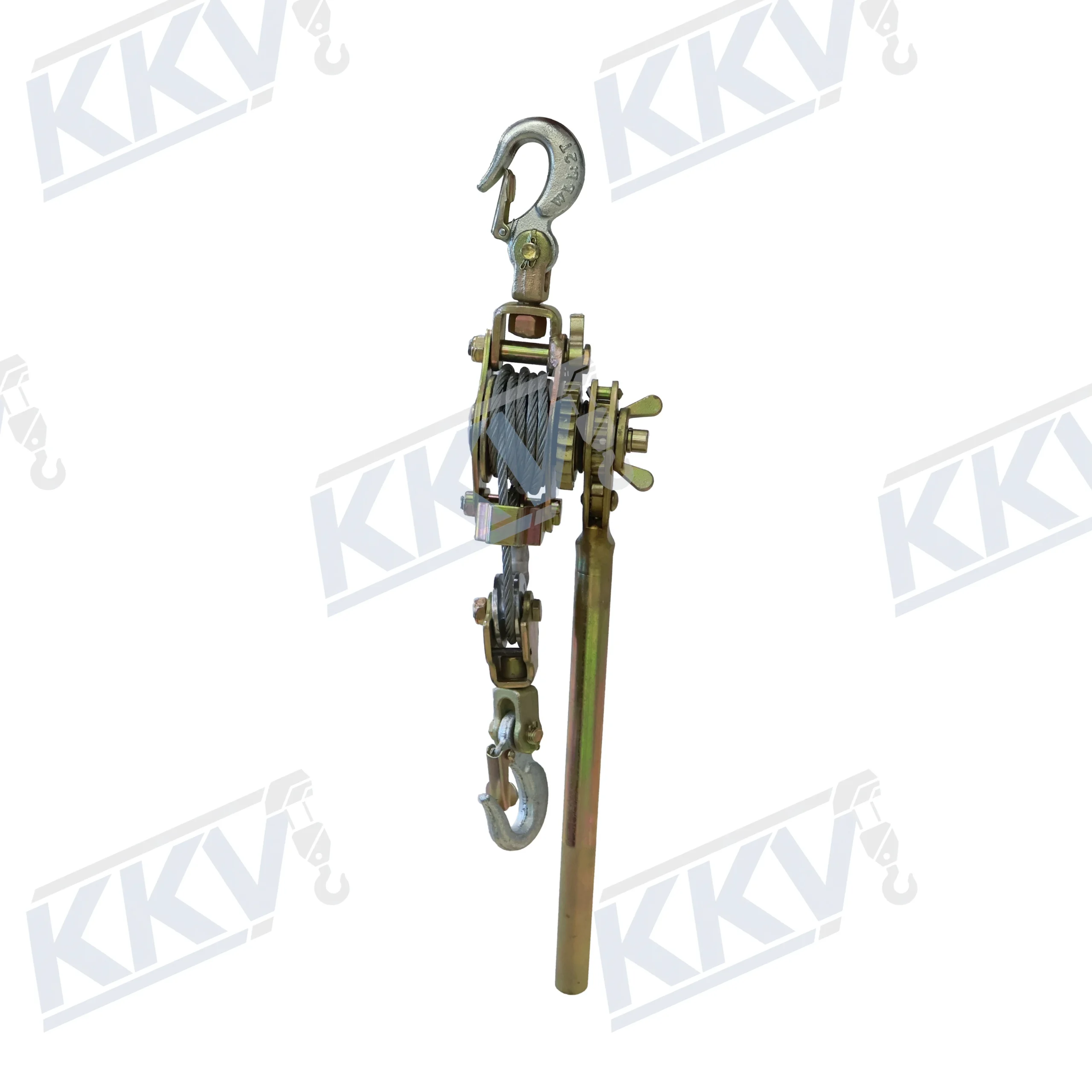
A capacity match can still fail the application if a wall, machine guard or nearby structure prevents normal handle movement. Provide an outline of the available operating space and ask for the required handle envelope. Do not assume the table’s single Overall Size figure represents every clearance.
Also describe where the operator can stand, whether the load remains visible and how other people will be kept outside the work area. The purchase enquiry should identify access constraints without trying to design the exclusion zone from a catalogue image.
The HAUL-MASTER manual requires its puller to align with the pulling direction. Where the proposed route changes direction, treat that as a separate arrangement needing competent design and manufacturer confirmation, not an invitation to bend the cable around an edge.
For repeated work, explain the number of movements, expected frequency and access restrictions. Ask about suitability and operating effort rather than assuming that a portable manual device is automatically appropriate for continuous service. If a different equipment category is needed, change the specification before ordering.
Review Rope Condition, Release and Service Support
Inspectability and support are buying criteria too. Ask how the supplied rope assembly is identified, how inspection findings are recorded and who can assess damage. Request the exact removal criteria and approved replacement assembly; diameter alone does not define a substitute rope.
The Kerbl manual identifies fraying, kinks, broken strands and distortion as conditions to inspect. Its instructions and the HAUL-MASTER manual also address equipment damage. For the selected KKV unit, obtain the applicable inspection and functional-check procedure rather than creating a numerical discard rule or an operator load test from a general article.
Think beyond reaching the final position. The HAUL-MASTER instructions require its load to be secured against movement before tension is released and warn about release on an uneven or sloping surface. Ask how the proposed application will remain controlled during unloading of the puller, using its own manual and site procedure. This guide intentionally gives no universal pawl-release sequence.
For environments involving moisture, chemicals, salt, heat or unusual contamination, state those conditions in the enquiry and request explicit compatibility. A plated appearance does not document corrosion resistance for every environment. Ask about storage, approved maintenance materials, spare parts and repair support before committing to a fleet purchase.
Work Through a Quotation-Screening Example
Consider a hypothetical purchase request, not a KKV performance claim. A competent assessment has already established a required working pull of 7 kN, and the load must move 1.4 m. The attachment-point spacing, access drawing and method for controlling the load at the end are included in the enquiry.
Three hypothetical quotations arrive:
| Candidate offer | Documentation supplied | Preliminary decision |
|---|---|---|
| A | 8 kN working pull in the proposed arrangement; only 1.1 m documented usable movement | Travel requirement not met |
| B | 10 kN test load; no stated working pull or usable movement | Insufficient information; do not compare test load with required pull |
| C | 8 kN working pull and 1.6 m usable movement in the proposed arrangement | Passes these two screens only; connections, access, task approval and release still need acceptance |
Candidate A is short of movement by 1.4 − 1.1 = 0.3 m, despite its stated force covering the requirement. Candidate B cannot be accepted from its higher-looking number. Candidate C is only a conditional shortlist, not an operating approval.
The useful output is a list of outstanding acceptance items, not a recommendation to keep reconnecting the tool under tension. If one controlled movement is required, state that explicitly and choose a system documented to provide it. Do not improvise re-anchoring steps to compensate for inadequate travel.
Prepare a Complete Purchase Enquiry
A strong enquiry lets the supplier answer the same questions for every candidate. It also makes differences between offers visible before price becomes the deciding factor.
| RFQ item | Information to provide or request |
|---|---|
| Exact task | What moves, how it is supported and whether pulling, tensioning or lifting is proposed |
| Required force | Assessed working requirement, units, assumptions and responsible assessor |
| Movement | Required load travel, starting and final connection separation |
| Configuration | Supplier-approved arrangement drawing and corresponding working rating |
| Connections | Anchor and load-point details, connector dimensions and intended directions |
| Operator access | Handle envelope, standing position, visibility and space restrictions |
| Environment | Exposure, temperature, contamination and storage conditions |
| Frequency | Expected use pattern and operating-effort requirements |
| Release and restraint | How the load remains controlled when tension is removed |
| Documentation | Exact-model manual, identification, declaration and relevant test records |
| Service | Inspection criteria, replacement rope assembly, parts and authorized repair support |
| Commercial details | Model candidates, quantity, destination and required delivery timing |
At receipt, reconcile the order, nameplate, model, rope assembly and supplied instructions before accepting the equipment for use. Escalate missing or contradictory information to the supplier. A different-looking hook or rope is not a harmless substitution until its compatibility is confirmed.
For a job requiring a through-rope mechanism rather than a spool-type puller, review the separate KKV HHBS manual wire rope winch and specify the task afresh. Do not transfer the JHW table to another mechanism.
Frequently Asked Questions
Can every ratchet hand puller be used for lifting?
No. Product names cover different designs and permissions. Obtain the exact model’s instructions and applicable rating for the proposed task. A pulling-only unit does not become a hoist because it has hooks, a brake or a high capacity number.
Does the KKV 2,800 mm rope entry mean 2,800 mm of usable movement?
It is published as rope length. Request the usable movement and connection-length limits for the supplied arrangement before selecting from that dimension.
Can a test-load figure be used as the working limit?
No. Ask for the separate working rating and its conditions. Do not use a testing figure or breaking-strength figure as permission to increase the operating load.
Does double-line operation always double capacity and halve travel?
Do not use that as a universal selection rule. Obtain the manufacturer’s capacity-and-travel information for the approved arrangement. Do not add pulleys or change the configuration on the basis of a general mechanical-advantage description.
Can I choose the puller from the machine’s weight alone?
Not reliably. Describe the support, route, inclination and starting condition, and have the required force assessed where needed. Mass and pulling-force requirements are different entries in a useful enquiry.
Is a hand puller the same as a ratchet tie-down strap?
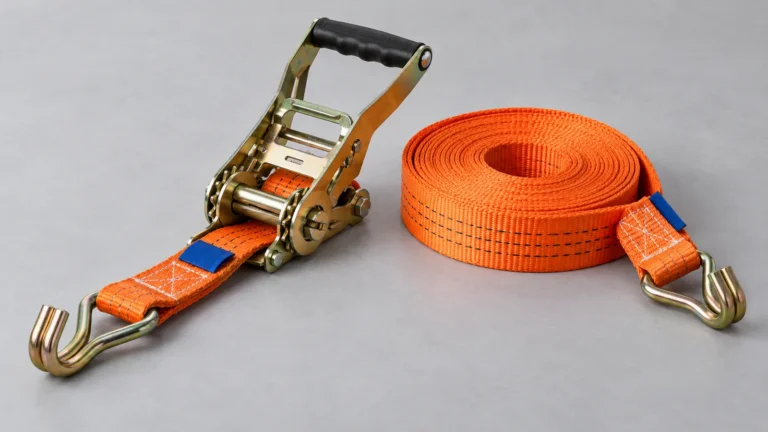
No. A wire-rope pulling device and a webbing cargo-restraint assembly serve different functions. If the requirement is securing cargo in transport, specify a suitable lashing system rather than assuming a hand puller is an approved tie-down.
Can the rope be replaced with any cable of the same diameter?
Do not assume so. Ask for the manufacturer’s approved rope assembly, terminations, installation and inspection requirements. The diameter in a catalogue is not a complete replacement specification.
What should I send KKV for a useful quotation?
Send the proposed task, assessed force requirement, required movement, connection and access drawings, environment, use frequency, quantity and destination. Request confirmation of the applicable rating, usable travel and instructions for the selected configuration.
Primary References and Their Limits
The numerical JHW comparison comes from the current KKV product page. Other manufacturers’ documents illustrate why terminology and operating restrictions must be checked; they do not certify or configure KKV equipment.
The TEKTON 5547 manual provides the explicitly attributed capacity-and-pull-length example. The Kerbl 37116/37117 manual, English pages 6–7, supports the attributed cable-limit and accessory examples. The HAUL-MASTER 30131 manual, UPC 792363301312, supports the attributed alignment, dynamic-load and release examples. Wyeth-Scott’s specifications demonstrate that a similarly named product can have a different permitted function; no conversion ratio is adopted here.
Specify the Whole Pulling Task, Not Just a Tonnage
A useful ratchet hand puller specification joins the permitted task, working rating, usable movement, connections, access and end-of-task control into one enquiry. Comparing tonnage alone leaves the most application-specific questions unanswered.
Review the JHW candidates against that complete request, obtain the missing documents and resolve contradictions before purchase. This makes a quotation easier to evaluate and helps avoid buying a tool that reaches the load but cannot complete the required movement.
For help specifying a ratchet hand puller, contact KKV or email sales@kkvhoist.com with the task details and required quantity.
Safety note: This is a general product-selection guide, not an operating, rigging or tension-release procedure. Follow the exact equipment manual, manufacturer confirmation and competent site assessment. Do not exceed working limits, improvise configurations or use the equipment to handle people.
Choosing a ratchet hand puller means matching more than the largest tonnage printed in a catalogue. The selected unit must be permitted for the task, provide the required working capacity in its actual configuration, reach both attachment points and complete the required movement without running out of usable travel.
A compact tool can be inconvenient if its handle cannot move through the available space. A longer cable can still provide insufficient working movement. A hook that physically enters an attachment point does not establish that the connection can carry the intended force. These questions belong in the purchase enquiry, before equipment arrives on site.
This guide focuses on spool-type, ratchet-operated wire-rope hand pullers, including the KKV JHW range. It covers selection and specification, not a universal rigging, cable-routing or tension-release procedure.
Quick answer: Select a ratchet hand puller by the exact permitted task, configuration-specific working rating, documented usable travel and compatible load and anchor connections. Confirm the meaning of every capacity figure, the required handle clearance, rope limits and controlled-release provisions. Do not treat test load, breaking strength, nominal rope length or a generic product name as operating approval.
Table of contents
- Identify the tool and permitted task
- Separate working capacity from other numbers
- Check cable length, reach and usable travel
- Compare the published KKV JHW models
- Specify load and anchor connections
- Check handle access and the working area
- Review rope condition, release and service support
- Work through a quotation-screening example
- Prepare a complete purchase enquiry
- Frequently asked questions
- Primary references and their limits
Identify the Tool and the Permitted Task
Start with a description of what must move, how it is supported and where the force will act. State whether the task is horizontal positioning, temporary tensioning or a proposed lifting operation. Include any need to maintain position after movement or to release tension while the load could still move.
Avoid ordering by the informal word come-along alone. A spool-type cable puller, a lever chain hoist and a through-rope pulling machine can have different operating arrangements and permitted uses. Their names are not interchangeable technical specifications.
For context, TEKTON’s 5547 manual prohibits lifting with that tool, while Wyeth-Scott describes its own product as a puller/hoist with ratings based on vertical lifting. Neither statement establishes approval for a KKV model. This difference is precisely why the exact manufacturer’s instructions matter.
If lifting is proposed, obtain the selected model’s manual, applicable rating, permitted arrangement and relevant declaration before accepting it. A catalogue reference to a brake or a lifting application is not enough to define a complete operating method. Never use the equipment for personnel handling.
Separate Working Capacity from Other Numbers
The buying decision needs a working rating for the proposed task and configuration. Request that figure explicitly, with units and the document defining it. Do not select from a headline capacity without knowing what the label means.
For example, the TEKTON 5547 specification distinguishes its maximum-rated figure from a lower safe working load, and separately identifies single-line and double-line arrangements. The lesson is to preserve the manufacturer’s field names and configuration, not to import its ratings into another brand.
| Information in a quotation | What to ask before comparing offers |
|---|---|
| Rated load or safe working load | Which task, arrangement and conditions does it cover? |
| Test or proof load | What test does it describe, and where is the separate working limit? |
| Breaking strength | Is this a failure-related value rather than a permitted operating load? |
| Capacity in t, kg, lb or kN | Is the unit and intended meaning explicit and consistent across documents? |
| Load mass | Has the required pulling force been assessed for the actual movement? |
| Product net weight | Is this only the tool’s own mass, not its load-handling capacity? |
A machine’s mass is not, by itself, a complete pulling-force specification. For an enquiry, describe its support, route, inclination, starting condition and any restraint or obstruction. Ask a competent person to establish the force requirement where necessary; do not invent a friction coefficient from a floor photograph or use a generic weight-to-pull multiplier.
Avoid replacing that assessment with a larger tool and more effort. The HAUL-MASTER 30131 manual warns that sudden load movement can overload its puller and prohibits a lever extension. For a purchase specification, request operating-force information and an approved method rather than planning to add a pipe or apply a shock load.
Check Cable Length, Reach and Usable Travel Separately
Record three different requirements: the starting attachment-point separation, the movement the load must make and the space remaining at the final position. Ask the supplier to confirm the tool can cover the complete sequence in the approved arrangement.
Total rope length is a component dimension. Usable movement also depends on the device’s permitted configuration and end-of-travel restrictions. The Kerbl hand power puller manual, for example, specifies retained wraps and a rope-marker limit for its own units. Those requirements show why nominal length alone is insufficient; they are not KKV settings.
If a product offers different line arrangements, request its own capacity-and-travel table. Do not add a pulley and assume a new rating or an exact mathematical change in usable distance.
As a concrete manufacturer-specific example, TEKTON 5547 lists a safe working load of 2,000 lb and maximum pull length of 12 ft 7 in for its single-line arrangement, versus 4,000 lb and 7 ft 3 in for its double-line arrangement. This is a documented pairing, not a KKV conversion rule. Its stated pull length is not exactly halved.
For procurement, a dimensioned arrangement drawing is more useful than an unqualified promise of a long cable. Ask it to identify both connection positions, relevant minimum and maximum lengths, the required movement, handle clearance and any stopping limits. If the drawing is missing, keep the selection provisional.
Compare the Published KKV JHW Models
The following figures are from the current KKV Ratchet Hand Puller product page. The column labels are retained rather than reinterpreted as a configuration-specific line-pull chart.
| Model | Rated Load (t) | Wire Rope Diameter × Length (mm) | Overall Size (mm) | Net Weight (kg) |
|---|---|---|---|---|
| JHW-1000 | 1.0 | 5 × 2800 | 580 | 3.30 |
| JHW-1500 | 1.5 | 6 × 2800 | 680 | 4.35 |
| JHW-2000 | 2.0 | 6 × 2800 | 680 | 4.70 |
The additional-information section lists test load as 1.5 times rated capacity. That does not increase the working limit. The 2,800 mm entry is rope length, not verified usable travel; the reference points for Overall Size are not defined in the public table.
Use these data to identify candidate models, then request a configuration drawing, applicable working rating and operating manual. Do not fill gaps by estimating hook reach from a photograph. A procurement comparison should show which requirements are confirmed, unanswered or incompatible instead of treating every blank as a standard feature.
Specify Both the Load and Anchor Connections
Send the supplier photographs and dimensions of both connection locations, together with the intended force direction. Identify the attachment structure as well as the connector: an adequately rated shackle does not prove that the plate or support behind it is adequate.
Include the hook’s entry clearance, seating space, latch clearance and the possible change in alignment during movement. Ask whether the connection remains compatible at the starting and finishing positions, not only while the equipment is slack on the floor.
Do not use a photograph of a closed latch as evidence of connection capacity. Treat fit, rating and permitted force direction as separate acceptance items. A swivel or rotating feature also needs its own instructions; it is not general permission to load a hook sideways or pull around a corner.
The Kerbl manual expressly prohibits looping its operating cable around an object and hooking it back onto itself. If a separate load accessory is needed, specify it as part of the proposed system and obtain approval. Do not turn the puller’s rope into an improvised sling.
Check Handle Access and the Working Area
A capacity match can still fail the application if a wall, machine guard or nearby structure prevents normal handle movement. Provide an outline of the available operating space and ask for the required handle envelope. Do not assume the table’s single Overall Size figure represents every clearance.
Also describe where the operator can stand, whether the load remains visible and how other people will be kept outside the work area. The purchase enquiry should identify access constraints without trying to design the exclusion zone from a catalogue image.
The HAUL-MASTER manual requires its puller to align with the pulling direction. Where the proposed route changes direction, treat that as a separate arrangement needing competent design and manufacturer confirmation, not an invitation to bend the cable around an edge.
For repeated work, explain the number of movements, expected frequency and access restrictions. Ask about suitability and operating effort rather than assuming that a portable manual device is automatically appropriate for continuous service. If a different equipment category is needed, change the specification before ordering.
Review Rope Condition, Release and Service Support
Inspectability and support are buying criteria too. Ask how the supplied rope assembly is identified, how inspection findings are recorded and who can assess damage. Request the exact removal criteria and approved replacement assembly; diameter alone does not define a substitute rope.
The Kerbl manual identifies fraying, kinks, broken strands and distortion as conditions to inspect. Its instructions and the HAUL-MASTER manual also address equipment damage. For the selected KKV unit, obtain the applicable inspection and functional-check procedure rather than creating a numerical discard rule or an operator load test from a general article.
Think beyond reaching the final position. The HAUL-MASTER instructions require its load to be secured against movement before tension is released and warn about release on an uneven or sloping surface. Ask how the proposed application will remain controlled during unloading of the puller, using its own manual and site procedure. This guide intentionally gives no universal pawl-release sequence.
For environments involving moisture, chemicals, salt, heat or unusual contamination, state those conditions in the enquiry and request explicit compatibility. A plated appearance does not document corrosion resistance for every environment. Ask about storage, approved maintenance materials, spare parts and repair support before committing to a fleet purchase.
Work Through a Quotation-Screening Example
Consider a hypothetical purchase request, not a KKV performance claim. A competent assessment has already established a required working pull of 7 kN, and the load must move 1.4 m. The attachment-point spacing, access drawing and method for controlling the load at the end are included in the enquiry.
Three hypothetical quotations arrive:
| Candidate offer | Documentation supplied | Preliminary decision |
|---|---|---|
| A | 8 kN working pull in the proposed arrangement; only 1.1 m documented usable movement | Travel requirement not met |
| B | 10 kN test load; no stated working pull or usable movement | Insufficient information; do not compare test load with required pull |
| C | 8 kN working pull and 1.6 m usable movement in the proposed arrangement | Passes these two screens only; connections, access, task approval and release still need acceptance |
Candidate A is short of movement by 1.4 − 1.1 = 0.3 m, despite its stated force covering the requirement. Candidate B cannot be accepted from its higher-looking number. Candidate C is only a conditional shortlist, not an operating approval.
The useful output is a list of outstanding acceptance items, not a recommendation to keep reconnecting the tool under tension. If one controlled movement is required, state that explicitly and choose a system documented to provide it. Do not improvise re-anchoring steps to compensate for inadequate travel.
Prepare a Complete Purchase Enquiry
A strong enquiry lets the supplier answer the same questions for every candidate. It also makes differences between offers visible before price becomes the deciding factor.
| RFQ item | Information to provide or request |
|---|---|
| Exact task | What moves, how it is supported and whether pulling, tensioning or lifting is proposed |
| Required force | Assessed working requirement, units, assumptions and responsible assessor |
| Movement | Required load travel, starting and final connection separation |
| Configuration | Supplier-approved arrangement drawing and corresponding working rating |
| Connections | Anchor and load-point details, connector dimensions and intended directions |
| Operator access | Handle envelope, standing position, visibility and space restrictions |
| Environment | Exposure, temperature, contamination and storage conditions |
| Frequency | Expected use pattern and operating-effort requirements |
| Release and restraint | How the load remains controlled when tension is removed |
| Documentation | Exact-model manual, identification, declaration and relevant test records |
| Service | Inspection criteria, replacement rope assembly, parts and authorized repair support |
| Commercial details | Model candidates, quantity, destination and required delivery timing |
At receipt, reconcile the order, nameplate, model, rope assembly and supplied instructions before accepting the equipment for use. Escalate missing or contradictory information to the supplier. A different-looking hook or rope is not a harmless substitution until its compatibility is confirmed.
For a job requiring a through-rope mechanism rather than a spool-type puller, review the separate KKV HHBS manual wire rope winch and specify the task afresh. Do not transfer the JHW table to another mechanism.
Frequently Asked Questions
Can every ratchet hand puller be used for lifting?
No. Product names cover different designs and permissions. Obtain the exact model’s instructions and applicable rating for the proposed task. A pulling-only unit does not become a hoist because it has hooks, a brake or a high capacity number.
Does the KKV 2,800 mm rope entry mean 2,800 mm of usable movement?
It is published as rope length. Request the usable movement and connection-length limits for the supplied arrangement before selecting from that dimension.
Can a test-load figure be used as the working limit?
No. Ask for the separate working rating and its conditions. Do not use a testing figure or breaking-strength figure as permission to increase the operating load.
Does double-line operation always double capacity and halve travel?
Do not use that as a universal selection rule. Obtain the manufacturer’s capacity-and-travel information for the approved arrangement. Do not add pulleys or change the configuration on the basis of a general mechanical-advantage description.
Can I choose the puller from the machine’s weight alone?
Not reliably. Describe the support, route, inclination and starting condition, and have the required force assessed where needed. Mass and pulling-force requirements are different entries in a useful enquiry.
Is a hand puller the same as a ratchet tie-down strap?
No. A wire-rope pulling device and a webbing cargo-restraint assembly serve different functions. If the requirement is securing cargo in transport, specify a suitable lashing system rather than assuming a hand puller is an approved tie-down.
Can the rope be replaced with any cable of the same diameter?
Do not assume so. Ask for the manufacturer’s approved rope assembly, terminations, installation and inspection requirements. The diameter in a catalogue is not a complete replacement specification.
What should I send KKV for a useful quotation?
Send the proposed task, assessed force requirement, required movement, connection and access drawings, environment, use frequency, quantity and destination. Request confirmation of the applicable rating, usable travel and instructions for the selected configuration.
Primary References and Their Limits
The numerical JHW comparison comes from the current KKV product page. Other manufacturers’ documents illustrate why terminology and operating restrictions must be checked; they do not certify or configure KKV equipment.
The TEKTON 5547 manual provides the explicitly attributed capacity-and-pull-length example. The Kerbl 37116/37117 manual, English pages 6–7, supports the attributed cable-limit and accessory examples. The HAUL-MASTER 30131 manual, UPC 792363301312, supports the attributed alignment, dynamic-load and release examples. Wyeth-Scott’s specifications demonstrate that a similarly named product can have a different permitted function; no conversion ratio is adopted here.
Specify the Whole Pulling Task, Not Just a Tonnage
A useful ratchet hand puller specification joins the permitted task, working rating, usable movement, connections, access and end-of-task control into one enquiry. Comparing tonnage alone leaves the most application-specific questions unanswered.
Review the JHW candidates against that complete request, obtain the missing documents and resolve contradictions before purchase. This makes a quotation easier to evaluate and helps avoid buying a tool that reaches the load but cannot complete the required movement.
For help specifying a ratchet hand puller, contact KKV or email sales@kkvhoist.com with the task details and required quantity.
Safety note: This is a general product-selection guide, not an operating, rigging or tension-release procedure. Follow the exact equipment manual, manufacturer confirmation and competent site assessment. Do not exceed working limits, improvise configurations or use the equipment to handle people.