Hand Pallet Truck Inspection Checklist: Forks, Wheels, Hydraulics and Pre-Use Checks
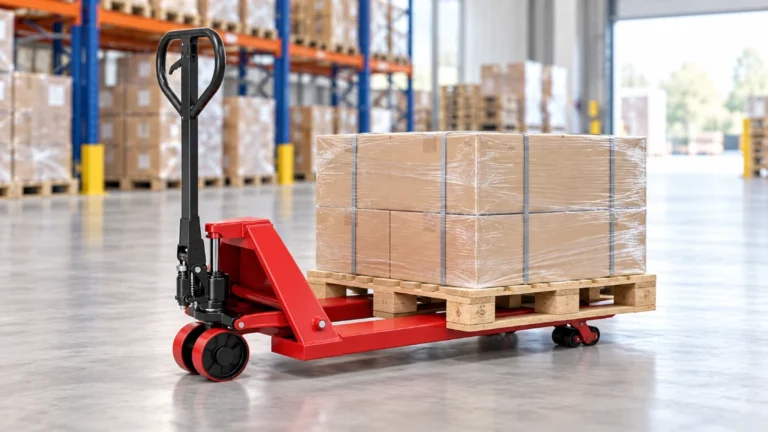
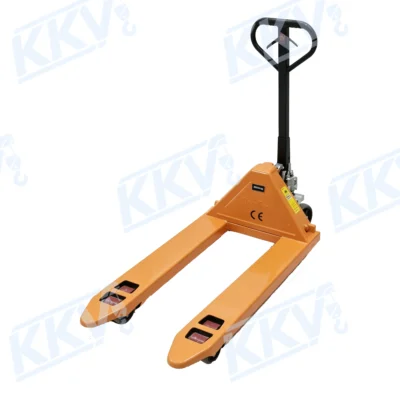
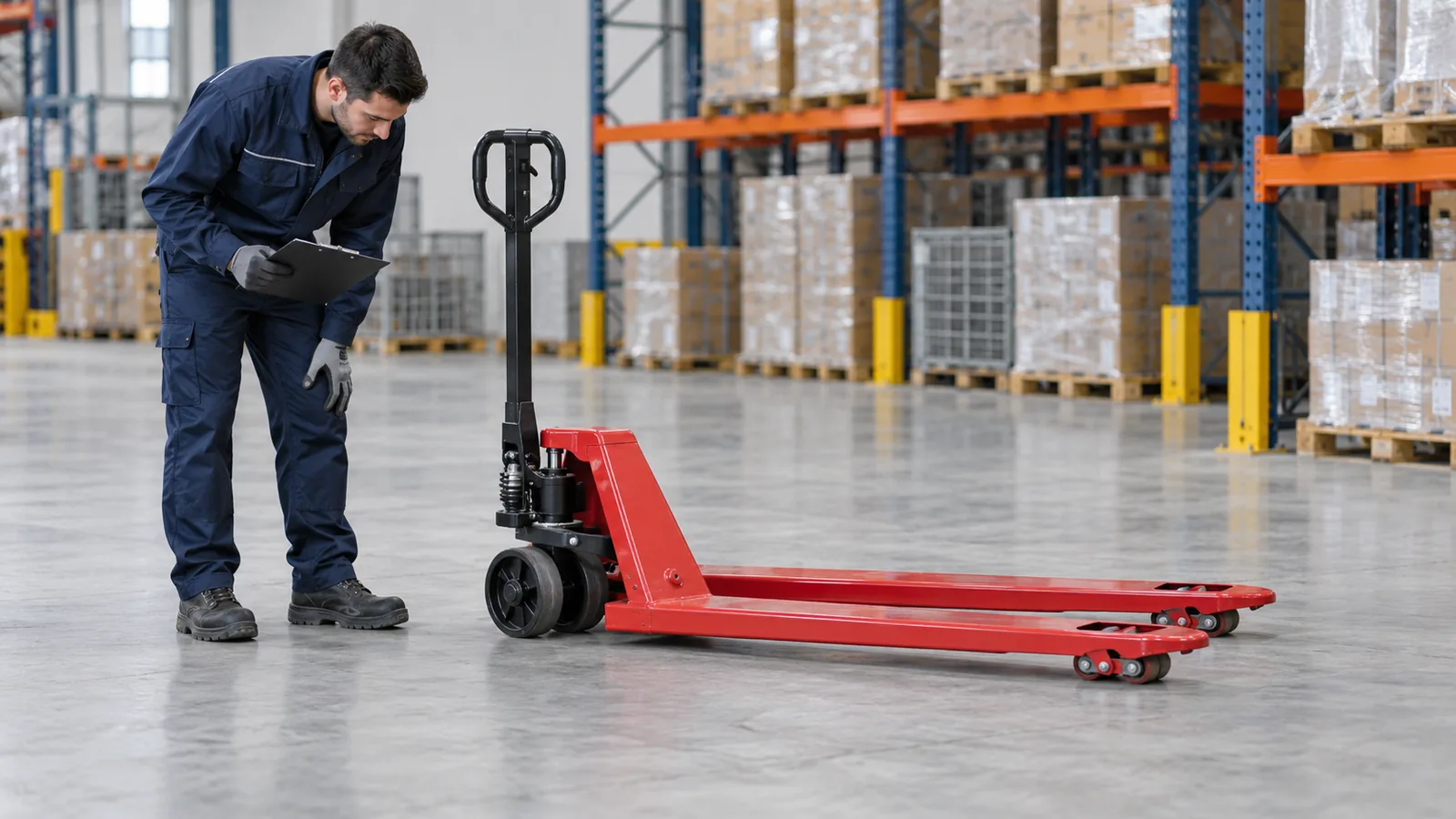
A hand pallet truck inspection checklist helps warehouse teams check an unloaded truck before moving the first pallet. It should cover the forks and frame, steering wheels and load rollers, handle controls, hydraulic operation, identification and the intended travel route. The question is not simply whether the truck can lift: it is whether it can lift, travel, steer and lower normally for the planned task.
This guide is for a conventional, manually propelled, low-lift hydraulic pallet truck, also called a hand pallet jack or pump truck. It is not a checklist for an electric pallet truck, a high-lift scissor truck or a pallet stacker. Use the operating manual for the exact model together with the site’s inspection and defect-reporting procedure.
Quick answer: Inspect the truck before first use or at the start of the shift as required by its manual and site procedure. With the truck unloaded on a clear, level surface, check identification, forks, frame, wheels, handle, visible hydraulic components and normal raise/neutral/lower functions. Do not use a truck with a structural crack, a seized or seriously damaged wheel, an unsafe control, uncontrolled lowering or another safety-related defect. Record the finding, prevent further use and arrange assessment by an authorized service person. Also check the pallet, load and route; a sound truck does not make an unsuitable handling task safe.
Table of contents
- What this checklist covers and when to use it
- Hand pallet truck pre-use inspection checklist
- Inspecting forks, frame and load-supporting components
- Checking steering wheels and load rollers
- Checking the tiller, handle and steering
- Checking hydraulics and raise, neutral and lower functions
- Checking brakes, pallets and the travel route
- When to stop using a hand pallet truck
- Pre-use checks versus scheduled maintenance
- A practical inspection and defect-record template
- Common inspection mistakes
- Frequently asked questions
- Manufacturer references
What This Checklist Covers and When to Use It
The purpose of a pre-use inspection is to identify visible damage and abnormal operation before the truck is put into service. It does not certify the structure, prove rated capacity or replace a service inspection. The Lift-Rite Titan operator manual, for example, calls for checks at the beginning of each shift and directs operators to report unsafe conditions and malfunctions.
Build the routine around the actual truck and operating conditions. A unit used by several shifts needs a clear handover; a unit struck by another vehicle needs assessment after the incident, even if that day’s checklist was already completed. A truck returning from repair should have a documented release, rather than silently reappearing beside the receiving dock.
Useful occasions to check or reassess the truck include:
- Before first operation according to the model manual and site routine.
- When taking over a different truck or one with an uncertain operating history.
- After an impact, overload event, drop, jam or reported abnormality.
- When steering, pumping, rolling or lowering feels different from normal.
- Before return to service after repair or extended storage, as directed by the responsible person.
For a new purchase, first establish that the capacity, fork dimensions and wheel configuration fit the application. See how to choose a hand pallet truck. Inspection is a separate step: selecting the correct model does not remove the need to check its condition.
Hand Pallet Truck Pre-Use Inspection Checklist
Start with the forks lowered, the truck unloaded and the surrounding area clear. Read the control instructions before operating an unfamiliar unit. Keep feet and hands away from wheels, fork undersides and moving linkage; the Crown PTH50 operator instructions specifically identify these pinch and crush areas. If the visual check reveals a significant defect, do not continue into a function check simply to complete the form.
Use the table as a starting point for a site-specific checklist. The descriptions are screening prompts, not universal dimensional rejection limits. Where the manual specifies a measurement, service method or acceptance criterion, use that instruction.
| Check item | What to look for or verify | Action if abnormal |
|---|---|---|
| Identity and capacity | Truck ID, model and capacity information are legible and match the equipment | Hold use if capacity or identity cannot be established; obtain verified information |
| Forks and fork tips | No visible crack, twist, major bend, damaged tip or abnormal difference between the two sides | Stop use and arrange structural assessment |
| Frame and joints | No visible damaged weld, cracked frame or loose/missing retaining component | Stop use for a safety-related defect; report the exact location |
| Load rollers | No seizure, major damage, flat spot, missing component or debris restricting rotation | Remove the affected truck from service until assessed |
| Steering wheels | Normal rolling and steering; no loose wheel, severe damage or abnormal wobble | Stop if control or stability is affected |
| Handle and control lever | Secure mounting, normal movement, readable operating instructions and no damaged control | Do not use a truck with unsafe or uncertain controls |
| Hydraulic exterior | No active leak, unexplained fresh puddle or obvious damage to visible components | Hold use pending assessment of active leakage or suspected hydraulic damage; do not attempt an operator repair |
| Raise function | Unloaded forks rise normally and evenly during the prescribed function check | Stop for abnormal rise, binding or inconsistent response |
| Neutral function, where provided | Travel mode behaves as described in the manual without unintended fork movement | Stop if control selection is unreliable |
| Lower function | Forks descend under control and return to their normal lowered position | Stop for uncontrolled descent, binding or failure to lower |
| Brake, if fitted | Service/parking brake operates as specified for that model | Stop for brake malfunction; use N/A only if no brake is fitted |
| Pallet, load and route | Compatible sound pallet, suitable load, clear level route and adequate clearance | Correct the task or choose suitable equipment before moving |
An acceptable result should mean that the applicable checks were actually performed. It should not mean that the truck was available, had been used yesterday or could lift one test pallet.
Inspecting Forks, Frame and Load-Supporting Components
Walk around the unloaded truck and compare both fork arms. Look along their length and inspect the fork tips, heels, joining structure and accessible welds. Pay attention to damage after an impact or after forks have caught on a pallet or floor obstruction.
The Bishamon Blue Label operator manual includes checks for distortion, stress cracks and breaks in welds, materials and castings. A suspected structural crack is a reason to stop use and obtain assessment, not to cover it with paint or decide that it is small enough to ignore.
Practical observations to record include:
- Which fork or frame area is affected.
- Whether the damage is a visible crack, deformation, missing part or uncertain mark.
- Whether one fork appears different from the other when both are lowered.
- Whether an accessible linkage component appears displaced or damaged.
- Whether there are signs of an unauthorized modification or repair.
Inspect only from a safe position. Do not put a hand beneath an unsupported raised fork to examine a roller or joint. Any inspection requiring lifting, dismantling or blocking the truck belongs to the service procedure with the correct support and precautions.
Do not borrow fork wear percentages or repair rules from a powered forklift checklist and apply them automatically to a hand pallet truck. Obtain the manufacturer’s criteria for the actual structure. Operators should not straighten a fork, weld a crack or substitute an unidentified pin.
Checking Steering Wheels and Load Rollers
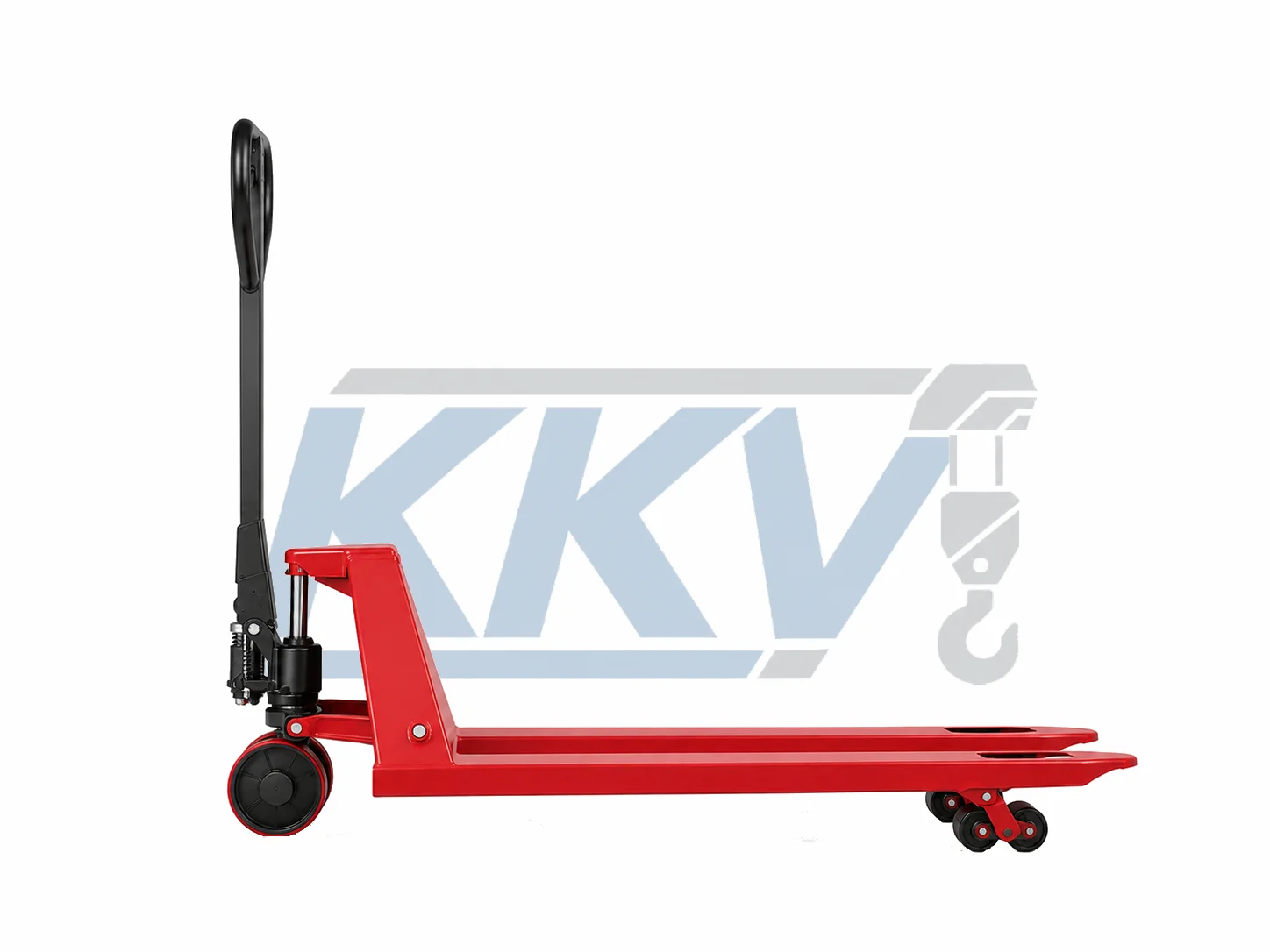
Separate the wheel groups in the inspection record. Steering wheels are at the handle end; load rollers are beneath the forward part of the forks. A truck may have single or tandem rollers, so check the fitted arrangement rather than assuming every unit has the same number of wheels.
Look for embedded debris, wrapping material, visible tread damage, cracking, separation, abnormal wear and missing retaining parts. The Vestil PM4-LP manual highlights thread and rags as potential wheel obstructions. On the clear inspection surface, check whether rolling and steering are normal. Unusual vibration, scraping, wobble or a wheel that does not rotate normally calls for investigation.
These symptoms can be described without guessing a cause:
| Observed symptom | Useful information to record | What not to assume |
|---|---|---|
| Rhythmic bump while rolling | Which wheel appears affected and whether damage is visible | That all wheels need replacement without inspection |
| One roller drags | Roller location, visible obstruction and any floor contact | That more pulling force is an acceptable solution |
| Handle-end wobble | Wheel movement, noise and accessible loose/missing parts | That tightening an unknown fastener is an operator task |
| Difficult travel | Unloaded or loaded condition, floor surface and affected area | That the problem must be hydraulic |
| Repeated wheel damage | Pallet entry, route joints, debris and wheel configuration | That changing wheel material alone will solve the route problem |
Do not try to free a jammed wheel with the load raised or use the fork tips to crush an obstruction. Follow the site’s isolation and service procedure if removal of debris brings hands close to moving parts.
For replacement parts, wheel material is only one specification. Diameter, width, axle arrangement, bearing and load rating must match the approved configuration. If wheel problems recur on otherwise serviceable trucks, review the application through the KKV pallet truck range rather than choosing parts by appearance.
Checking the Tiller, Handle and Steering
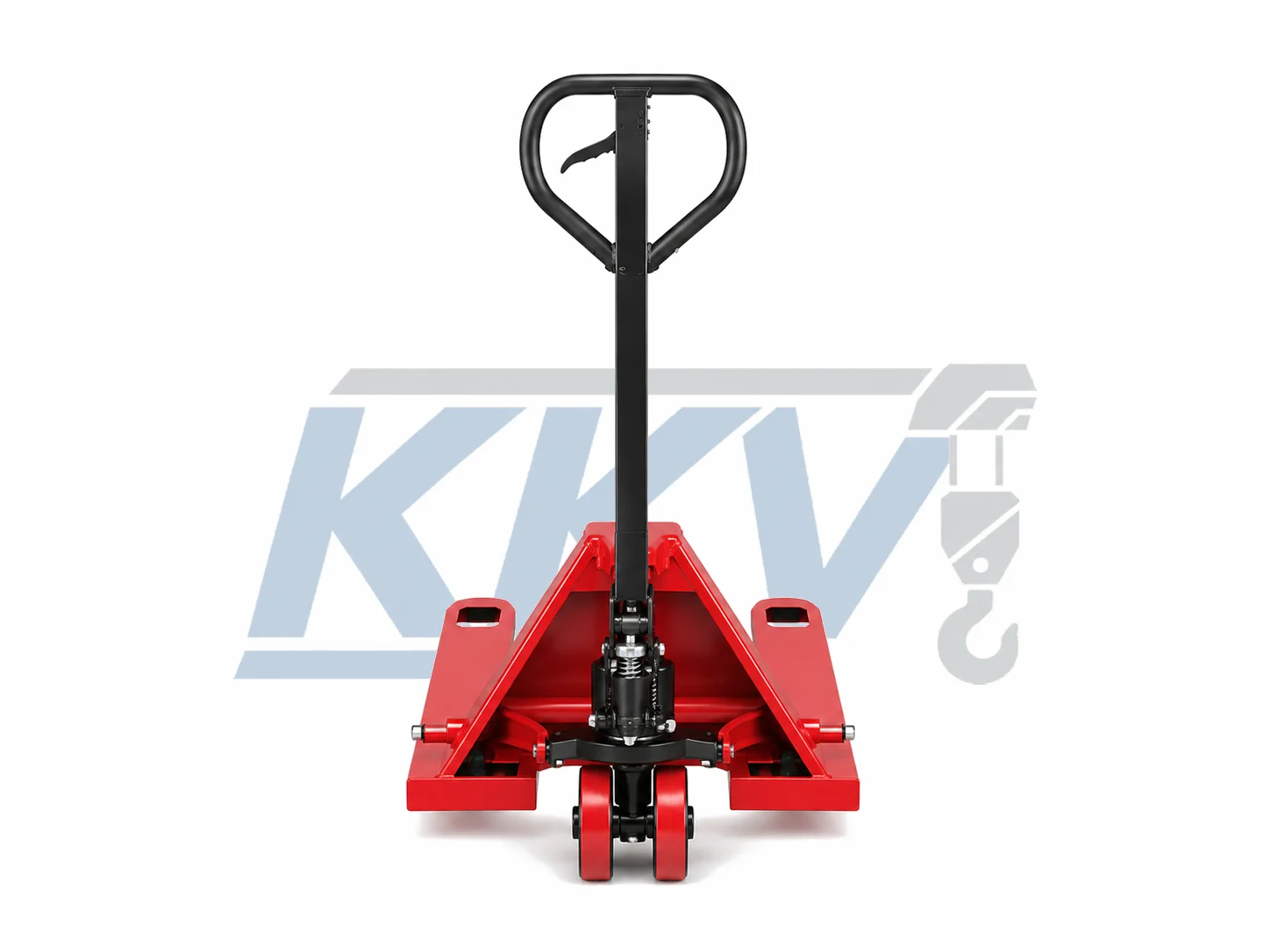
The tiller should be securely attached and move normally through the permitted operating range. Look for a bent handle, cracked grip, damaged control lever, loose mounting or any exposed control linkage that appears disconnected or damaged.
Check steering in a clear area and observe the handle-end wheels. A sudden change in resistance, binding, scraping or excessive play should be recorded. Do not force the handle past its normal movement or steer using a foot against a wheel.
Raise, neutral and lower are common control functions, but lever positions and operating details are model-specific. Use the actual labels and manual; do not assume an upper, middle or lower lever position has the same meaning on every truck.
Checking Hydraulics and Raise, Neutral and Lower Functions
Inspect the visible hydraulic unit and the floor beneath it. Record active leakage, a fresh unexplained puddle, damage or a significant change from the truck’s usual condition. Distinguish an observation from a diagnosis: oil near a component does not by itself identify which seal, fitting or valve is responsible.
A slight surface film is not a universal failure criterion. The Bishamon Blue Label manual, for example, distinguishes a small amount of oil at a piston or rod from oil flowing out. Use the model’s instructions and service assessment; do not automatically declare a seal failed from one photograph.
A controlled unloaded function check
Perform the check only after the visual inspection is satisfactory, using the manufacturer’s instructions and an area where movement will not create a hazard:
- Confirm the truck is unloaded, the floor is suitable and nobody is close to the fork or linkage movement.
- Select the raising function and operate the handle as instructed. Observe normal, even fork movement without binding or unusual noise.
- Select neutral/travel mode if the model provides it. Confirm the controls behave as described in the manual.
- Operate the lowering control carefully. Observe controlled descent and normal return to the lowered position.
- Check for new leakage or other abnormalities and record the result.
An unloaded check is not a capacity test and cannot establish every fault that may appear under load. If a truck has been reported to sink, lower unexpectedly or fail while loaded, stop using it and refer it for authorized service assessment even if it later passes an unloaded check.
Do not perform an improvised overloaded test, stand on the forks, adjust the hydraulic valve or change a pressure setting to make the checklist pass. If load-holding verification is required, the responsible service person should specify the safe method, conditions and acceptance criteria.
Useful symptom descriptions
Record what happened: the forks did not rise, one side rose differently, the control did not return normally, the descent was abrupt, or oil appeared beneath the pump. Avoid turning the inspection sheet into a repair instruction. Oil selection, filling, bleeding, valve adjustment and disassembly require the correct model procedure.
Checking Brakes, Pallets and the Travel Route
Brakes are configuration-specific
Some hand pallet trucks have a brake; many basic units do not. Inspect and function-check a fitted brake according to its instructions. Do not invent an emergency-reverse button or an automatic tiller brake on a manual truck, and do not mark a faulty fitted brake as N/A.
The absence of a brake does not make a sloping route acceptable. Use the manufacturer’s permitted operating conditions and the site’s assessment. Do not improvise a loaded ramp test to determine whether the operator can hold the truck.
Check the pallet and load separately
Before collecting a pallet, establish that its load is within the capacity and configuration limits of the actual truck, including the pallet and other supported items. Check pallet condition, openings, fork fit, load stability and a clear view along the route. A sound truck should not be used to compensate for a broken pallet or an unstable load.
Insert and support the pallet according to the operating instructions. Do not treat the fork tips as a lifting platform for a long, poorly supported item or move people on the truck.
Check the route before travelling
Look for debris, floor damage, wet areas, thresholds, narrow turns, pedestrian conflict and insufficient clearance. Loading docks, vehicle floors and dock plates need separate checks of condition, support, capacity and control arrangements where relevant. Do not proceed simply because the truck itself passed inspection.
If routine travel is becoming difficult or distances and frequency have increased, consider whether the handling method still fits the task. The article manual pallet truck vs electric pallet truck explains the equipment distinction; choosing powered equipment introduces its own training and inspection requirements.
When to Stop Using a Hand Pallet Truck
Stop use when a defect affects safe load support, movement, steering or control, or when the condition is uncertain and needs assessment. Examples include a visible structural crack, significant fork deformation, a seized roller, insecure wheel, serious hydraulic leak, unreliable lowering control or a malfunctioning fitted brake.
Use a clear defect-handling process:
- Stop the task. If a load is already on the truck, keep people clear and follow the site’s procedure for securing or safely recovering it; do not improvise a repair under load.
- Identify the truck and report the observed problem to the responsible person.
- Mark and segregate the truck, or use the site’s other controls to prevent someone else using it.
- Arrange assessment and repair by an authorized person using the correct parts and instructions.
- Record the work and the required checks before the designated person releases it back into service.
Make the report specific. ‘Right fork roller binds during unloaded travel’ is more useful than ‘truck bad’. Include photographs taken from a safe position, the date, truck ID and circumstances. A note on a checklist is not enough if the truck remains available for the next operator.
Not every cosmetic paint mark has the same significance as a crack. Equally, uncertainty is not a reason to declare a truck safe. Refer unclear findings to the responsible person rather than inventing a pass criterion.
Pre-Use Checks Versus Scheduled Maintenance
A pre-use check is an operator screening routine. Scheduled maintenance is a separate process for the tasks, measurements, lubrication and part replacement specified for the model. Passing the first does not cancel the second.
| Activity | Main purpose | Responsibility and basis |
|---|---|---|
| Pre-use inspection | Find visible damage and abnormal operation before work | Trained operator following the model instructions and site procedure |
| Scheduled maintenance | Perform the manufacturer’s maintenance and condition checks | Authorized service personnel at the applicable model/site intervals |
| Post-incident assessment | Establish condition after impact, overload or another unusual event | Responsible person and competent service support; scope based on the event |
| Return-to-service verification | Confirm repair and required checks are complete | Designated release process, documented before reuse |
There is no single oil grade, refill volume, lubrication interval or annual service recipe suitable for every hand pallet truck. Obtain the current manual using the model and serial identification. The Jungheinrich operating-manual portal is an example of a manufacturer providing model-based document access.
If maintenance records show repeated wheel damage, poor pallet entry or handling difficulty, review fork fit, pallet condition and the route as well as the truck. For operations that need to place loads at height, a low-lift hand truck is not a substitute for a stacker; see how to choose a pallet stacker.
A Practical Inspection and Defect-Record Template
Use a record that distinguishes the check result from the decision to release the truck. The template below is an original starting point for a warehouse procedure, not a manufacturer’s certificate or a regulatory inspection form. Add the exact model-specific items before adopting it.
| Record field | Information to enter |
|---|---|
| Inspection date and shift | Date, time and shift identifier |
| Truck identity | Asset number, manufacturer, model and serial number |
| Capacity information | Rated capacity from verified truck identification |
| Operator | Name or employee identifier |
| Condition check results | Pass / Fail / N/A for each applicable item, with reasons |
| Function-check results | Raise, neutral where fitted, lower, rolling, steering and fitted brake |
| Defect detail | Exact location, observation and circumstances |
| Immediate action | Stopped use, segregated, notified responsible person |
| Service reference | Work order and person assigned to assess the truck |
| Release record | Repair/checks completed, release date and authorizing person |
For each failed item, keep a short factual description. If a check cannot be performed, record that limitation instead of marking it passed. Use N/A only for a genuinely inapplicable feature, such as a brake that is not fitted.
An inspection record becomes useful when findings are followed through. Review recurring defects by truck and location, so the business can distinguish an individual equipment problem from a recurring pallet or route issue.
Common Inspection Mistakes
Checking only whether the forks rise
A truck may lift yet have a damaged roller, unreliable steering or uncontrolled lowering. The checklist needs both condition checks and the prescribed function checks.
Using yesterday’s result for today’s truck
Condition can change between shifts or after an incident. Check the unit actually being used and ensure its identification matches the record.
Turning an inspection into a repair session
Adjusting unknown valves, dismantling a pump or replacing a pin without approved instructions can create a new problem. Report the symptom and follow the service process.
Treating every difficult movement as a truck defect
The truck may be unsuitable for the pallet or route even if it is mechanically sound. Record the operating conditions and investigate both equipment and application.
Reusing a powered-truck checklist without adapting it
Battery condition, charging, travel controls and emergency reverse belong to powered equipment where fitted. A manual truck needs a checklist matched to its structure and controls. Do not assume a regulation written for powered industrial trucks automatically imposes the same provisions on every fully manual pallet jack.
Recording a defect but leaving the truck in circulation
Someone else may not see the sheet. The physical or administrative controls preventing reuse matter as much as the written report.
Frequently Asked Questions
How often should a hand pallet truck be inspected?
Use the model’s operating instructions and the site procedure. A check before first use or at the start of a shift is a practical routine, with reassessment after damage, abnormal operation or an incident. It does not replace scheduled maintenance or any applicable local inspection requirements.
Is a daily checklist the same as a service inspection?
No. An operator checklist screens for visible problems and normal operation. Service work may require measurements, approved parts, supporting arrangements or dismantling that are outside an operator pre-use check.
Can I use a pallet truck if one load roller does not turn?
Do not continue handling a load with a seized or malfunctioning roller. Stop use, identify and report the problem, and arrange assessment. Do not compensate by pulling harder or leaving the roller to slide across the floor.
Does oil around the pump always mean the truck has failed?
Not necessarily. The significance of a surface film depends on the design and manual. Active leakage, fresh unexplained oil beneath the truck, abnormal operation or suspected hydraulic damage should be reported and assessed. Do not diagnose or repair a seal from appearance alone.
What if a truck passes the unloaded check but sinks under a pallet?
Stop using it and report the loaded symptom. An unloaded function check does not prove load-holding performance. Any further verification should be specified and performed through the authorized service process.
Should I carry out a full-capacity test each morning?
Do not improvise a full-capacity or overload test as a daily check. Follow the model’s pre-use instructions. A prescribed service or acceptance test is a separate controlled activity, not an operator experiment.
Can I repair a bent fork or welded frame crack?
Do not straighten, heat, grind or weld the load-supporting structure as an operator repair. Remove the truck from service and obtain the manufacturer’s approved assessment and repair or replacement decision.
Does this checklist apply to an electric pallet truck?
Only some general items overlap. An electric pallet truck also needs model-specific checks for its battery, powered travel, controls, braking and protective devices. Use its own manual and inspection procedure.
Manufacturer References
The checklist is an original general framework. These references illustrate manufacturer instructions; they do not replace the manual supplied with a KKV truck or establish universal limits for other models.
- Lift-Rite Titan LCR55/LCS55 operator and parts manual: model-specific operator checks and service information.
- Bishamon Blue Label hand pallet truck operator manual: model-specific daily checks, controls and service restrictions.
- Vestil PM4-LP hand pallet truck manual: wheel checks and model-specific control and fault information.
- Crown PTH50 operator instructions: control functions, operator precautions and parking instructions.
- Jungheinrich operating-manual portal: search for instructions by equipment model.
- KKV manual hydraulic pallet truck: current product configuration and general inspection overview.
Keep the Truck, Pallet and Route in the Same Inspection Process
A useful inspection routine checks the equipment, the handling task and the response to defects. Combine a clear pre-use checklist with the exact model manual, scheduled maintenance and a documented return-to-service process.
For an equipment enquiry, review the KKV manual hydraulic pallet truck and send the required capacity, pallet dimensions, fork opening, floor condition and travel distance. If the enquiry concerns an existing truck, include its model, serial or asset identification, photographs and a factual description of the symptom so the appropriate technical information can be requested.
For pallet truck selection or a product information request: Contact KKV or email sales@kkvhoist.com.
Safety note: This is a general inspection guide, not a repair procedure, capacity test or certification. Follow the exact equipment manual, workplace procedure and applicable local requirements. Do not use equipment with a safety-related defect or perform repairs outside your authorization.